

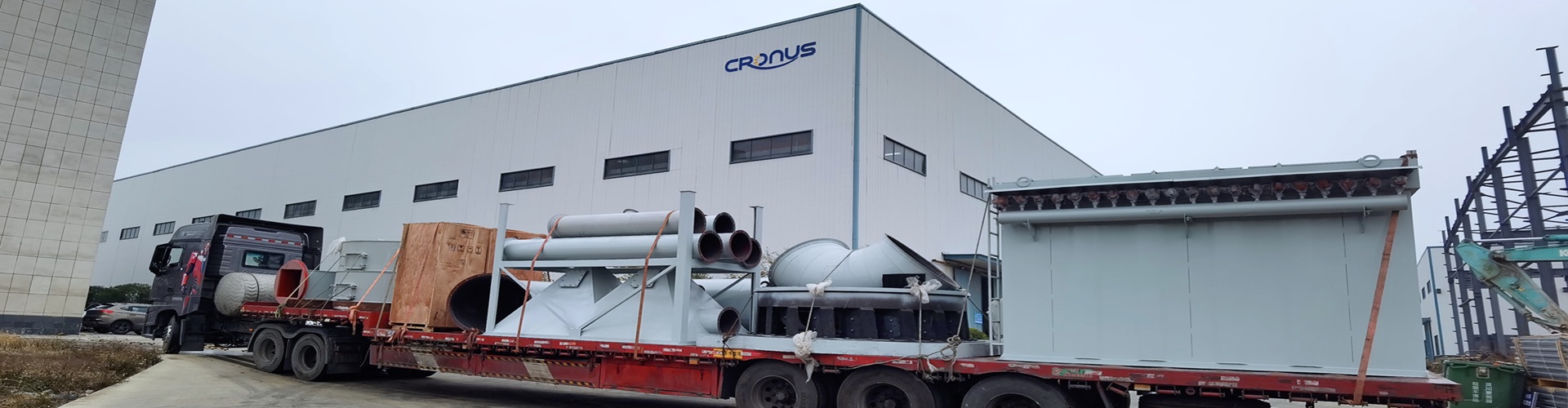
100,000 T/Y Flue Gas Desulfurization Gypsum Powder Production Line in Hubei
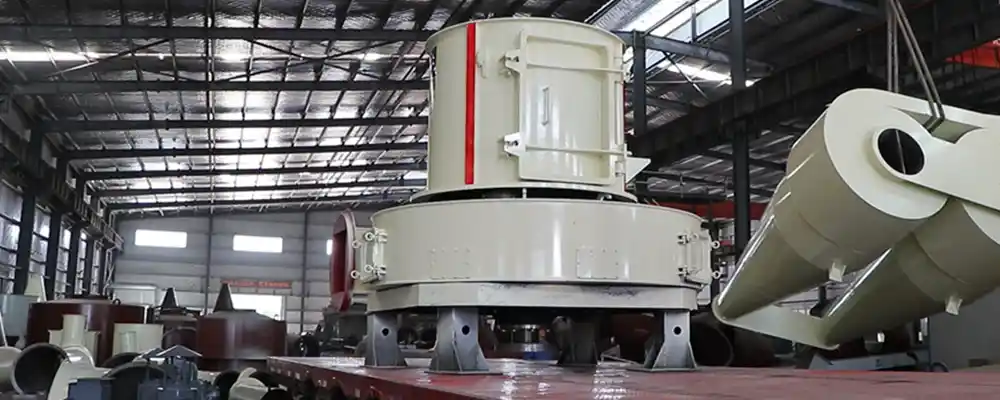
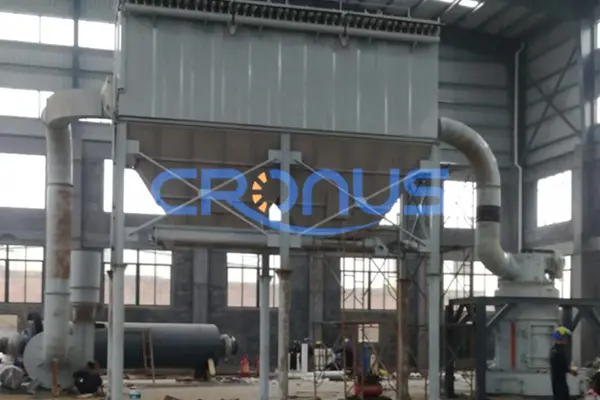
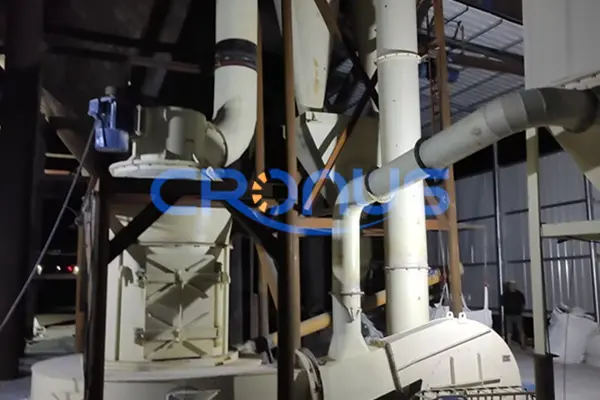
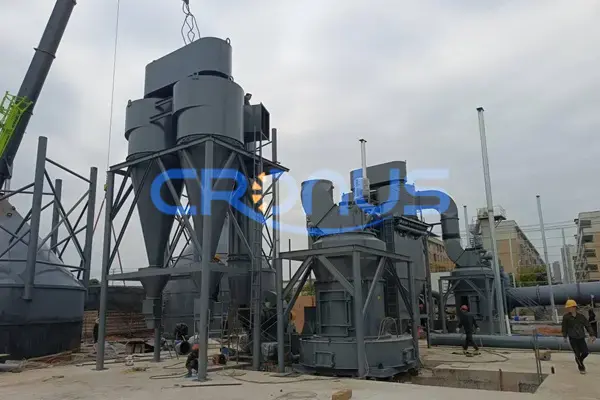
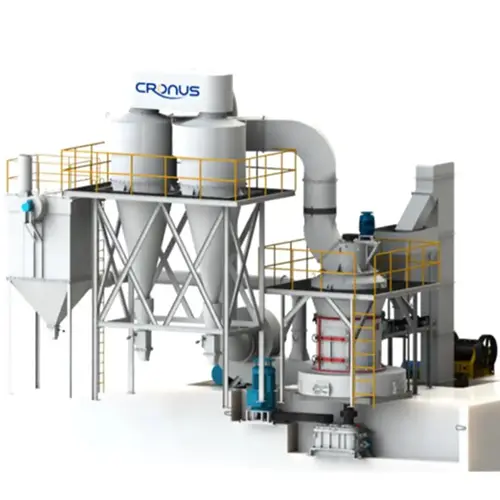
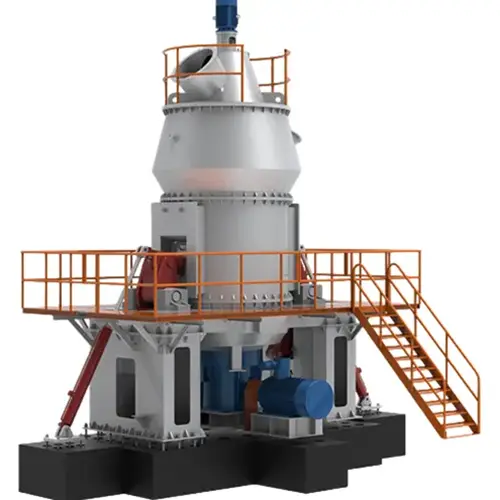
Core Equipment:CRRM1620 Raymond Mill
Processed Materials:Gypsum(10~20mm)
Production Output:5~22t/h
Powder Fineness:300 mesh
This desulfurization gypsum production line has operated exceptionally successfully, achieving a peak hourly output of 22 tons. The physical properties of the finished gypsum powder remain stable, and the production line features a high level of automation. Cronus Machinery provided professional support throughout the entire process.
—— Cronus Machine Customer
Project Overview
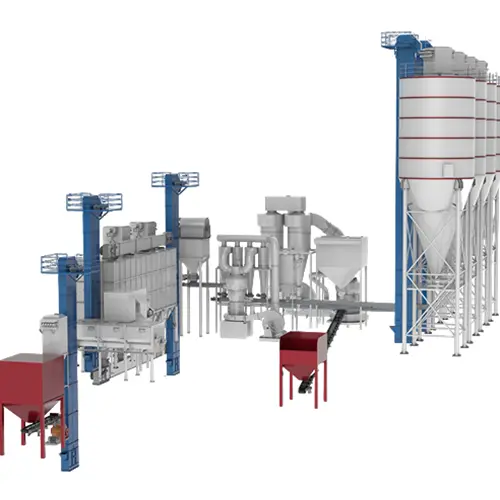
A large-scale resource comprehensive utilization enterprise in Hubei invested in the construction of a technologically advanced flue gas desulfurization (FGD) gypsum powder production line. The core project requirement was to achieve stable conversion from dihydrate gypsum to hemihydrate gypsum. After comprehensive comparison and selection, the enterprise chose the CRRM1620 Raymond Mill from Cronus Machinery, equipped with a rotary kiln to form a combined "calcination-grinding" process. This line can flexibly produce 300 mesh high-quality FGD gypsum powder, with a maximum output of 22 t/h.
Project Details
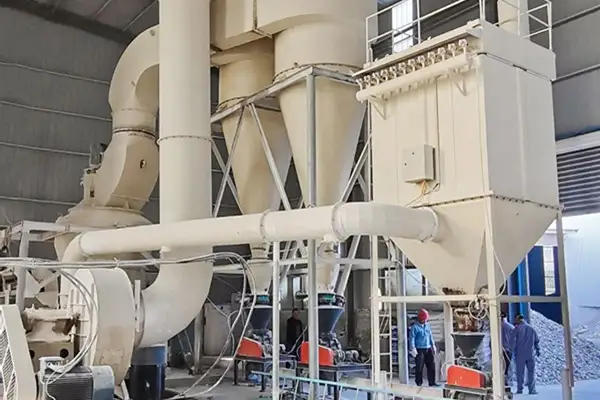
Gypsum Raw Material → Rotary Kiln → Bucket Elevator → Cooling Bin → Belt Conveyor → Raymond Mill
Gypsum raw material is heated in the rotary kiln, where part of the crystalline water is removed, transforming it from dihydrate gypsum (CaSO₄·2H₂O) to hemihydrate gypsum (CaSO₄·0.5H₂O). The calcined high-temperature gypsum is then conveyed by the bucket elevator to the cooling bin for forced cooling. This process not only prevents gypsum material from caking and ensures flowability but also stabilizes the physical properties of the gypsum material and avoids over-grinding.
Cyclone Collector → Packaging Equipment → Finished Product Warehouse
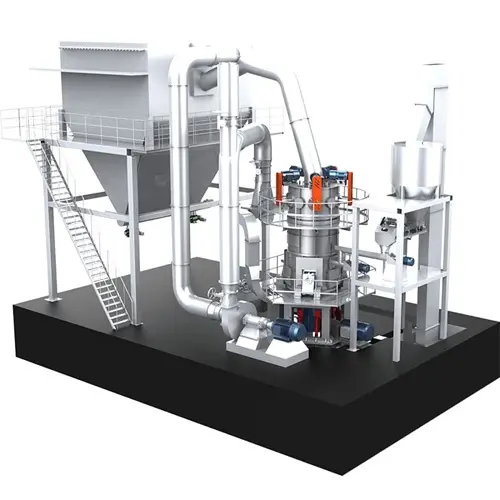
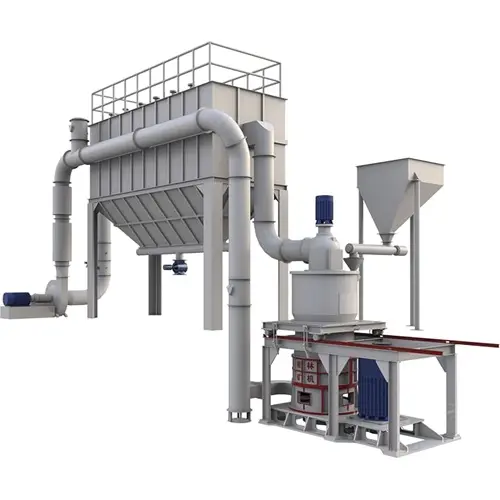
The cooled gypsum material is fed into the CRRM1620 Raymond Mill via the belt conveyor for grinding and pulverization. The ground FGD gypsum powder is carried by the airflow into the classifier. Under the action of the impeller, coarse FGD gypsum particles that do not meet the 300 mesh fineness requirement are separated and fall back into the grinding chamber for re-grinding, while qualified FGD gypsum fine powder enters the cyclone collector with the airflow, where it is separated and collected. The collected finished FGD gypsum powder is packed using automatic packaging equipment and then conveyed to the finished product warehouse.
| Main Equipment | Function Description |
| Rotary Kiln | Core calcination equipment, responsible for converting dihydrate gypsum into hemihydrate gypsum with cementitious properties |
| Cooling Bin | Used for rapidly cooling the calcined high-temperature gypsum, preventing gypsum material from caking and performance degradation |
| Belt Conveyor | Continuously and uniformly feeds the cooled gypsum into the Raymond mill |
| CRRM1620 Raymond Mill | Grinds gypsum material (10~20mm) into 300 mesh FGD gypsum powder |
| Cyclone Collector | Separates and collects the majority of FGD gypsum fine powder |
| Packaging Equipment | Automated weighing and packaging equipment |
Project Advantages
Green and Eco-Friendly: The entire production line adopts a sealed negative-pressure design, combined with high-efficiency cyclone dust collection, resulting in dust emissions far below national standards.
Resource Circulation: The project successfully transforms industrial solid waste (FGD gypsum) into a high-quality raw material widely used in the building materials industry, aligning with the national strategy for circular economic development.
- How to construct a standard foundation for a Raymond Mill?
- Can Sand‑Powder Integrated Machines Truly Achieve Co‑production? Equipment Selection Guide
- Deep‑Dive Analysis of Working Principle of Raymond Mill
- Why do the grinding roller shaft and the central shaft of a Raymond mill need to undergo heat treatm
- European Version, German Version, Vertical Swing Type Grinding Mills: Genuine Upgrade or Fake Concep
- Can a Raymond mill grind multiple materials together?
 Home
Home Products
 About
About Call
Call