

Manganese Ore Grinding Mill and Production Line Process
- Time:2026-05-07
- Views:64
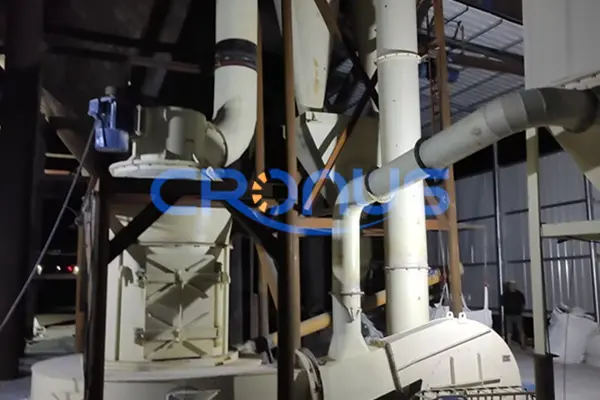
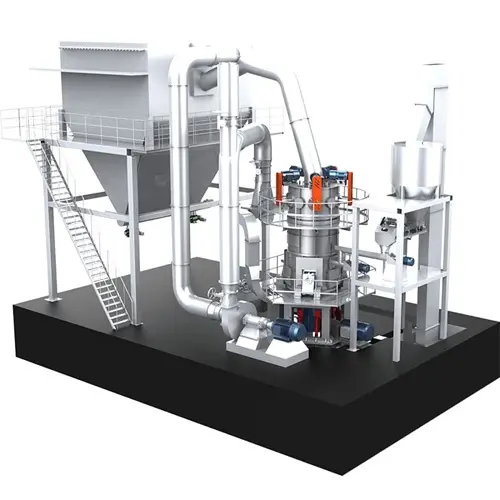
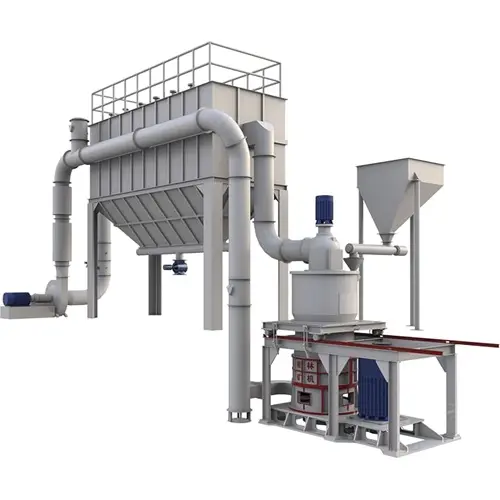
A manganese ore grinding mill is equipment used to grind manganese ore into powder. Manganese ore has a wide hardness range, requiring strict screening and impurity removal pretreatment before grinding. The steel metallurgy industry typically uses pyrolusite and rhodochrosite with relatively low hardness, for which a Raymond mill is the preferred choice. The battery materials industry typically uses psilomelane and braunite with slightly higher hardness, for which an ultra-fine vertical roller mill is recommended.
What is Manganese Ore?
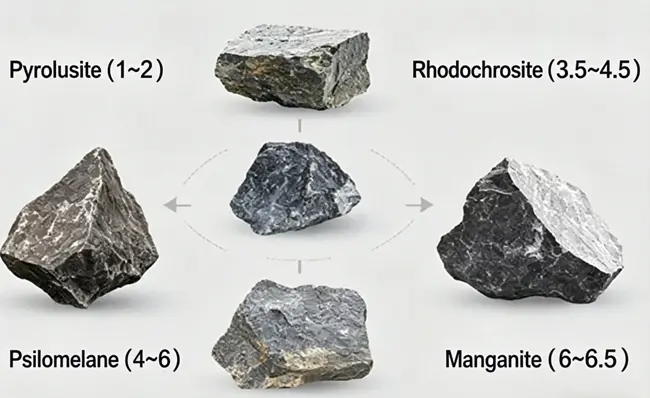
Manganese ore is a natural mineral with manganese as its primary metallic component. Common types include pyrolusite, psilomelane, rhodochrosite, and braunite, with a wide Mohs hardness range (1~6.5), varying from soft to hard, often associated with impurities such as iron, silicon, and aluminum. It is widely used in steel metallurgy and battery materials.
Key Considerations for Manganese Ore Grinding Production Line
Hardness Separation: A single batch of manganese ore often contains multiple minerals such as pyrolusite and braunite, with hardness differences of up to 3 times or more. Directly mixing and grinding such ores can cause abnormal wear of grinding rollers and rings. Therefore, hardness pre-separation must be carried out before crushing, classifying ores by hardness for separate batch processing.
Washing and Desliming: Manganese ore often contains a significant amount of primary slime, ranging from 10% to 30%. This slime is highly viscous and has high moisture content. A scrubber must be used for desliming pretreatment before crushing, which can remove over 80% of the slime from the raw ore.
Ore Crushing: The manganese ore grinding production line follows the principle of "more crushing, less grinding." Two-stage crushing is typically used for lower hardness ores, while three-stage crushing is required for higher hardness ores.
Beneficiation and Purification: For raw ores with complex composition, further beneficiation and purification of the washed ore is required. Conventional 12%~18% manganese oxide ore, after purification by a high-intensity magnetic separator, can achieve a manganese concentrate grade of over 30% with a manganese recovery rate of over 70%.
Safety Protection: Manganese ore dust is combustible and poses a dust explosion risk. Long-term inhalation can cause nervous system damage and lead to manganese poisoning. The production line must be equipped with explosion-proof electrical equipment and venting devices, and workers must wear dust masks and protective eyewear properly.
How to Choose the Right Manganese Ore Grinding Mill?
Steel Metallurgy
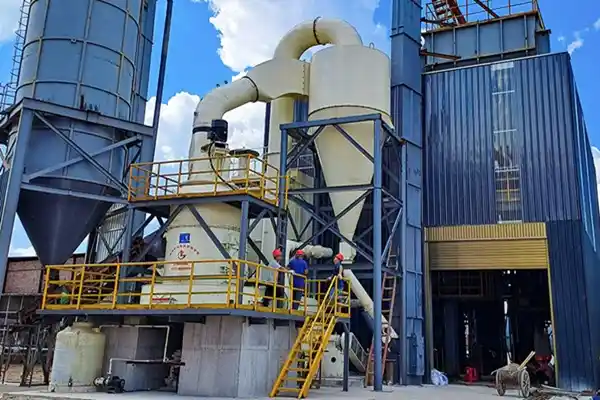
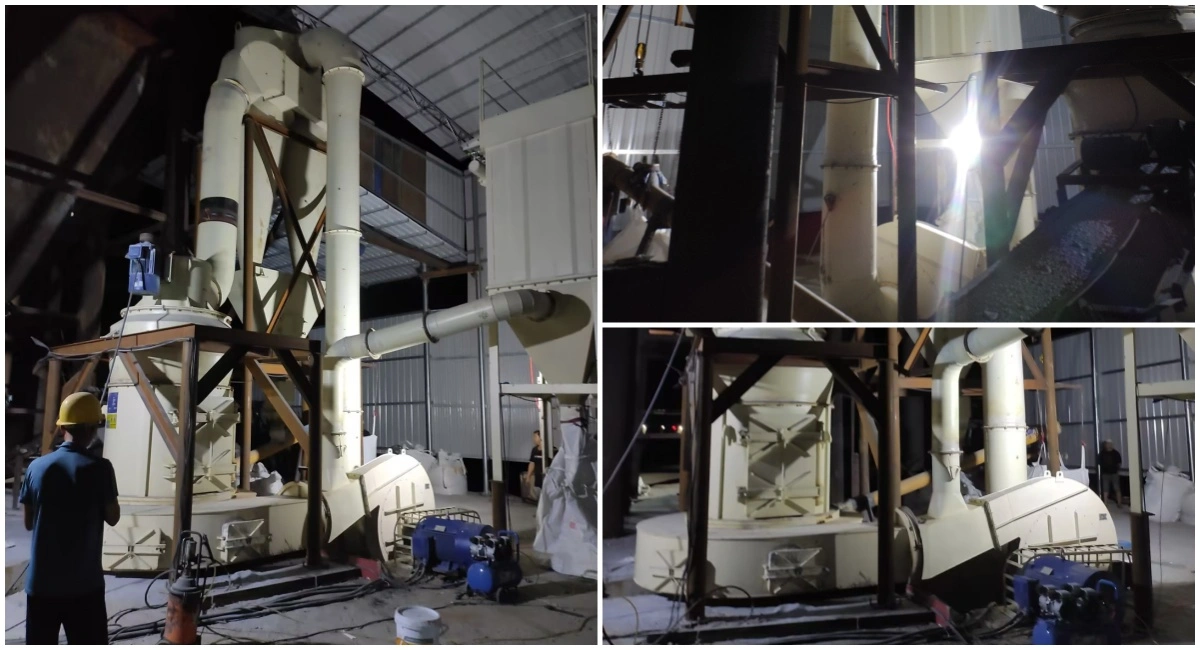
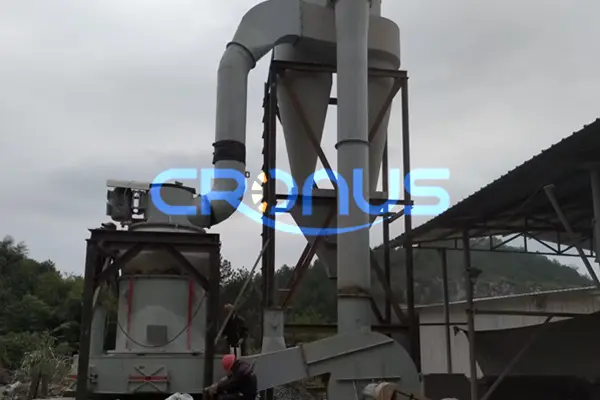
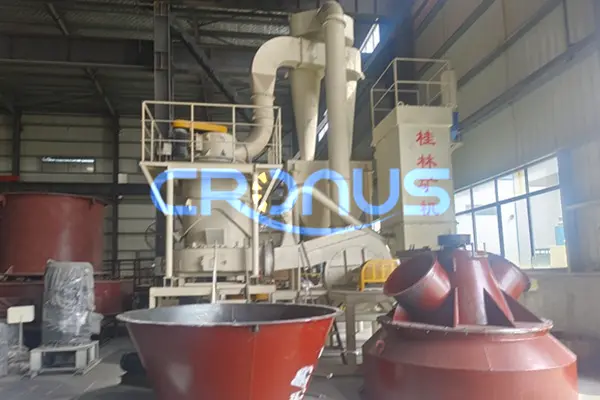
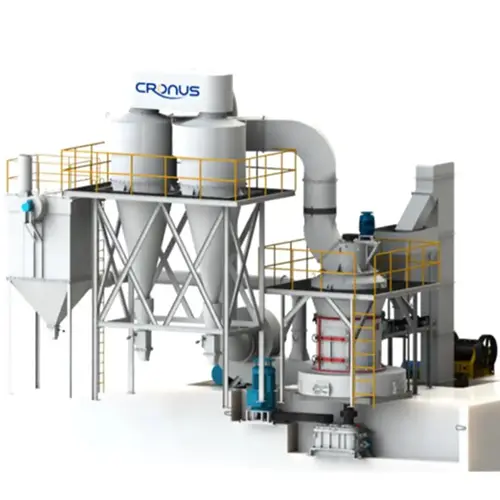
For conventional 80~200 mesh manganese ore powder required in the steel metallurgy industry, a Raymond mill is the preferred choice. The raw materials are typically low-hardness minerals such as pyrolusite and rhodochrosite, with Mohs hardness generally below 4.5. Choosing a Raymond mill offers low investment cost and long grinding roller service life (over 3,500 hours when hardness ≤4), economically and efficiently meeting the batch production needs of ordinary metallurgical auxiliary materials.
Battery Materials
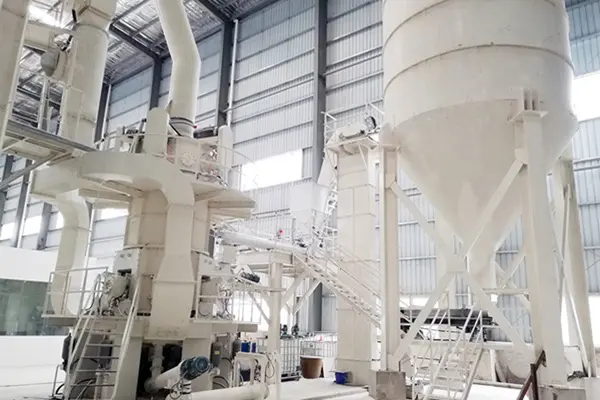
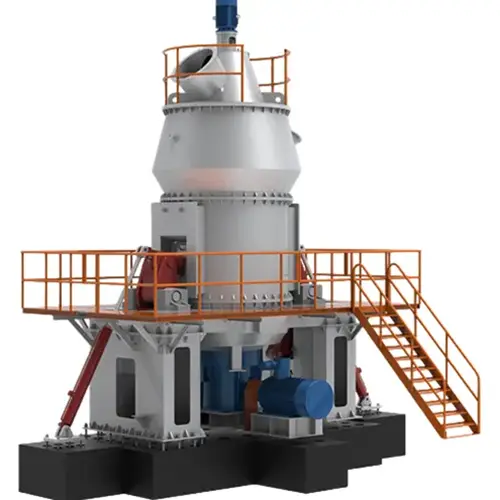
For ultra-fine manganese ore powder required for battery materials (e.g., EMD, lithium manganese oxide), the quality requirements are stringent: fineness ≥800 mesh, iron content ≤50 ppm, particle size distribution Span ≤1.5, and the raw materials are predominantly high-hardness psilomelane and braunite. To reduce wear caused by high-hardness materials and prevent metal contamination, an ultra-fine vertical roller mill with a ceramic lining is recommended. This equipment uses alumina ceramic composite grinding rollers, eliminating iron contamination at the source. The grinding rollers have a hardness of over HV2100, a service life 2-3 times longer than high-chromium materials, and the roller sleeves can be turned over for extended use, with a comprehensive service life of up to 8,000-12,000 hours.
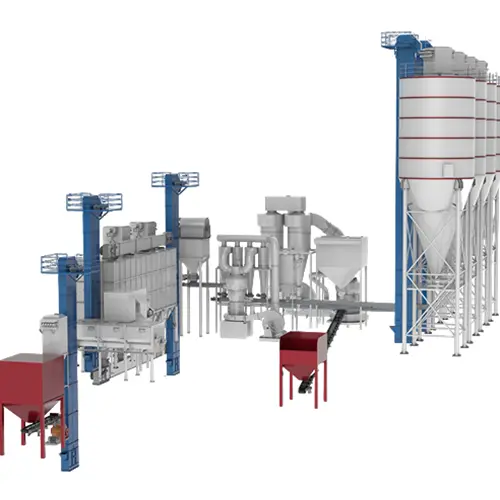
Process Flow of Manganese Ore Grinding Production Line
The raw ore is first passed through a scrubber to remove 10%~30% of primary slime, then undergoes hardness pre-separation via manual sorting or optical sorters, classifying ores such as pyrolusite and braunite for separate processing to avoid abnormal equipment wear caused by mixing soft and hard ores. The pretreated ore is then subjected to multi-stage crushing using jaw crushers and cone crushers. After crushing, the material is first beneficiated by a high-intensity magnetic separator, then undergoes multi-stage permanent magnetic iron removal to eliminate mechanical iron impurities, and is finally evenly fed by a feeder into the grinding mill for grinding and classification. If the manganese ore powder is used for the battery materials industry, the finished powder must also undergo deep iron removal using a high-gradient magnetic separator to strictly control the iron content to ≤50 ppm.
Application Scenarios of Manganese Ore Grinding Mills
Frequently Asked Questions About Manganese Ore Grinding
Can an ultra-fine ring roller mill process manganese ore?
Theoretically, an ultra-fine ring roller mill can process manganese ore with relatively low hardness. However, in the actual field of ultra-fine manganese ore powder processing, the raw materials are predominantly high-hardness psilomelane and braunite. If an ultra-fine ring roller mill is used, equipment wear is severe, operation and maintenance costs are high, and the overall economic efficiency is poor. An ultra-fine vertical roller mill is recommended for this field.
Why not choose a ball mill for manganese ore processing?
Ball mills rely on impact grinding using steel balls and steel liners, which introduces a large amount of mechanical iron, causing excessive iron content in the manganese powder and resulting in yellow or red discoloration. Additionally, they often lead to over-grinding of soft ores and under-grinding of hard ores, creating a bipolar particle size distribution problem that makes it difficult to meet the production requirements of the metallurgical and battery industries.
How to prevent workers from inhaling manganese ore dust in the production line?
The production line adopts a fully enclosed negative-pressure structure and closed-pipe conveying, equipped with a pulse-jet baghouse dust collector. Sealing and leak-proofing are implemented at pipe flanges, discharge ports, and the mill inlet and outlet. The workshop maintains proper ventilation, and dust accumulation is cleaned using wet methods. Dry sweeping is strictly prohibited to prevent secondary dust generation. Workers must wear standard dust masks and protective eyewear.
Recommendations
-
 How to construct a standard foundation for a Raymond Mill?
 -
 Can Sand‑Powder Integrated Machines Truly Achieve Co‑production? Equipment Selection Guide
 -
 Deep‑Dive Analysis of Working Principle of Raymond Mill
 -
 Why do the grinding roller shaft and the central shaft of a Raymond mill need to undergo heat treatm
 Home
Home Products
 About
About Call
Call