

How to construct a standard foundation for a Raymond Mill?
- Time:2026-05-21
- Views:20
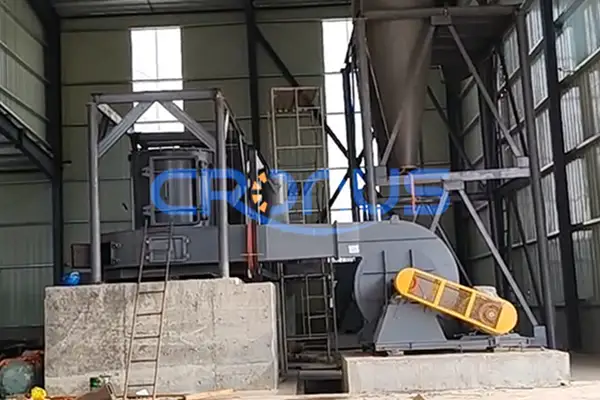
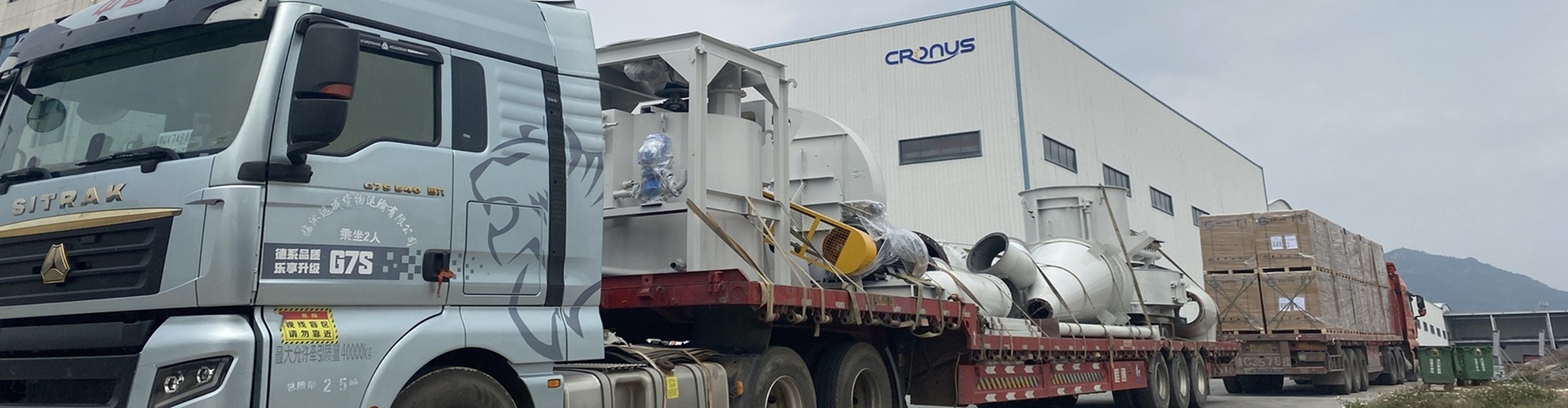
The Raymond mill is a high‑vibration and heavy‑load equipment. Its operational stability directly impacts the production capacity of the production line, finished product quality and service life of wearing parts. As a rigid connecting carrier between the equipment and the ground, the concrete foundation shall be constructed in strict accordance with industrial standards.
The quality of foundation construction for Raymond mills is often overlooked by users. Many customers cut corners to save time and money, either simplifying construction procedures or directly using a steel frame as the foundation. Consequently, the equipment vibrates severely and malfunctions frequently, resulting in higher rework costs. Drawing on over 50 years of experience accumulated by Cronus Machinery, we will explain how to properly construct the concrete foundation for Raymond mills.
First, it should be clarified that the specifications below apply only to fixed standard Raymond mills. Mobile Raymond mills are designed for temporary production lines, equipped with self‑contained chassis, and require no concrete foundation pouring.
Why Concrete Is Used for Raymond Mill Foundations
Vibration Suppression and Resonance Avoidance: Raymond mills generate intense vibration during operation. The concrete foundation suppresses vibration via its own weight and rigidity. A lightweight foundation or steel frame cannot dissipate vibration, easily causing resonance with the equipment and amplifying vibration amplitude by 5 to 10 times. Minor issues include broken anchor bolts and eccentric wear of grinding rollers and rings, while severe cases lead to equipment collapse and wall cracking of the workshop.
Precision Assurance and Stable Operation: The main unit, reducer, fan and classifier of a Raymond mill must be mounted on the same reference plane with strict coaxiality and parallelism. An uneven foundation causes the transmission system to run askew, resulting in rapid bearing burnout and uneven wear of grinding rollers and rings, cutting their service life by half.
Uniform Load Distribution and Equipment Stability: A Raymond mill weighs dozens of tons. Uneven foundation stress causes settlement and warping within half a year, leading to equipment deflection and transmission misalignment, which triggers various failures. A high‑quality concrete foundation evenly distributes the load and prevents settlement for more than a decade.
Design Standards for Raymond Mill Foundations
The foundation design of Raymond mills shall strictly comply with General Code for Construction and Acceptance of Mechanical Equipment Installation Engineering (GB 50231) and professional technical drawings provided by the manufacturer. Core technical parameters must not be modified arbitrarily.
Weight Standard: The total weight of the concrete foundation shall be at least twice the total weight of the equipment. The dynamic reaction force during operation is approximately 0.3‑0.5 times the self‑weight of the mill. An underweight foundation cannot resist vibration, causing shaking and wobbling of the equipment.
Depth Requirements: The foundation burial depth shall be ≥1.5 m and at least 0.2 m below the local frost depth to prevent foundation deformation caused by frost heave in winter and thaw settlement in summer. The foundation beneath the main unit and reducer shall be further deepened by 30‑50 cm to form a reinforced bearing platform, as these two areas bear concentrated stress.
Material Specifications: C25‑C30 concrete shall be adopted for the foundation; C20 or lower‑grade concrete is strictly prohibited due to insufficient strength that causes cracking after years of use. A two‑way double‑layer steel mesh shall be laid inside the foundation with main bar diameter ≥16 mm and bar spacing ≤200 mm. 3‑4 additional reinforcing bars shall be arranged around anchor bolt pre‑holes to prevent hole wall cracking.
Pre‑hole Requirements: The position deviation of anchor bolt pre‑hole centers shall be ≤5 mm. Hole depth can only be deeper (max. 20 mm deeper) rather than shallower. Pre‑holes for anchor bolts of the main unit and reducer must be reserved during one‑time pouring; post‑pouring drilling is forbidden as it breaks internal steel bars and renders the foundation invalid.
Standard Foundation Construction Procedures for Raymond Mills by Cronus Machinery
The installation and foundation construction of our Raymond mills strictly follow industrial standards. The detailed construction procedures are as follows:
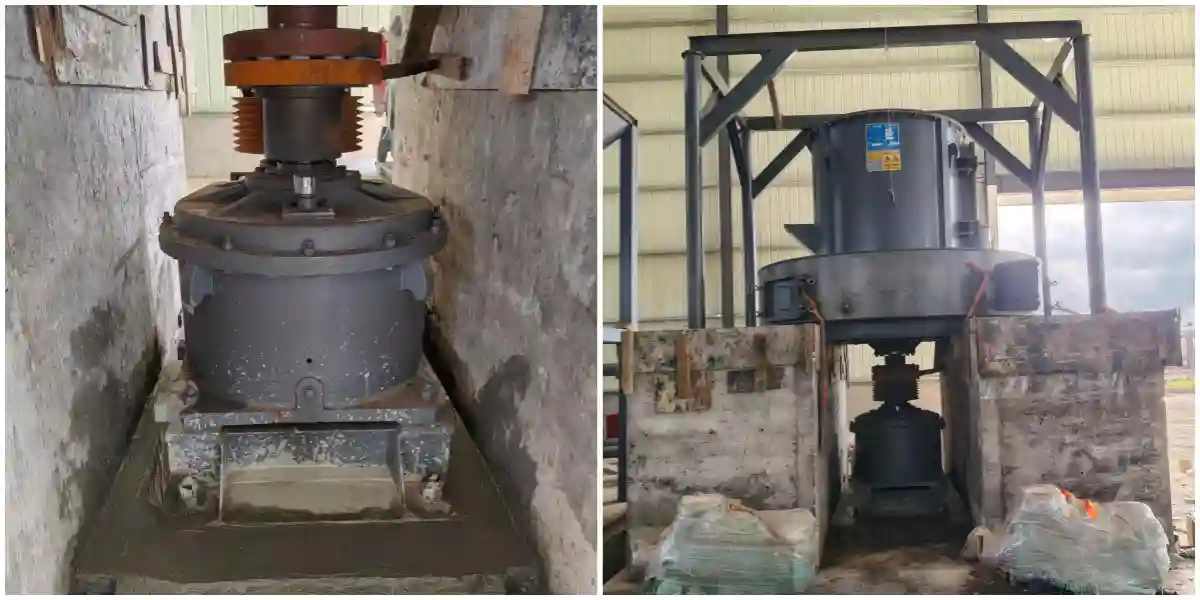
Site Investigation: Before construction, our technical team conducts on‑site surveys to inspect ground conditions, geological features, groundwater levels and underground pipelines. Customized professional design drawings are provided for customers based on total equipment weight, component layout, anchor hole dimensions, cable trench routing and surrounding building conditions.
Foundation Pit Excavation: Excavate the foundation pit strictly in accordance with Raymond mill foundation drawings. Level and compact the pit bottom after excavation, completely removing loose soil, silt and debris. If foundation bearing capacity fails to meet long‑term operation requirements of the mill, sand‑gravel replacement with thickness ≥300 mm shall be adopted with layered compaction and compaction coefficient ≥0.95 to ensure stable foundation load‑bearing performance.
Steel Bar Binding: Bind steel mesh strictly in accordance with construction specifications, ensuring steel bar lap length ≥35 times bar diameter and binding point spacing ≤300 mm. Firmly support with steel formwork to avoid form expansion or displacement during concrete pouring. Precisely arrange and fix pre‑hole molds for anchor bolts of the mill main unit, fan and reducer to prevent position deviation during pouring.
Foundation Pouring: Adopt continuous concrete pouring and compact with immersion vibrators with vibration spacing strictly controlled within 400 mm to eliminate concrete defects such as honeycombing, pitting and voids. Cover with geotextile for water curing within 12 hours after pouring. Thermal insulation and anti‑freezing measures are adopted for winter construction to guarantee foundation quality.
Complete Equipment Installation: Remove formwork and pre‑hole molds after concrete strength of the Raymond mill foundation reaches over 75% of the designed strength. Lift the entire Raymond mill into position and precisely adjust the levelness and coaxiality of the main unit to meet installation reference requirements.
Secondary Grouting: Non‑shrinkage fine aggregate concrete one grade higher than foundation concrete is used for secondary grouting of anchor bolts with grout layer thickness strictly controlled at 30‑50 mm. Tighten anchor bolts after the grout layer is cured for more than 3 days to ensure firm equipment installation.
- Previous Article:没有了!
- Next Article:Why do the grinding roller shaft and the central shaft of a Raymond mill need to undergo heat treatm
- Can Sand‑Powder Integrated Machines Truly Achieve Co‑production? Equipment Selection Guide
- Deep‑Dive Analysis of Working Principle of Raymond Mill
- European Version, German Version, Vertical Swing Type Grinding Mills: Genuine Upgrade or Fake Concep
- Comparative Analysis of Inverted Cone Rotor and Cylindrical Rotor for Raymond Mill
 Home
Home Products
 About
About Call
Call