

Monoammonium Phosphate Grinding Mill and Production Line Process
- Time:2026-05-15
- Views:23
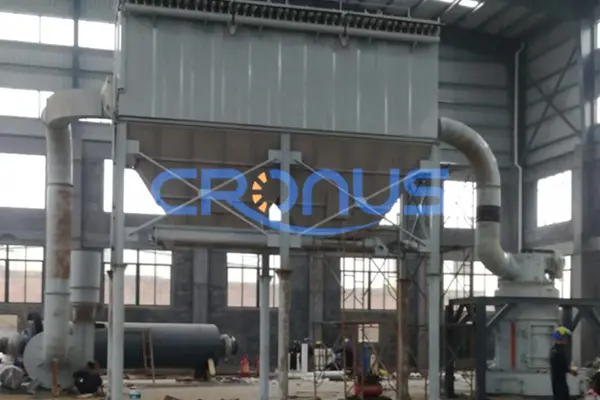
Monoammonium Phosphate Pulverizer refers to equipment used for grinding Monoammonium Phosphate granules into powder. Since Monoammonium Phosphate is prone to moisture absorption and caking, as well as melting and decomposition when heated, an open-circuit pulverizer must be used during grinding. The production line requires strict control of material moisture content, temperature, and grinding duration.
What is Monoammonium Phosphate?
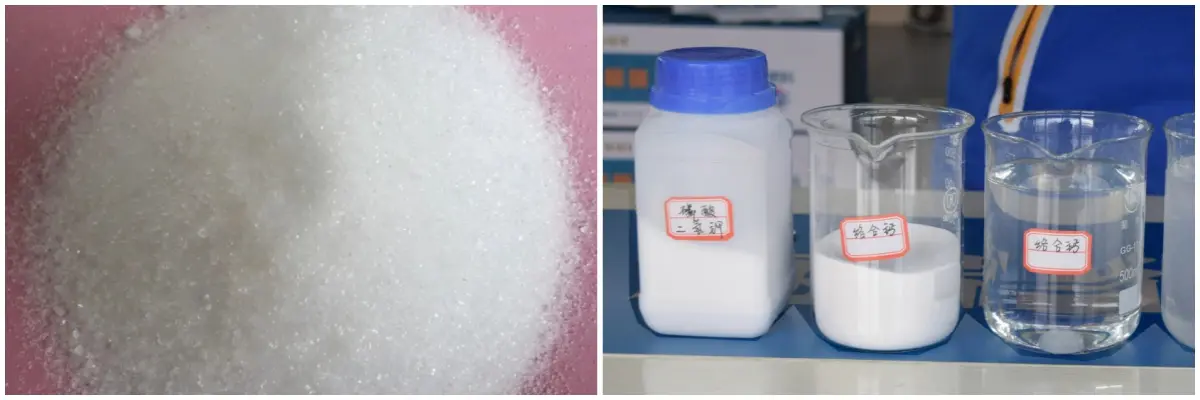
Monoammonium Phosphate (chemical formula: NH₄H₂PO₄, referred to as MAP), also known as Ammonium Dihydrogen Phosphate, is a heat-sensitive, moisture-absorbent, weakly acidic and corrosive material that is difficult to grind. Its decomposition temperature is 190°C. In actual production, when the ambient temperature exceeds 60°C, ammonia escape and nutrient loss will occur, and the material may even melt and adhere to equipment. When the relative humidity exceeds 60%, the material readily absorbs moisture and cakes, easily causing blockages in pipelines and the grinding chamber. The aqueous solution of the material is weakly acidic, and ordinary carbon steel is highly susceptible to rapid corrosion and wear. The dust poses an explosion risk, with a lower explosion limit of approximately 40 g/m³. Therefore, strict safety protection measures must be implemented during production and processing.
Key Considerations for Monoammonium Phosphate Grinding Production Line
Strict Temperature Control: The Monoammonium Phosphate material must not be dried using hot air. All heat sources must be completely isolated from the material system. The equipment must be equipped with a high-power forced air cooling system to maintain the grinding chamber temperature below 50°C, thereby preventing risks such as ammonia escape, caking, and machine blockage.
Comprehensive Explosion Protection: The production line must be designed according to dust explosion protection standards. All equipment and pipelines must be anti-static grounded. Explosion venting panels shall be installed at critical locations. An explosion-proof pulse dust collector must be provided, supplemented by a nitrogen protection system, to completely eliminate the risk of combustion and explosion.
Equipment Corrosion and Wear Resistance: Given the weak acidity and corrosiveness of Monoammonium Phosphate, components that come into direct contact with the material, such as grinding rollers, grinding rings, liners, and conveying pipelines, shall be made of wear-resistant and corrosion-resistant alloy materials. Ordinary carbon steel will quickly corrode and develop holes, which not only affects production but also poses safety risks.
Moisture Protection: All contact points with the material, including the raw material silo, pulverizer, conveying pipelines, and finished product silo, must be fully sealed. During the rainy season, dry air shall be introduced to assist in moisture protection. Finished powder is best packaged on the same day of production; the probability of caking increases significantly if stored for more than 24 hours.
How to Select a Suitable Monoammonium Phosphate Grinding Mill?
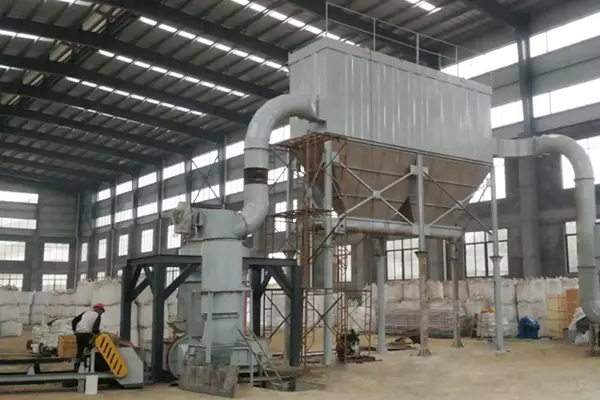
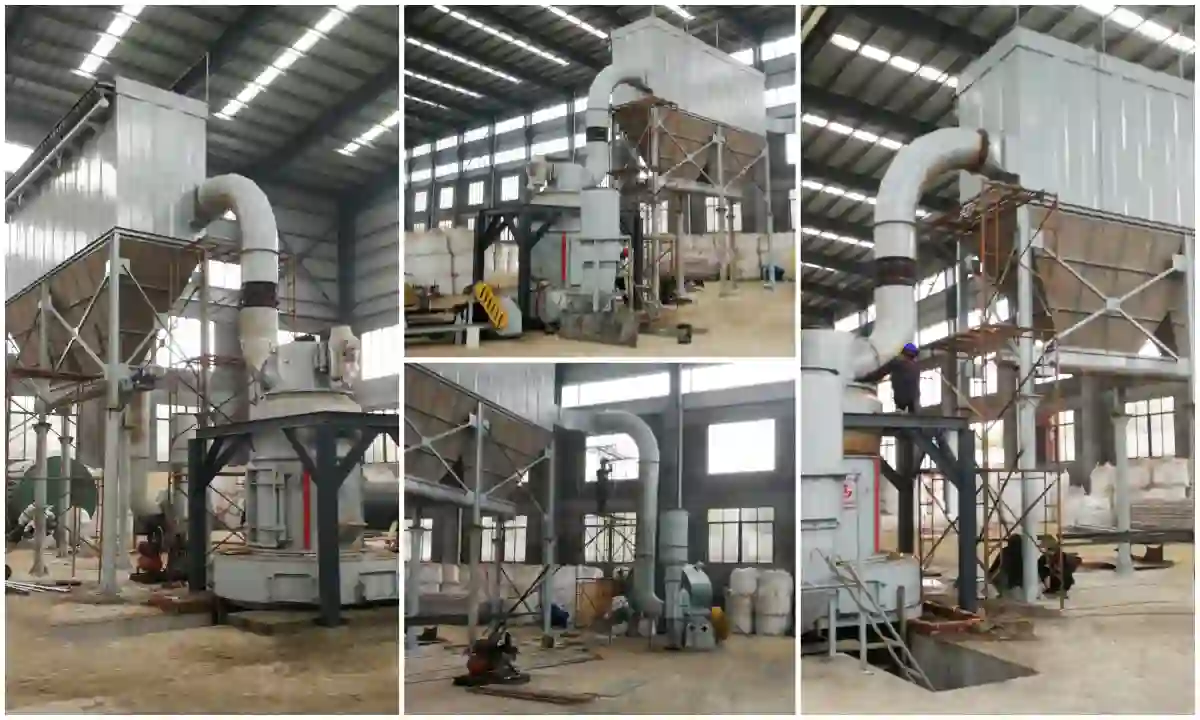
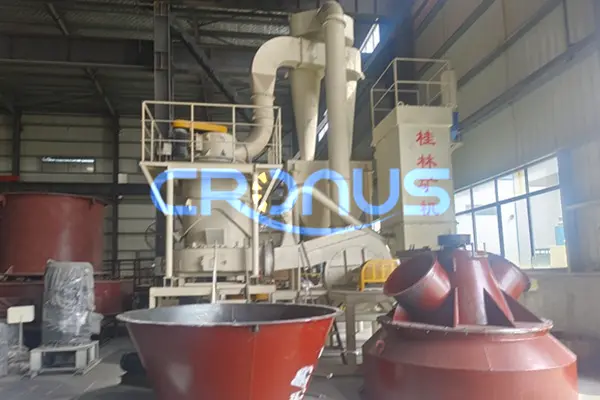
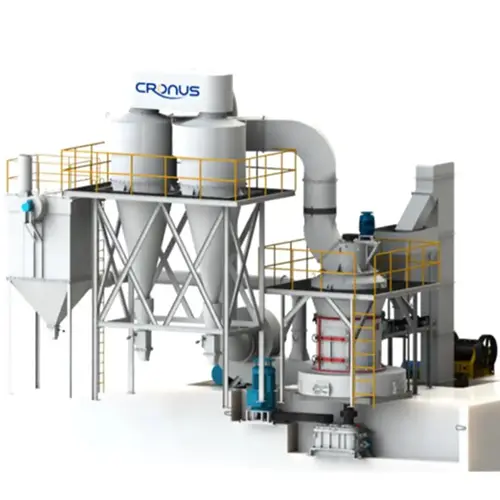
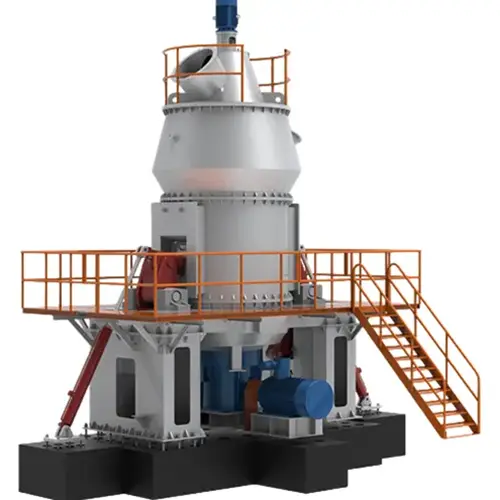
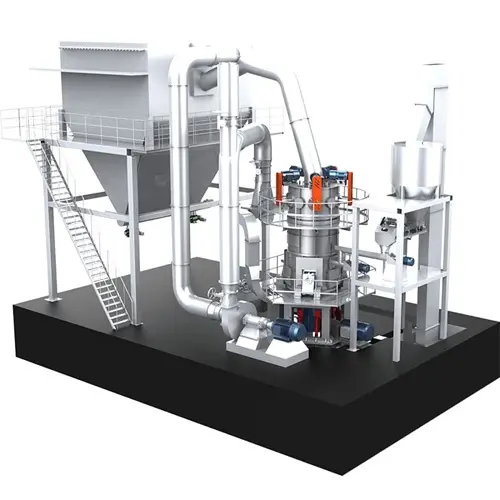
In the industry, Monoammonium Phosphate powder is mainly used in conventional fertilizer and water-soluble fertilizer applications with a particle size range of 80 to 200 mesh. Currently, the most technologically mature and cost-effective processing equipment in this field is the open-circuit Raymond mill. Vertical roller mills generate high grinding pressure and excessive temperature rise in the grinding chamber, which readily causes Monoammonium Phosphate to melt, coat the rollers, and adhere to the chamber walls. Typically, operation must be stopped for cleaning after just a few hours, making continuous and stable production impossible. While ball mills operate stably, they have disadvantages such as high energy consumption, low capacity, and uneven finished product particle size; they also face the issue of material caking due to grinding temperature rise. Furthermore, an open-circuit Raymond mill suitable for processing Monoammonium Phosphate must be equipped with an air cooling system and a high-power fan. During grinding, these can rapidly remove heat from the grinding chamber, preventing issues such as ammonia escape, caking, and equipment adhesion caused by excessive temperature rise.
Process Flow of Monoammonium Phosphate Grinding Production Line
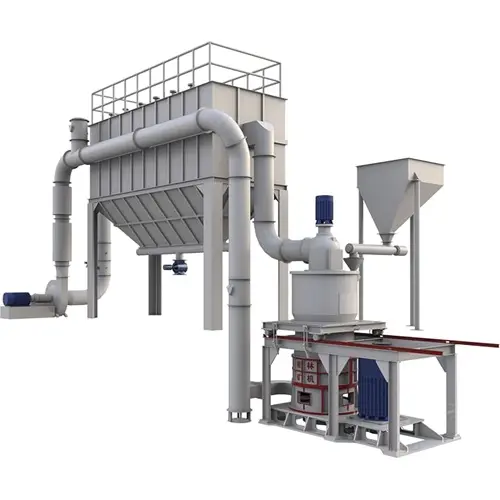
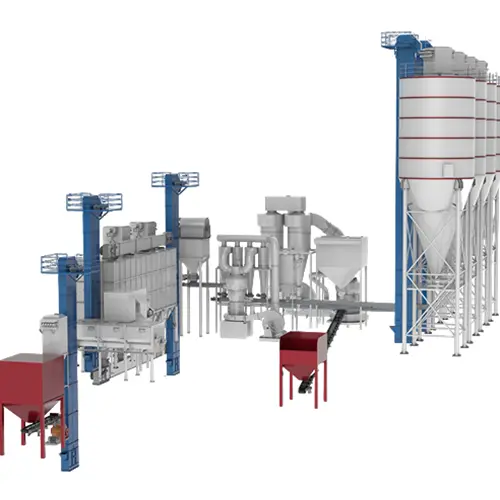
Monoammonium Phosphate grinding must adopt an open-circuit process, equipped with a high-power forced air cooling system, to prevent heat accumulation and excessive temperature rise in the grinding chamber. The production process flow is as follows:
Lump Monoammonium Phosphate raw material is transported by forklift to the raw material silo. A vibrating feeder at the bottom of the silo evenly feeds the material into the main unit of the open-circuit Raymond mill. The equipment is equipped with an independent forced air cooling system. The main fan continuously draws in ambient fresh air into the grinding chamber. While grinding the material, the forced air cooling rapidly removes the grinding heat, maintaining the grinding chamber temperature stably below 50°C. The material is discharged immediately after a single grinding pass. The powder is carried by the airflow into the cyclone collector, where most of the finished powder settles and is collected. A small amount of dust enters the explosion-proof pulse dust collector for recovery and purification. The exhaust gas is discharged after ammonia removal treatment to meet emission standards.
Application Scenarios of Monoammonium Phosphate Grinding Mill
Frequently Asked Questions about Monoammonium Phosphate Grinding
Why must an open-circuit system be used for the Monoammonium Phosphate grinding mill?
In a closed-circuit system, heat cannot dissipate outward, causing the grinding chamber temperature to continuously accumulate and rise. After a period of operation, the Monoammonium Phosphate will decompose, release ammonia, melt, cake, and block the equipment, ultimately forcing a shutdown for cleaning and maintenance. An open-circuit system continuously draws in ambient fresh air, allowing the heat generated during grinding to be directly discharged out of the system with the airflow, thereby stably controlling the grinding chamber temperature.
What should be done if the Monoammonium Phosphate powder cakes severely?
Over 90% of caking issues during Monoammonium Phosphate processing are caused by either excessive grinding chamber temperature or material moisture absorption. Therefore, the production line must strictly maintain the grinding chamber temperature below 50°C. At the same time, thoroughly inspect the sealing of the entire production line, focusing on sealing critical areas prone to moisture ingress such as pipeline connections and access doors, to prevent external humidity from entering. Finished powder should be packaged immediately after production to avoid prolonged storage in the silo. If necessary, introduce dry air for moisture protection.
How to address strong ammonia odor and severe nutrient loss during Monoammonium Phosphate grinding?
If an abnormally strong ammonia odor occurs during production, it is usually due to excessive grinding chamber temperature causing the Monoammonium Phosphate to thermally decompose and release ammonia gas. In this case, the fan air volume should be adjusted to the maximum setting to rapidly lower the grinding chamber temperature by enhancing the air cooling effect. Subsequently, check whether the feed rate is too high. Excessive feed will prolong the material's residence time in the grinding chamber, leading to heat accumulation and material decomposition, further worsening the ammonia odor. Additionally, regularly clean the scale and adhered material from the inner wall of the grinding chamber to prevent such accumulated material from repeatedly decomposing due to heat and continuously releasing ammonia gas.
Recommendations
-
 How to construct a standard foundation for a Raymond Mill?
 -
 Can Sand‑Powder Integrated Machines Truly Achieve Co‑production? Equipment Selection Guide
 -
 Deep‑Dive Analysis of Working Principle of Raymond Mill
 -
 Why do the grinding roller shaft and the central shaft of a Raymond mill need to undergo heat treatm
 Home
Home Products
 About
About Call
Call