

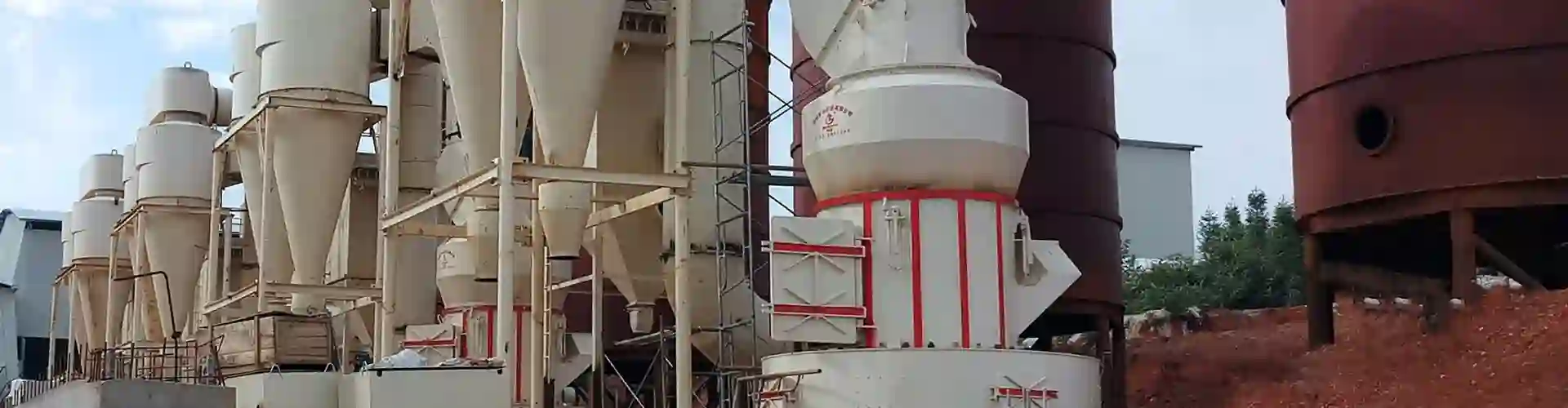
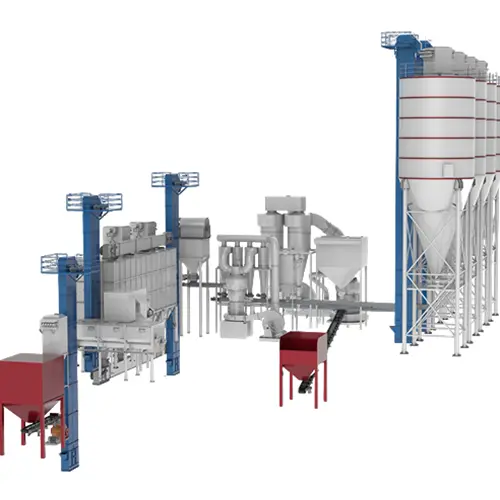
CR Calcium Hydroxide Production Line
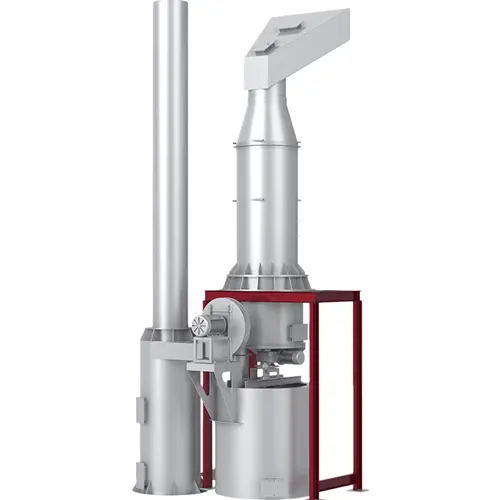
Function Description:The core equipment of a calcium hydroxide production line includes a lime slaker, water mist dust collector, hydrated lime classifier, and hydrated lime grinding mill, supporting the customized production of various grades of calcium hydroxide.
Suitable Materials:Calcium hydroxide (slaked lime or hydrated lime)
Calcium Hydroxide Production Line Information Introduction
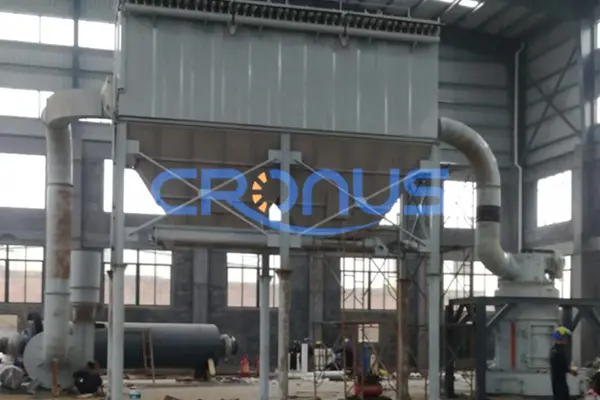
The CR Calcium Hydroxide Production Line is a one-stop production line specially developed by Cronus Machinery to address the characteristics of calcium hydroxide such as easy adhesion and agglomeration. The core equipment includes Lime Slaker, Water Mist Dust Collector, Hydrated Lime Classifier, and Hydrated Lime Grinding Mill, adopting a Distributed Control System (DCS).
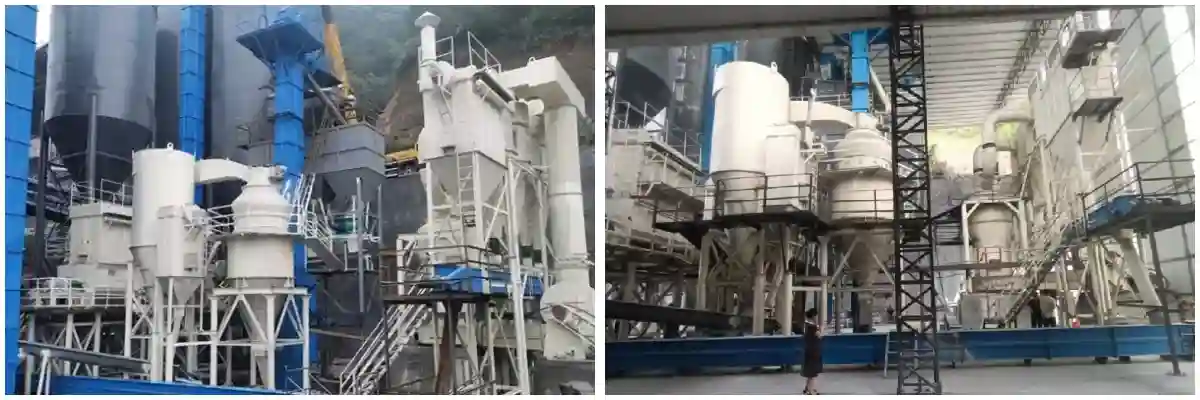
The finished product fineness is precisely controllable from 80~800 mesh. Equipment volume and finished product output can be customized (5~50t/h). It can produce calcium hydroxide with high purity (≥96%), high fineness (325 mesh sieve residue ≤2%), and high specific surface area (≥17m²/g), meeting the customized production requirements for different grades (industrial, environmental, food, pharmaceutical, etc.) of calcium hydroxide powder.
Features and Advantages of Calcium Hydroxide Production Line
The Calcium Hydroxide Production Line mainly consists of hydration, dust collection, classification, grinding, and control systems. It adopts a two-stage hydration design and multiple dust collection technologies including pulse and water mist. The hydration rate reaches over 98%, exhaust emissions ≤10mg/m³, and wastewater discharge nearly zero. Capacity and volume can be customized, with investment costs significantly lower than traditional 3~7 stage processes (reduced by over 30%). The entire system is designed specifically for calcium hydroxide characteristics, enabling flexible production of calcium hydroxide powder with high purity, high fineness, and high specific surface area to meet customized customer requirements.
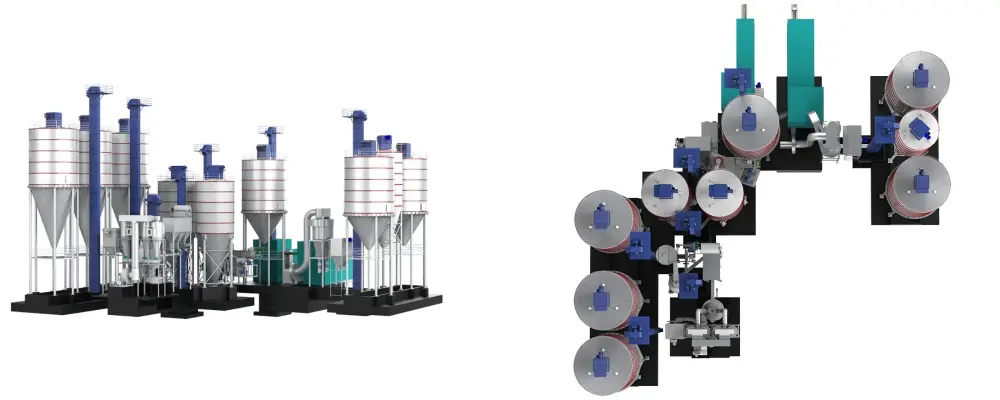
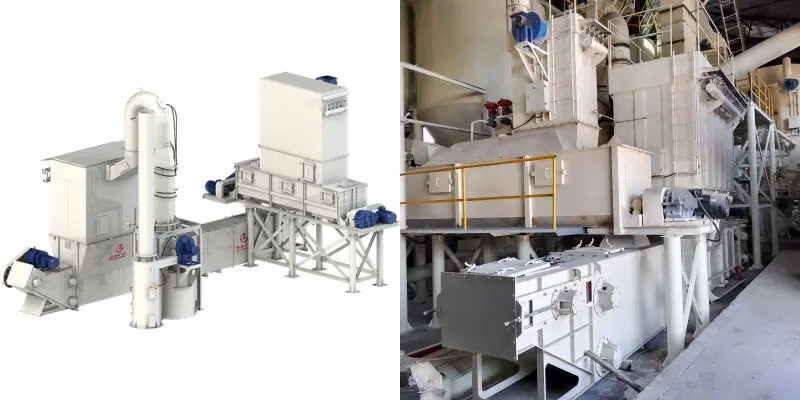
Hydration System: Lime Slaker
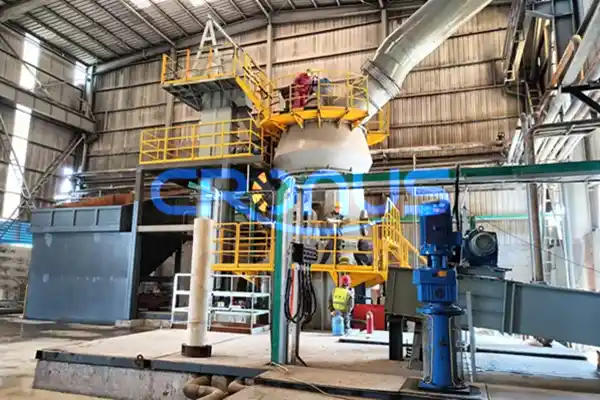
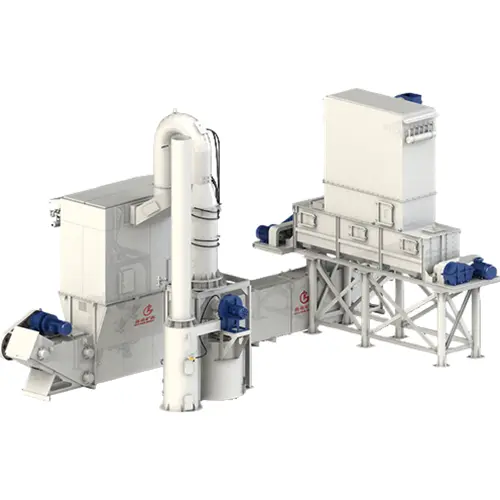
Adopting modular hydration modules with two-stage hydration design, the Lime Slaker features customizable capacity and volume, significantly reducing investment costs for steel structures, foundations, and plant buildings. It offers strong heat preservation capacity and high hydration efficiency (≥98%), outperforming traditional 3~7 stage designed slakers. Through precise control of water-to-lime ratio, it produces high-activity calcium hydroxide.
Dust Collection System: Water Mist Dust Collector
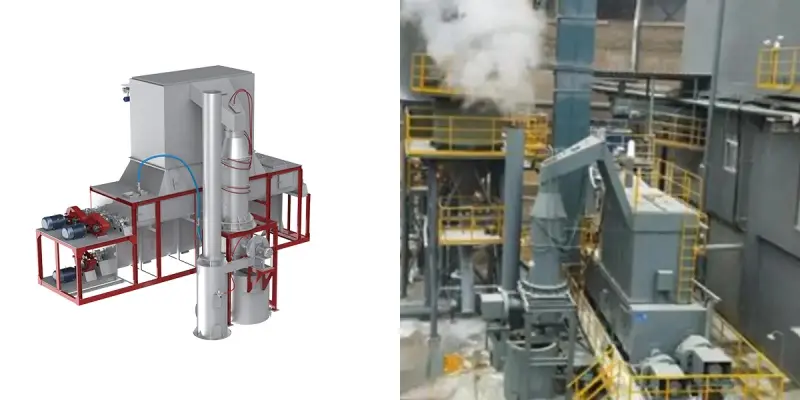
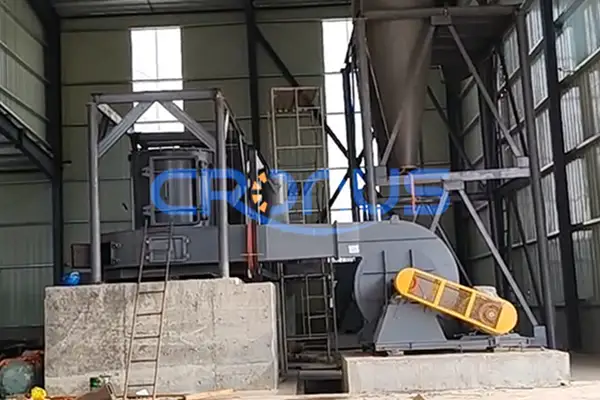
Utilizing patented pulse water mist dust collection technology, the pulse bag filter and Water Mist Dust Collector work in tandem, connected in series at the lime slaker. While recovering heat to promote the hydration reaction, it also effectively collects dust. Through multiple dust collection technologies and water resource recycling, ultra-low emissions are achieved (exhaust emissions ≤10mg/m³, wastewater discharge nearly zero).
Classification System: Hydrated Lime Classifier
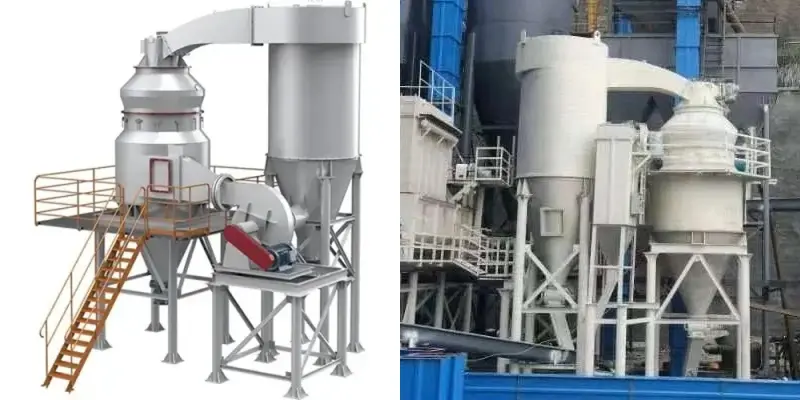
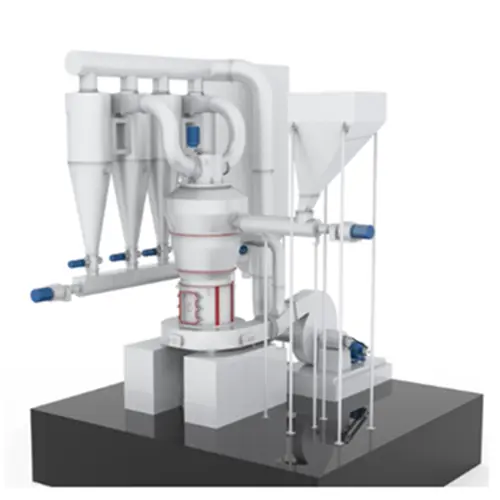
The Hydrated Lime Classifier adopts advanced pre-classification technology, directly classifying hydrated lime after hydration without grinding, solving the problems of ineffective grinding and over-grinding found in traditional processes of grinding first and then classifying. It flexibly works with the Hydrated Lime Grinding Mill to create customized production lines, meeting the production requirements for different grades (industrial, environmental, food, pharmaceutical, etc.) of calcium hydroxide powder.
Grinding System: Hydrated Lime Grinding Mill
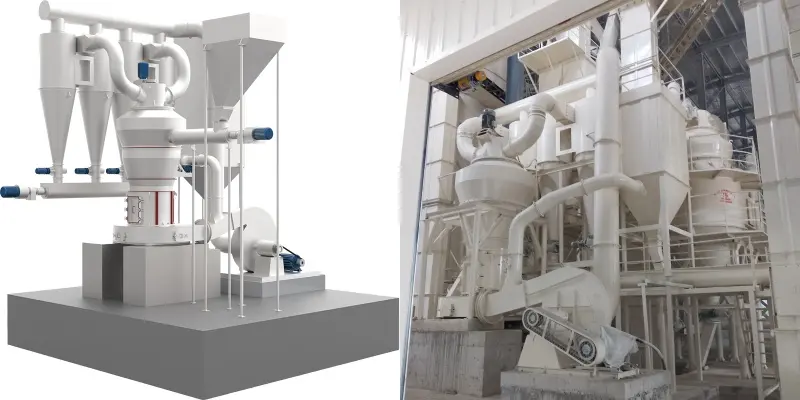
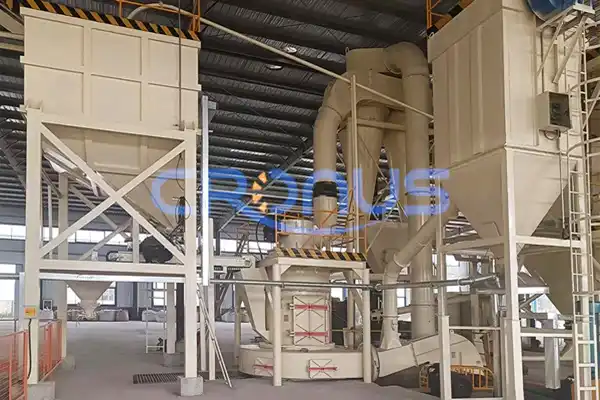
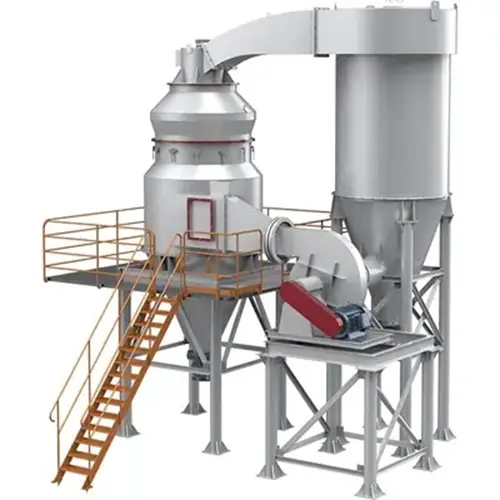
The Hydrated Lime Grinding Mill is specially developed and modified for calcium hydroxide characteristics, integrating dispersion, grinding, and classification functions. With full-process anti-adhesion design and triple dispersion technology, it easily solves problems such as calcium hydroxide agglomeration, clogging, adhesion, and hardening. Finished product particle size is precisely controllable, making it the core equipment for producing calcium hydroxide with high fineness, high purity, and high specific surface area.
Control System: Distributed Control System
Adopting a Distributed Control System (DCS) for centralized intelligent control. The system features one-click or zone-based start/stop, fault warning, and interlocking shutdown functions. The interface is intuitively designed, displaying maintenance reminders and production statistics. With reasonably distributed logic modules and simple operation procedures, it reduces labor costs and the risk of misoperation shutdowns, comprehensively improving production efficiency.
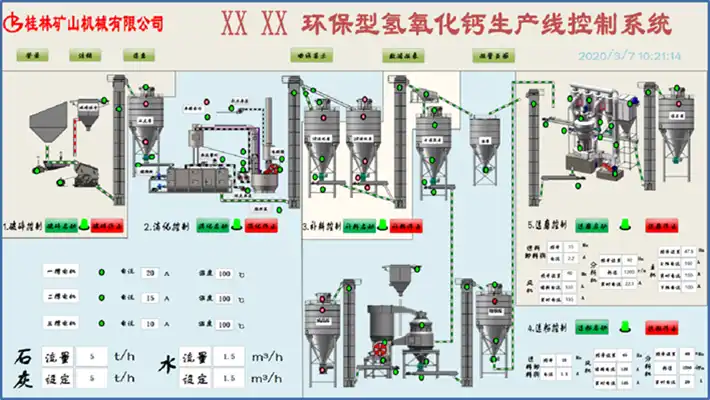
Process Flow of Calcium Hydroxide Production Line
Limestone → Calcination → Quicklime → Crushing → Lime Slaker → Water Mist Dust Collector → Hydrated Lime after Hydration → Hydrated Lime Classifier → Hydrated Lime Grinding Mill → Finished Product Packaging
Raw Material Preparation
High-quality limestone with calcium carbonate content ≥90% is typically used as raw material. It undergoes primary crushing via jaw crusher to ensure kiln feed particle size (≤50mm, excessive size is unfavorable for calcination). Vibrating screens and magnetic separators are then used for screening and impurity removal to ensure the whiteness and purity of the finished calcium hydroxide powder.
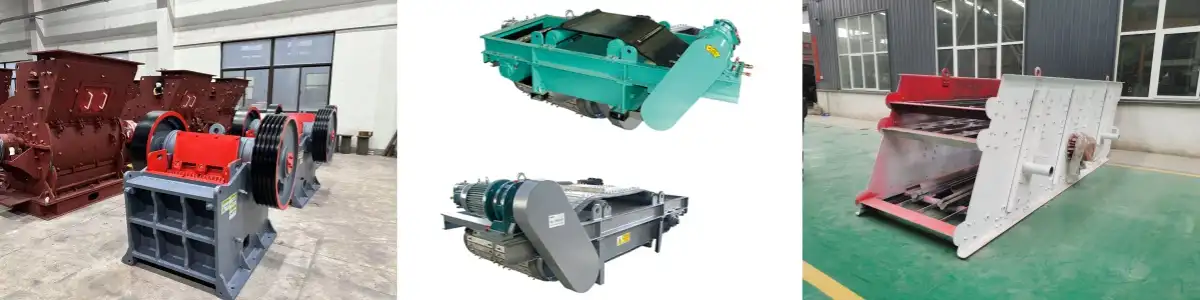
Jaw Crusher (Left), Magnetic Separator (Center), Vibrating Screen (Right)
Calcination and Crushing
Limestone (CaCO₃) → Quicklime (CaO) + CO₂↑
The pre-treated limestone enters a rotary kiln or shaft kiln for high-temperature calcination, with temperature generally controlled between 900°C and 1350°C. If the calcination temperature is too low, the limestone may be under-burned and incompletely decomposed, affecting quicklime purity. If the temperature is too high, the limestone may be over-burned, reducing specific surface area and decreasing quicklime activity.
The calcined quicklime exits the kiln with inconsistent particle sizes and requires further crushing and screening to ensure particle size ≤30mm. The particle size and purity of calcined quicklime directly affect the efficiency of the lime hydration reaction and determine the quality of the finished calcium hydroxide powder.
Ca(OH)₂ (Calcium Hydroxide Slurry) + CO₂ (Purified Gas) → CaCO₃ (Precipitated Calcium Carbonate) + H₂O
Carbon dioxide generated from limestone calcination is non-toxic and harmless itself, but large-scale emissions contribute to the greenhouse effect and environmental damage. It can be purified and used for producing Precipitated Calcium Carbonate (PCC), thereby improving economic benefits.
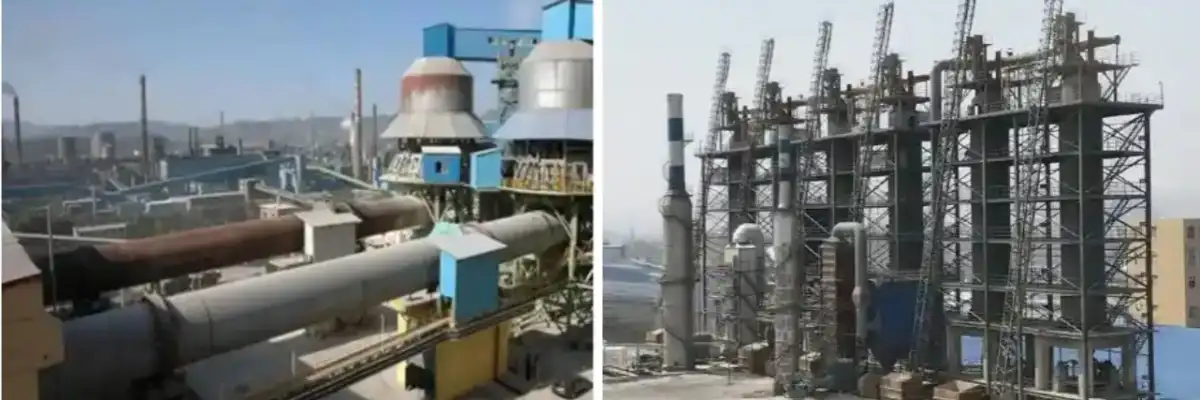
Rotary Kiln (Left) and Shaft Kiln (Right)
| Rotary Kiln vs. Shaft Kiln Comparison Analysis | |
| Rotary Kiln | Shaft Kiln |
| Limestone rolls and advances in a slowly rotating inclined kiln body, contacting high-temperature airflow for calcination. | Limestone and fuel move downward from top to bottom by gravity in a stationary kiln body for calcination. |
| Material continuously tumbles with uniform heat distribution, virtually no over-burning or under-burning. | Material tends to accumulate at the bottom with poor uniformity, prone to over-burning and under-burning. |
| Uses clean fuels such as natural gas and pulverized coal separated from material, virtually no contamination risk. | Fuel directly mixed with material, posing contamination risk and reducing quicklime purity. |
| Material collision during rolling removes some surface impurities. | Static combustion, impurities adhering to material are difficult to remove. |
| Quicklime purity after calcination ≥95%, high and stable. | Quicklime purity after calcination 85~95%, relatively low with significant fluctuation. |
| Suitable for fields with high purity requirements such as environmental protection, desulfurization, food, pharmaceutical, and high-end industrial applications. | Suitable for fields with lower purity requirements such as construction mortar, iron and steel smelting, and general industrial applications. |
Hydration and Aging
Quicklime (CaO) + Water (H₂O) → Calcium Hydroxide (Ca(OH)₂) + Heat
The calcined quicklime is continuously, uniformly, and quantitatively fed into the CR Lime Slaker via a quantitative feeder. Through precise control of water-to-lime ratio, reaction time, reaction temperature, and mixing intensity, the hydration, aging (homogenization + maturing), and deep hydration of quicklime are achieved.
The water-to-quicklime mass ratio is generally mixed at 0.6:1 to 0.8:1, with reaction temperature typically controlled between 80°C~95°C. Preliminary hydration uses twin-shaft mixer for high-speed mixing, while homogenization uses gentle, slow methods to achieve uniform distribution of moisture and heat. Hydration time and aging time depend on the quality requirements of the finished calcium hydroxide powder; longer is not always better.
Conventional Process: Uses twin-shaft mixer as primary hydration tank for preliminary hydration, and single-shaft mixer for aging (supplemental hydration assistance).
Two-Stage Hydration Process: Uses twin-shaft mixer as primary hydration tank for preliminary hydration, and chain mixer hydrator for aging and deep hydration, generally used for producing high-activity, high specific surface area calcium hydroxide.
Water Mist Dust Collection
The lime hydration reaction generates large amounts of hot steam and calcium hydroxide dust. If discharged directly into the air, it would create white pollution and harm the environment. Generally, a pulse bag filter is first used to filter dust, reducing the load on the subsequent water mist dust collector and preventing calcium hydroxide dust agglomeration and clogging.
The pre-filtered exhaust gas then enters the water mist dust collector for spray washing and water mist dust collection. Hot water at 60~80°C is recovered and returned to the lime slaker to promote the hydration reaction. Water ≤60°C is returned to the water mist dust collector, along with a small amount of make-up water (3%~5%), for spray washing. This achieves high water resource utilization and nearly zero wastewater discharge. Through multiple dust collection technologies, exhaust emission concentration is stably maintained at ≤10mg/m³.
Classification and Grinding
The hydrated lime after hydration is conveyed to the CR Hydrated Lime Classifier or CR Hydrated Lime Grinding Mill for processing. Based on requirements for fineness, purity, and high specific surface area of the finished calcium hydroxide powder, the Hydrated Lime Classifier and Hydrated Lime Grinding Mill are flexibly equipped to achieve customized production requirements for different grades of calcium hydroxide powder.
General Production Line: Typically uses Hydrated Lime Classifier for separation, with coarse powder directly discharged. Simple process, low investment cost. Suitable for applications with low requirements for calcium hydroxide powder purity and fineness, such as construction mortar, wall putty powder, and other building applications.
Industrial Grade Production Line: Typically uses Hydrated Lime Grinding Mill for grinding and classification. Finished calcium hydroxide powder has uniform purity and fineness. Suitable for general industrial manufacturing such as plastics and rubber.
Environmental Grade Production Line: Typically uses Hydrated Lime Classifier for separation. Coarse powder with incomplete reaction requires return to the lime slaker for further hydration. Finished calcium hydroxide powder has high activity and fast reaction rate, with specific surface area typically ≥2.5m²/g. Suitable for general environmental applications such as power plant desulfurization and wastewater treatment.
High Specific Surface Area Production Line: Typically uses Hydrated Lime Classifier for separation. Classified coarse powder enters the Hydrated Lime Grinding Mill for grinding and classification. Finished calcium hydroxide powder features high specific surface area (≥17m²/g). Suitable for high-end environmental applications treating severe pollutants.
Food and Pharmaceutical Grade Production Line: Typically uses Hydrated Lime Classifier for separation and Hydrated Lime Grinding Mill for fine grinding and classification. Finished calcium hydroxide powder features high purity and high fineness characteristics. Suitable for high-end applications such as food and pharmaceuticals.
Packaging and Storage
Finished calcium hydroxide powder has strong hygroscopicity and readily absorbs moisture and carbon dioxide, leading to deterioration. It requires sealed, moisture-proof packaging and should be stored in a cool, dry, well-ventilated warehouse with a moisture-proof layer on the floor. Storage with acidic substances and oxidizing agents is strictly prohibited.
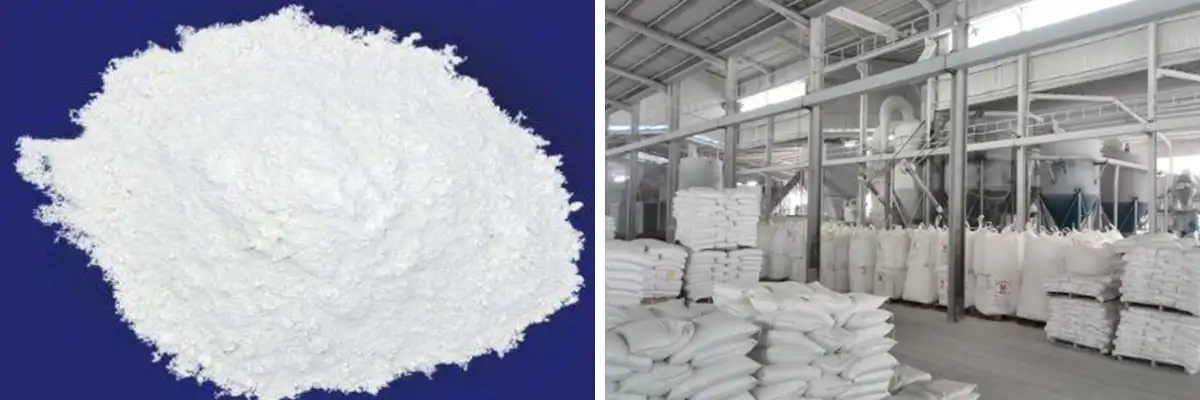
Application Scenarios of Calcium Hydroxide Production Line
| Application Scope of Calcium Hydroxide Powder | |||
| Property | Fine Calcium Hydroxide | High Specific Surface Area Calcium Hydroxide | General Calcium Hydroxide |
| Purity | ≥96% | ≥94% | ≥90% |
| Calcium Carbonate (CaCO₃) Content | ≤3% | ≤4% | ≤5% |
| Specific Surface Area | Not Required | ≥17m²/g | Not Required |
| Fineness | 325 mesh sieve residue ≤2% | 325 mesh sieve residue ≤5% | 200~325 mesh |
| Whiteness | ≥90 | Not Required | ≥80 |
| Application Fields | High-end fields such as food, pharmaceutical | High-end environmental fields such as metal pollution treatment | General industrial and environmental fields such as plastics, metallurgy |
| * The above data is for reference only. There is no unified industry standard for calcium hydroxide powder parameters. | |||
Technical Parameters of Calcium Hydroxide Production Line
| CR Calcium Hydroxide Production Line Parameter Comparison Table | |
| Quicklime Particle Size (After Calcination) | ≤30mm |
| Finished Product Output | 5~50t/h |
Finished Product Fineness | 80~800 mesh (600 mesh ≥95%) |
| Finished Product Purity | 90%~98% |
Specific Surface Area | 0~15m²/g (General Calcium Hydroxide) |
| ≥17m²/g (High Specific Surface Area Calcium Hydroxide) | |
| Dust Emission | ≤10mg/m³ |
| Hydration Equipment | Lime Slaker |
| Dust Collection Equipment | Pulse Bag Filter, Water Mist Dust Collector |
| Classification Equipment | Hydrated Lime Classifier |
| Grinding Equipment | Hydrated Lime Grinding Mill |
| Control System | Distributed Control System (DCS) |
| * The above data is for reference only. Specific parameters vary depending on raw materials. | |
| CR Calcium Hydroxide Production Line Different Process Parameter Comparison Table | |||
| Process Mode | Process Characteristics | Capacity (t/h) | Total Power (kW) |
General Production Line | Low requirements for purity and fineness | 5~10 | 370 |
Industrial Grade Production Line | Uniform purity and fineness | 10~15 | 412.7 |
| Environmental Grade Production Line | High activity, fast reaction rate | 10~15 | 570.1 |
| High Specific Surface Area Production Line | High specific surface area | 10~15 | 588.95 |
| Food and Pharmaceutical Grade Production Line | High purity, high fineness | 10~15 | 746.35 |
| * The above data is for reference only. Specific parameters vary depending on raw materials. | |||
Frequently Asked Questions about Calcium Hydroxide Production Lines
How to Produce High-Quality Calcium Hydroxide?
Raw Material Preparation: Select high-quality limestone with calcium carbonate content ≥90%, and perform pre-treatment such as crushing, screening, and impurity removal to ensure kiln feed particle size ≤50mm. Use a rotary kiln for calcination to ensure quicklime purity after calcination ≥95%, thereby guaranteeing the whiteness and purity of the finished calcium hydroxide powder.
Hydration Process: The calcined quicklime is further crushed and screened to ensure particle size ≤30mm. A lime slaker with two-stage hydration design (twin-shaft mixer + chain mixer hydrator) is used. Through precise control of water-to-lime ratio, reaction temperature, mixing length, and reaction time, the activity of calcium hydroxide is improved.
Dust Collection Process: Use a Water Mist Dust Collector to prevent dust pollution, promote the hydration reaction, and increase the overall yield of high-quality calcium hydroxide powder.
Classification Process: Use a Hydrated Lime Classifier for separation, then use a Hydrated Lime Grinding Mill for dispersion, grinding, and classification, thereby further improving the purity, fineness, and high specific surface area of the finished calcium hydroxide powder.
What if the Quicklime Raw Material Quality is Poor?
Crush and screen the calcined quicklime to separate over-burned and under-burned material. Then convey the normally calcined but low-activity quicklime to the lime slaker, appropriately increase the water-to-lime ratio and reaction temperature, strengthen the mixing intensity of the hydration reaction, and extend the static aging time, thereby maximizing hydration efficiency and calcium hydroxide activity.
Why Does the Calcium Hydroxide Production Line Adopt Classification First and Then Grinding?
Modern calcium hydroxide production lines generally adopt the advanced process of classification first and then grinding. This is because the calcium hydroxide after hydration from the lime slaker is a mixture of qualified finished powder and coarse powder. By positioning high-efficiency classification equipment upstream, qualified powder can be directly separated, with only the coarse powder entering the Hydrated Lime Grinding Mill for grinding. This completely solves the problems of ineffective grinding and over-grinding found in traditional processes of grinding first and then classifying, significantly reducing system energy consumption and improving production line efficiency and powder quality.
Which Calcium Hydroxide Production Line Manufacturer is Best?
When selecting a calcium hydroxide production line, three professional indicators should be primarily considered. First is hydration technology, focusing on the mixing efficiency and heat utilization rate of the slaker. Second is grinding and classification technology, particularly whether the grinding rollers and rings are made of special materials for strongly alkaline media. Third is environmental technology, ensuring compliance with national standards. If you need to produce calcium hydroxide, Cronus Machinery is the best choice. Cronus Machinery has focused on powder processing for 50 years, with profound mechanical technology expertise and multiple patented calcium hydroxide processes. Its CR Calcium Hydroxide Production Line adopts a two-stage hydration design with compact structure, significantly reducing investment costs such as steel structures, with hydration capacity superior to traditional 3~7 stage designs. Patented pulse and water mist multiple dust collection technologies recover heat to promote hydration while effectively collecting dust, with wastewater discharge nearly zero. Flexible classification and grinding processes create customized production lines, meeting production requirements for different grades (industrial, environmental, food, pharmaceutical, etc.) of calcium hydroxide powder.
 Home
Home Products
 About
About Call
Call