

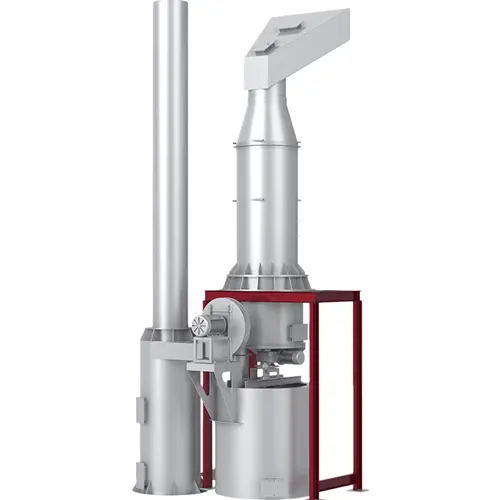
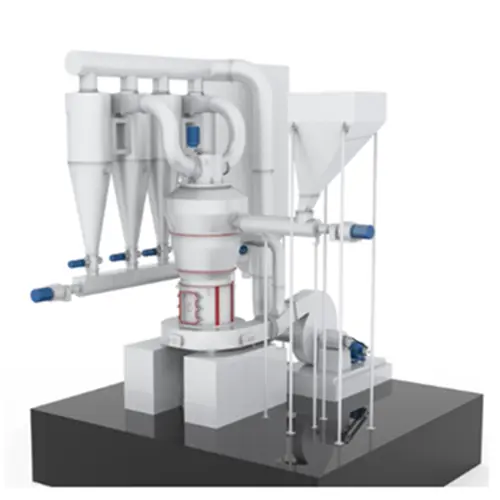
CR Water Mist Dust Collector
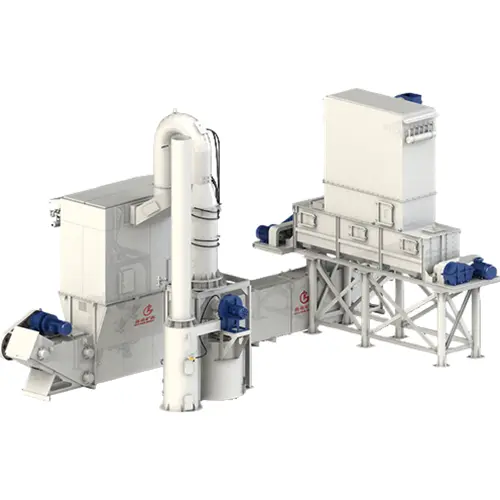
Function Description:The water mist dust collector employs pulse water-mist technology. The pulse-jet bag filter handles primary dust removal, and then the Water Mist Dust Collector performs multi-stage scrubbing, thereby achieving ultra-low emissions.
Suitable Materials:Calcium hydroxide (slaked lime or hydrated lime)
Water Mist Dust Collector Information Introduction
The CR Water Mist Dust Collector is an innovative dust collection equipment developed by Cronus Machinery based on decades of experience in dust treatment within the powder processing field. It adopts patented pulse water mist dust collection technology and is connected in series with a pulse bag filter at the lime slaker. While recovering and utilizing the heat generated from the hydration reaction, it simultaneously provides effective dust collection, with wastewater discharge approaching zero. When used in conjunction with the pulse bag filter, it not only reduces performance requirements for the filter bags but also achieves ultra-low emissions of ≤10mg/m³.
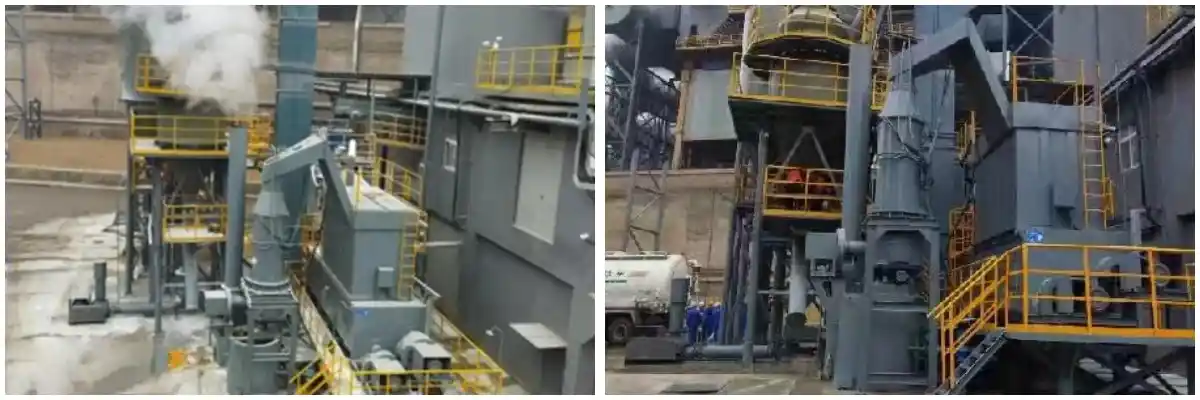
Features and Advantages of Water Mist Dust Collector
Structural Features
Spray System: Utilizes water film anti-adhesion technology on pipe sidewalls. Centrifugal pumps provide stable water pressure and flow rate, working with spray nozzles to cool and humidify exhaust gas for preliminary dust collection.
Mist System: Generates micron-level water mist through mist nozzles to capture fine dust particles.
Dust Collection System: Achieves gas-liquid separation through a demister, discharging clean gas while recycling hot water.
Circulation System: Utilizes two circulation water pumps to deliver 60~80°C hot water to the lime slaker, while the remaining lower temperature hot water is conveyed to the spray system.
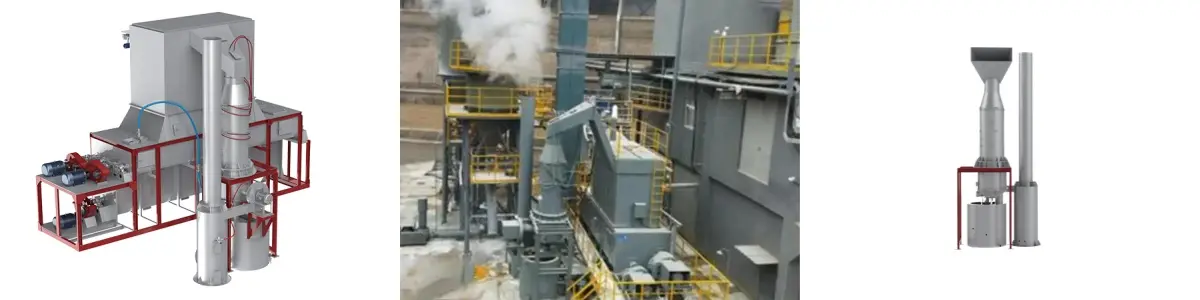
Performance Advantages
Ultra-Low Emissions: Multiple dust collection technologies provide excellent capture efficiency for fine dust and hydrophobic dust (especially "stiff ash" generated from lime hydration). Emission concentration is stably maintained at ≤10mg/m³.
High Efficiency and Energy Saving: Fully utilizes heat generated from the lime hydration reaction, recovering it for use in the hydration process. Hot water improves reaction efficiency, reducing energy consumption at the source.
Water Recycling: High water resource utilization rate with nearly zero wastewater discharge. Process water collected by the system is partially used for lime hydration and partially for spray washing.
Dual Protection: When used with a pulse bag filter, it can appropriately reduce performance requirements for filter bags. Even if filter bags are damaged, the water mist dust collector can capture fine dust, providing sufficient maintenance time for bag replacement.
Process Flow of Water Mist Dust Collector
Pulse Dust Collection
Lime Slaker → Hot Steam + Dust → Pulse Bag Filter
The lime hydration reaction generates significant amounts of hot steam (humid hot exhaust gas) and calcium hydroxide dust. This passes through a pulse bag filter for preliminary filtration, removing most of the dust, reducing the workload on the subsequent water mist dust collector, and preventing calcium hydroxide powder agglomeration that could clog spray nozzles.
Spray Washing
Water Mist Dust Collector → Spray Nozzles → Mist Nozzles → Demister → Clean Gas + Hot Water (Recovery)
The pre-filtered exhaust gas enters the water mist dust collector, where spray nozzles form a uniform, fine water curtain that cools and humidifies the exhaust gas (temperatures up to 90°C and above) while removing most larger particle size dust.
Water Mist Dust Collection
Subsequently, mist nozzles generate micron-level water mist that captures fine dust particles. After contact, the water mist and dust coalesce and settle with the water flow. Gas-liquid separation is achieved through a demister, with hot water entering the circulation water pumps and clean gas being discharged under the action of a high-pressure centrifugal fan, achieving ultra-low emissions of ≤10mg/m³.
Hot Water Recovery
Circulation water pumps deliver the collected hot water (60~80°C) to the lime slaker for the hydration reaction. The remaining lower temperature hot water (≤60°C) is conveyed to the spray system, where it is used for spray washing together with a small amount of make-up water (3%~5%), achieving nearly zero wastewater discharge.
Application Scenarios of Water Mist Dust Collector
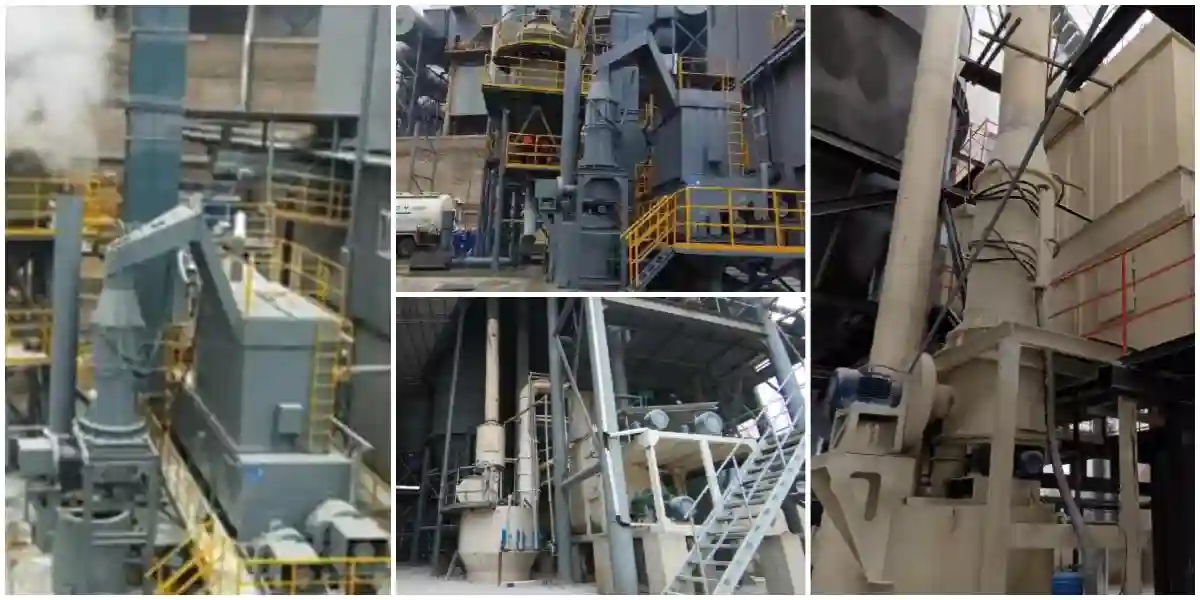
Technical Parameters of Water Mist Dust Collector
| CR Water Mist Dust Collector Parameter Comparison Table | ||
| Equipment Name | Motor Power (kW) | Quantity |
High-Pressure Centrifugal Fan | 18.5 | 1 |
Spray Water Pump | 3 | 1 |
| Circulation Water Pump | 4 | 2 |
Frequently Asked Questions about Water Mist Dust Collectors
Can the water mist dust collector be used first followed by the pulse bag filter?
The exhaust gas treatment for lime hydration must strictly follow the process sequence of "dry pulse dust collection first, followed by wet water mist dust collection". Calcium hydroxide dust is highly hygroscopic. If treated with wet process first, calcium hydroxide dust tends to agglomerate, clogging spray nozzles, and can also form hardened layers on the bag surface, leading to bag clogging.
Does the water mist dust collector consume large amounts of water?
The water mist dust collector does not consume large amounts of water. Circulated water accounts for over 95%, with make-up water only accounting for 3%~5%. This represents a process configuration with low water consumption and high recovery rate, without causing waste of water resources.
Does the water mist dust collector have desulfurization effects?
The water mist dust collector has certain desulfurization effects as auxiliary desulfurization. The circulating water becomes alkaline after absorbing calcium hydroxide dust and can undergo neutralization reactions with acidic SO₂. However, the desulfurization efficiency is relatively low and application scenarios are limited. It cannot replace specialized desulfurization equipment.
 Home
Home Products
 About
About Call
Call