

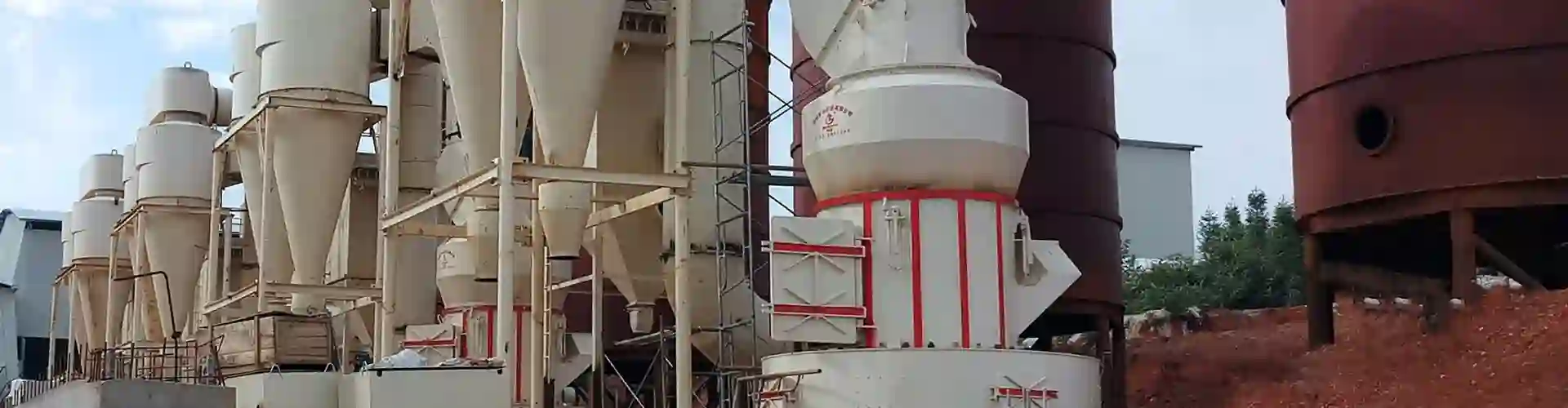
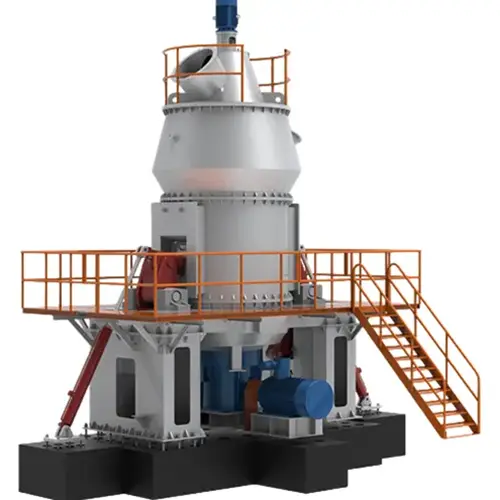
CRLM Vertical Roller Mill
Feed Size:≤60mm
Production Output:20~240t/h
Product Fineness:80~600 mesh
Suitable Materials:Limestone, marble, calcite, barite, dolomite, coal gangue, petroleum coke, slag, furnace slag, granulated slag, steel slag, bituminous coal, graphite, gypsum, cement clinker, etc.
Vertical Roller Mill Introduction
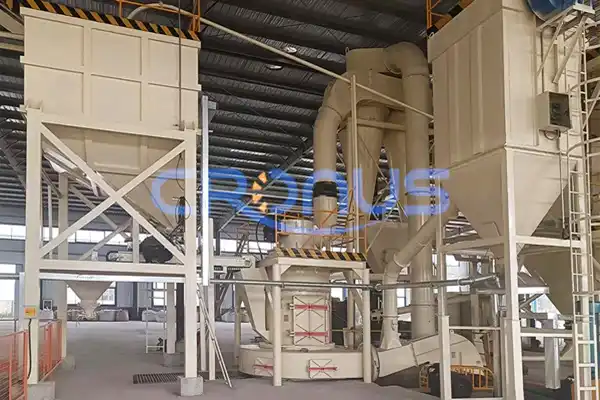
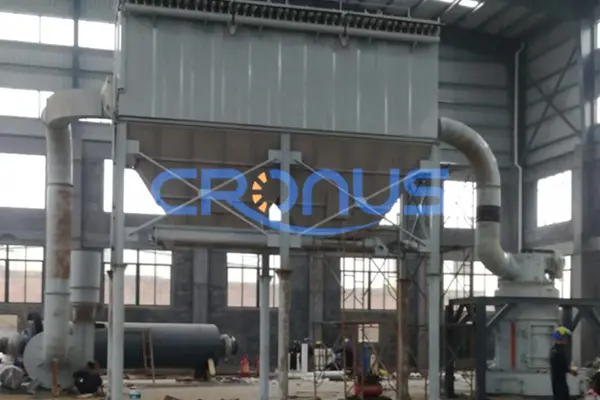
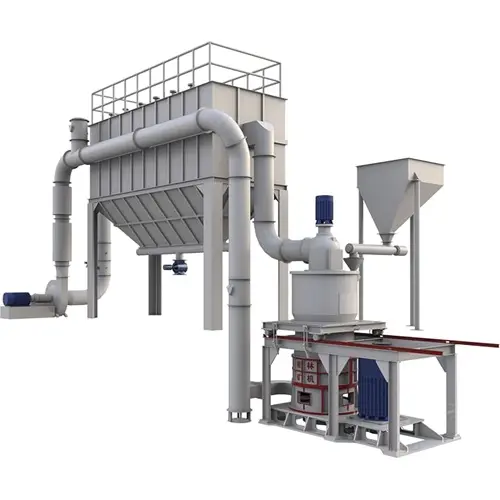
CRRM Vertical Roller Mill is an independently developed equipment with proprietary intellectual property rights, designed by Cronus Machinery based on advanced international vertical roller mill technologies (such as those from German Pfeiffer) and combined with 50 years of industry experience.
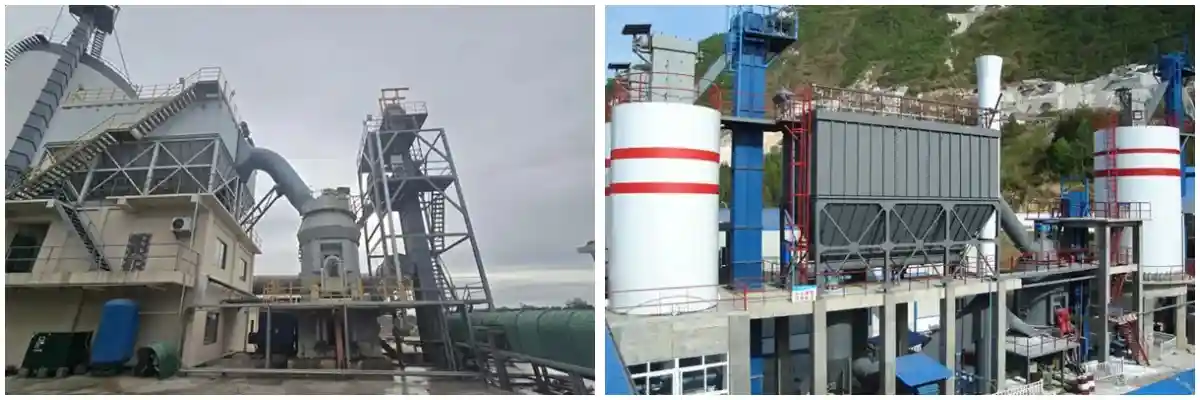
It integrates multiple functions including crushing, drying, grinding, and classification into one unit. Featuring a vertical roller design, the grinding rollers are positioned above the grinding table, applying pressure through the hydraulic system without direct contact with the table, resulting in low noise, minimal wear, and reduced metal contamination. The built-in powerful drying system can directly process sticky materials with moisture content up to 15%. It is widely used in large-scale powder processing applications across mining, cement, building materials, power generation, and metallurgy industries.
| Vertical Roller Mill Structural Components | ||||
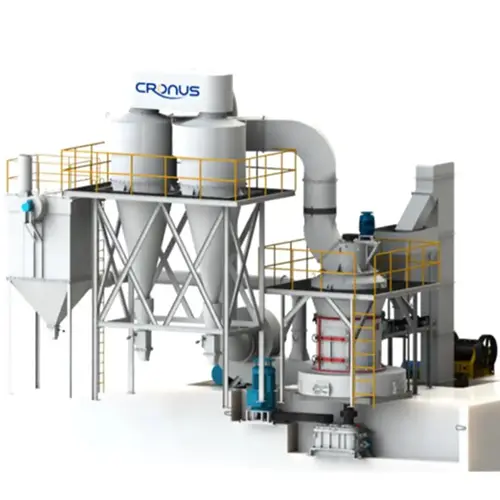
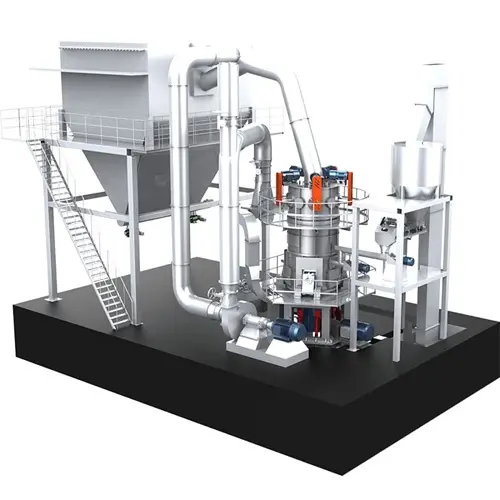
| Grinding System | Classification System | Drying System | Drive System | Hydraulic System |
| Consists of grinding table, grinding rollers, etc., with rollers positioned above the table | Dynamic classification system with high-speed rotating rotor creating centrifugal force field | Hot air introduced from the bottom enters the mill through the air ring | Composed of main motor and reducer | Independent maintenance hydraulic cylinders for easy roller turning |
| Hydraulic system applies pressure to grinding rollers for compression grinding | Product fineness controlled by adjusting rotor speed | Efficient drying during pneumatic material conveying | Main motor provides primary power, reducer drives the grinding table | Grinding force provided by roller加压 cylinders |
Vertical Roller Mill Features & Advantages
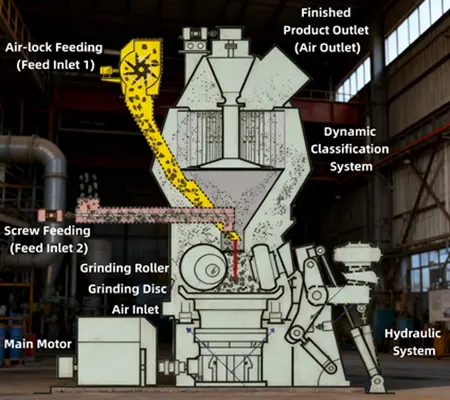
Highly Integrated: Integrates crushing, drying, grinding, classification, and conveying into a single unit, featuring high automation, small footprint, and easy maintenance.
Wear-Resistant & Long Service Life: Grinding rollers do not directly contact the grinding table. The rotating table receives material to form a material bed buffer, resulting in low noise, minimal wear, and reduced metal contamination. Roller sleeves can be turned over for extended service life.
Efficient Drying: Built-in powerful drying system with internal water spray device stabilizes the material bed and controls grinding temperature via atomized water. Can directly process sticky materials with moisture content up to 15%, eliminating the need for additional drying equipment.
Significant Energy Savings: Large feed size capability (3%~5% of roller diameter) enables high-capacity material processing with low operating energy consumption, reducing energy use by 30%~50% compared to ball mills.
Precise & Controllable: Product fineness can be adjusted freely within 80~600 mesh, with 325 mesh passing rate ≥90%, stable output, and uniform, concentrated particle size distribution.
Vertical Roller Mill Process Flow
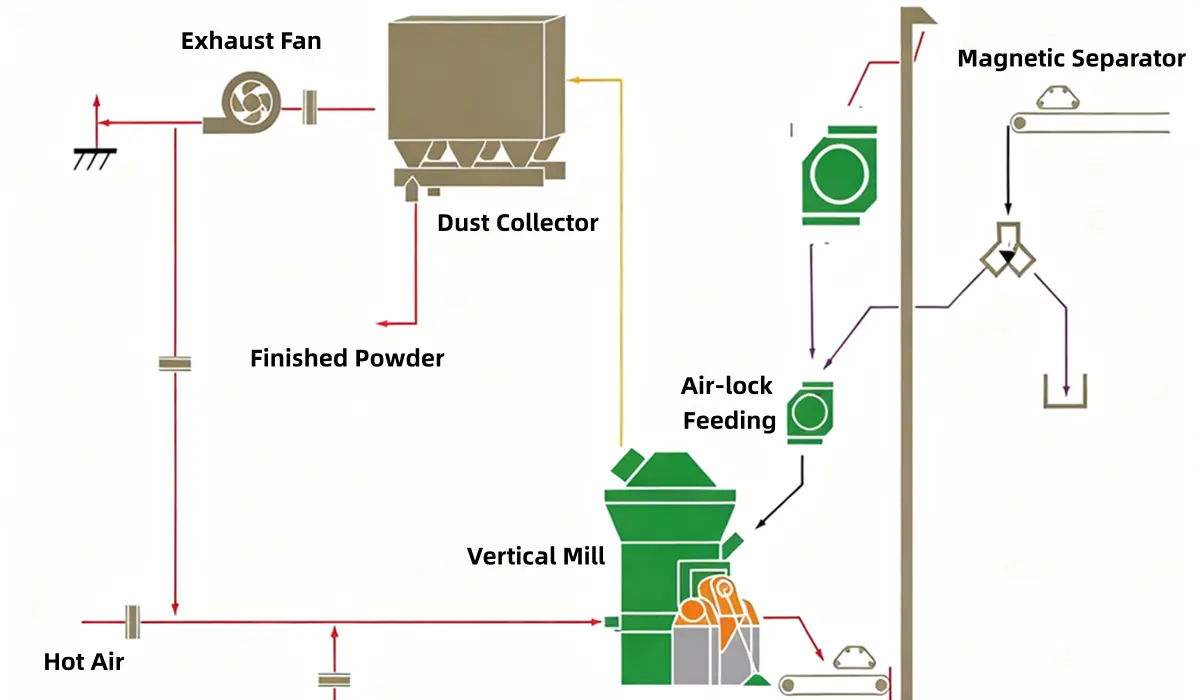
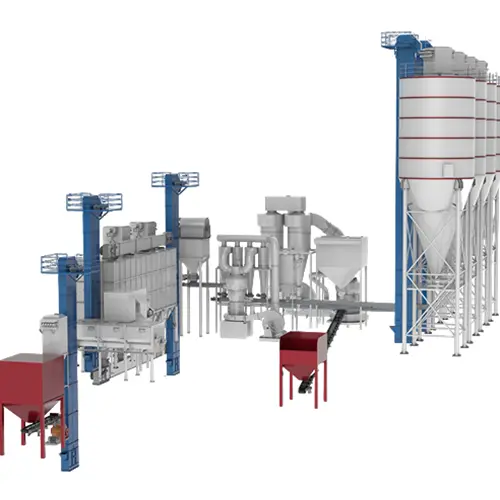
Raw Material → Vertical Roller Mill → Grinding and Drying → Dynamic Classification → Dust Collector → Finished
Material Bed Grinding
Raw materials meeting feed requirements (particle size ≤60mm, moisture ≤15%) are fed into the vertical roller mill via the conveying system. The material then drops from the feed inlet onto the center of the rotating grinding table. Under centrifugal force, it is thrown into the grinding zone between the rollers and the table. The hydraulic system provides stable pressure to the grinding rollers, while the material is constrained by the retaining ring to form a stable material bed, undergoing intense compression and grinding by the rollers.
Simultaneous Drying
High-temperature hot air introduced from the lower housing then passes through the material bed during grinding. As the specific surface area of the ground material increases dramatically, the powder undergoes heat exchange with the hot air, is instantly dried by the hot airflow during rising, and is carried by the airflow to the dynamic classifier at the top.
Dynamic Classification
Precise classification is then achieved by controlling the rotation speed of the classifier rotor. Fine powder meeting particle size requirements passes through the classifier wheel with the airflow and enters the dust collection system, while unqualified coarse powder is thrown by the rotor toward the surrounding housing and falls back to the grinding table for regrinding, forming a closed-circuit cycle.
Collection & Dust Removal
Finally, qualified fine powder enters the dust collection system (either single-stage or multi-stage) with the airflow for gas-solid separation. The finished fine powder is collected, and the remaining dust is purified before being discharged by the fan.
Single-Stage Dust Collection System: Uses electrostatic precipitators or baghouse dust collectors. Mill exhaust gas goes directly to the dust collector, offering simple system configuration, effective fan energy savings, and low investment and operating costs.
Multi-Stage Dust Collection System: Uses cyclone collectors for primary collection, with electrostatic precipitators or baghouse dust collectors as secondary collection equipment. This reduces system negative pressure, minimizes equipment wear, and increases total product recovery, making it particularly suitable for recovering high-value materials.
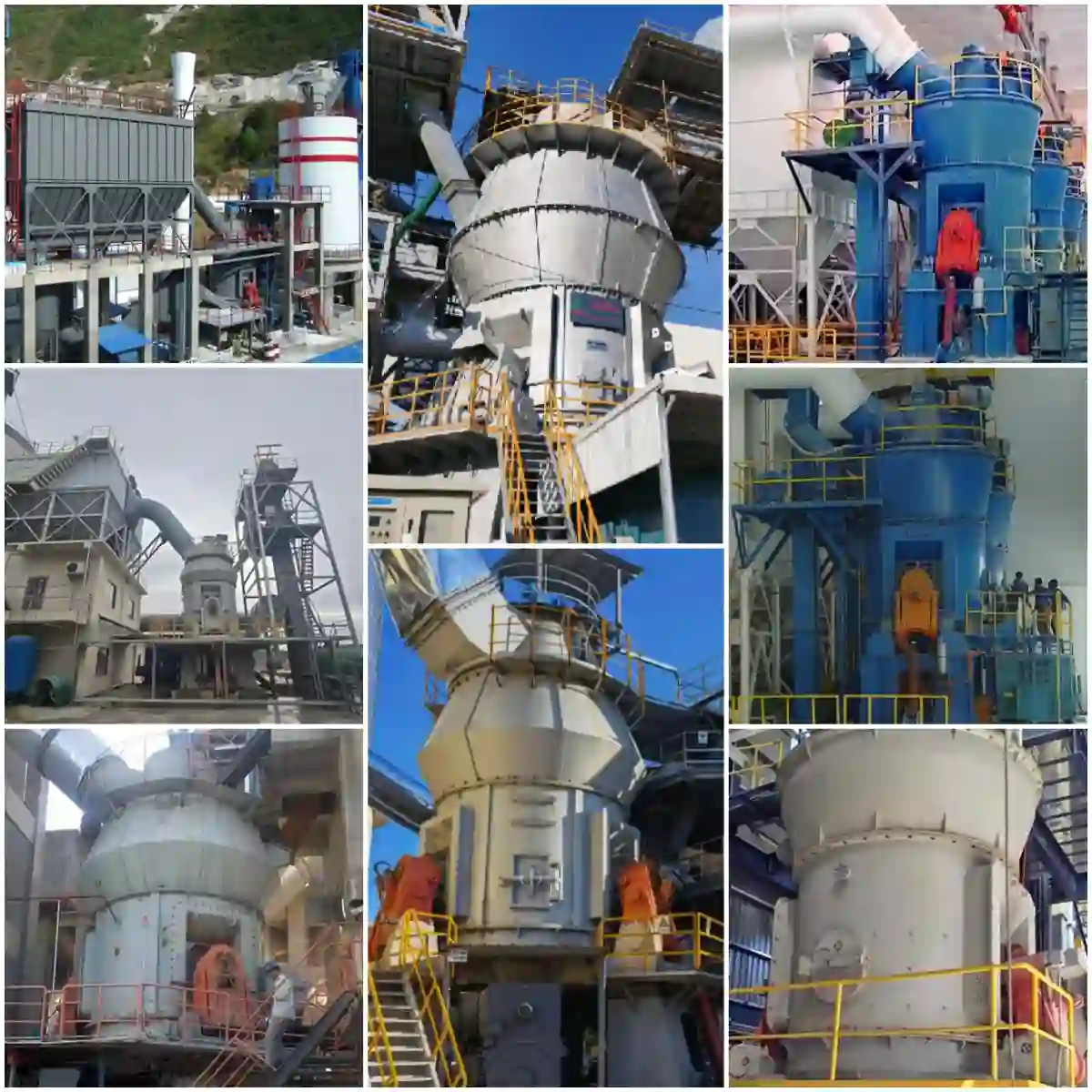
Vertical Roller Mill Application Scenarios
Vertical Roller Mill Technical Parameters
| CRLM Vertical Roller Mill Parameter Comparison Table | ||||||
| Model | Capacity (t/h) | Feed Size (mm) | Feed Moisture (%) | Feed Fineness (R0.08) | Product Moisture (%) | Main Motor Power (kW) |
| CRRM1300S | 20~24 | ≤25 | ≤15 | ≤12 | ≤1 | 200 |
| CRRM1500S | 25~34 | ≤30 | 315 | |||
| CRRM1700S | 38~48 | ≤35 | 450 | |||
| CRRM2000S | 65~80 | ≤40 | 710 | |||
| CRRM2200S | 90~105 | ≤45 | 1000 | |||
| CRRM2500S | 110~125 | ≤50 | ≤14 | 1250 | ||
| CRRM2800S | 125~155 | ≤55 | 1600 | |||
| CRRM3400S | 190~240 | ≤60 | ≤15 | 2500 | ||
| Bond Work Index of raw materials ≤12 kWh/t | ||||||
| * The above data is for reference only. Specific parameters vary depending on materials. | ||||||
Frequently Asked Questions About Vertical Roller Mills
How to choose the right vertical roller mill?
Standard Vertical Roller Mill: Suitable for applications with uniform feed size, relatively low moisture content (≤15%), and stable conditions. Focuses on producing high-value-added products such as high-activity slag powder, premium cement, and fine non-metallic mineral powders (e.g., calcined clay, limestone powder).
Coarse Powder Vertical Mill: Suitable for applications with large feed size, relatively high moisture content (≤25%), and complex material composition. Can be used directly to produce intermediate products or coarse powder with less stringent fineness requirements, such as cement raw meal, road construction slag, and metallurgical sinter feed.
Ultra-Fine Vertical Mill: Suitable for fine processing of high-purity materials with easily cleaved crystal structures. Specifically designed to produce functional mineral powders with narrow particle size distribution and high purity, such as marble, calcium carbonate, kaolin, and barite. It is the core production equipment for high-end fillers used in coatings, plastics, paper, and other industries.
What is the difference between vertical roller mills and Raymond mills?
Vertical Roller Mill: Higher processing capacity and larger feed size, with strong drying capability, but higher investment cost. Suitable for processing sticky materials and large-scale, high-capacity powder production.
Raymond Mill: Lower investment, suitable for small to medium-scale production. For large-scale production, a systematically pre-designed multi-unit parallel operation solution is required.
How to control product fineness in vertical roller mills?
Product fineness is primarily controlled by adjusting classifier speed, system airflow, and internal water spray rate. Higher speed produces finer product, while higher airflow produces coarser product.
What causes over-grinding (saturation) in vertical roller mills?
"Over-grinding" is a phenomenon characterized by increased mill load and abnormal vibration caused by excessive feed rate, overly wet material, or insufficient system airflow. Immediate action includes reducing or stopping feed, increasing system airflow. If ineffective, the mill must be stopped for cleaning and operating parameters optimized.
 Home
Home Products
 About
About Call
Call