

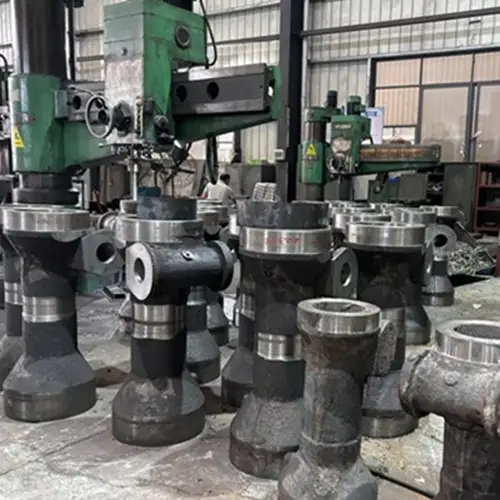
Raymond Mill Bearing Housing
Features and Advantages of Raymond Mill Bearing Housings
High Impact Resistance: Made from high-strength cast steel or alloy materials, they offer exceptional rigidity and fatigue strength. They effectively bear the substantial radial forces and impact loads during roller operation, providing stable support for the system.
Precision Machining: The inner bore undergoes strict precision machining, ensuring concentric installation of the grinding roller assembly. This significantly reduces vibration and noise while improving operational stability.
High-Efficiency Sealing: Integrated with multiple sealing structures such as oil seals, they effectively block dust ingress and prevent grease leakage. This creates a clean, reliable lubrication environment for the bearings, greatly extending the service life of core transmission components.
Durable Wear Resistance: Key mating surfaces are treated with hardening processes or repaired using wear-resistant composite materials. This enhances resistance to fretting wear, extends the bearing housing’s service cycle, and reduces the frequency of downtime for maintenance.
Convenient Maintenance: The split-body design and standardized interfaces of the bearing housing facilitate convenient disassembly, replacement, and lubrication maintenance of the bearings.
Maintenance Tips for Raymond Mill Bearing Housings
Seal and Cleanliness: Routine inspections should focus on seal wear and aging to ensure effective dust isolation and grease retention. Regularly clean accumulated dust from the bearing housing’s internal and external surfaces as well as cooling fins to prevent overheating and operational imbalance.
Inspection and Repair: During each disassembly for maintenance, use precision measuring tools to inspect the wear and dimensional tolerances of the inner bore mating surfaces. If out-of-tolerance conditions or scoring are found, repair or replace immediately.
Standardized Fastening: During installation, ensure concentricity between the bearing housing and the base, and tighten the connecting bolts in a crisscross pattern according to the specified torque standards.
- How to construct a standard foundation for a Raymond Mill?
- Can Sand‑Powder Integrated Machines Truly Achieve Co‑production? Equipment Selection Guide
- Deep‑Dive Analysis of Working Principle of Raymond Mill
- Why do the grinding roller shaft and the central shaft of a Raymond mill need to undergo heat treatm
- European Version, German Version, Vertical Swing Type Grinding Mills: Genuine Upgrade or Fake Concep
- Can a Raymond mill grind multiple materials together?
 Home
Home Products
 About
About Call
Call