

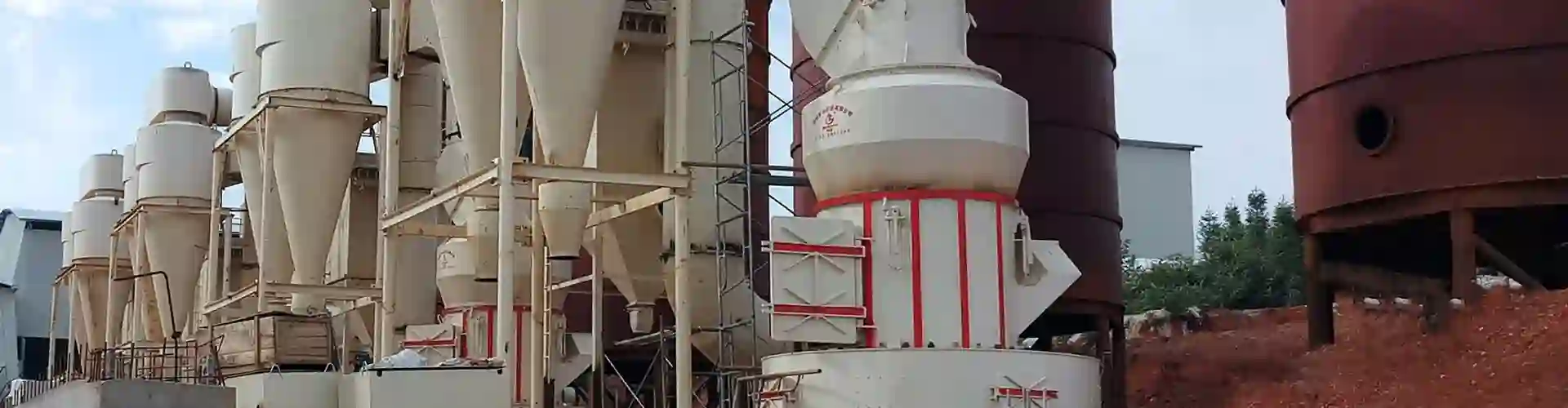
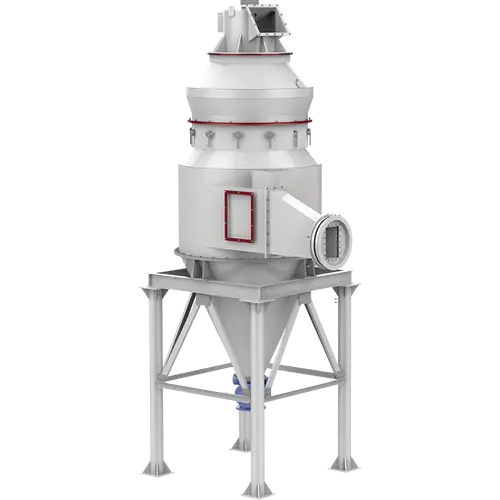
Air Classifier
Features and Advantages of Air Classifier
Precise Classification: By accurately controlling the centrifugal force field and airflow field, it effectively separates particles near the critical size. This results in a concentrated particle size distribution, reduces the content of both oversized and ultrafine particles, and thereby improves powder quality.
Wide Application Range: The process can be customized based on equipment type. Air classifiers can handle materials ranging from tens of mesh (hundreds of microns) down to several microns or even sub-micron levels. They are typically integrated with ball mills to form ball mill classification production lines, offering a very broad range of applications.
Simple and Efficient: Air classifiers feature a simple structure and small footprint. Particle size can be flexibly adjusted by regulating the rotor speed, improving classification efficiency and thus enhancing system energy efficiency.
Wear-Resistant and Contamination-Free: Key components (e.g., rotor, liners) are typically made of wear-resistant materials such as ceramics or special alloys, effectively preventing contamination by impurities like iron rust. This is particularly suitable for processing materials requiring high purity (e.g., kaolin, calcium carbonate).
Working Principle of Air Classifier
Centrifugal Force Field: A high-speed classification rotor generates an adjustable centrifugal force field, which interacts with the stable upward airflow (classification airflow) provided by the system fan to form a pair of opposing separation forces (centrifugal force vs. air drag).
Air Classification: In the rotor region, particles are separated based on the dynamic balance between the centrifugal force and air drag they experience. Larger particles are thrown outward by centrifugal force to become coarse powder, while finer particles pass through the rotor with the airflow to become fine powder.
- How to construct a standard foundation for a Raymond Mill?
- Can Sand‑Powder Integrated Machines Truly Achieve Co‑production? Equipment Selection Guide
- Deep‑Dive Analysis of Working Principle of Raymond Mill
- Why do the grinding roller shaft and the central shaft of a Raymond mill need to undergo heat treatm
- European Version, German Version, Vertical Swing Type Grinding Mills: Genuine Upgrade or Fake Concep
- Can a Raymond mill grind multiple materials together?
 Home
Home Products
 About
About Call
Call