

Lime Rotary Kiln
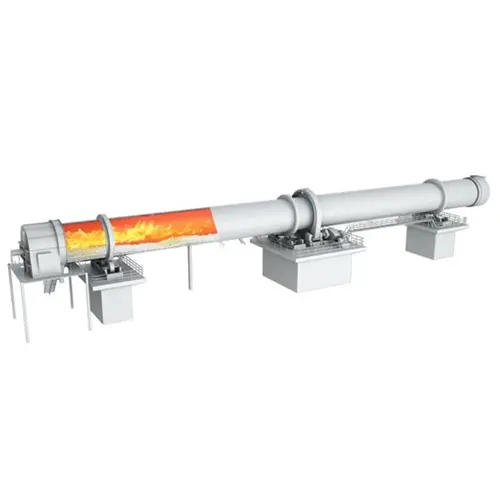
Function Description:The lime rotary kiln, equipped with a vertical preheater and a vertical cooler, features uniform and stable calcination and high resource utilization. It can produce high-purity (CaO ≥ 95%) and high-activity (340~380 ml) quicklime, and serves as the core calcining equipment for producing high-specific-surface-area calcium hydroxide.
Suitable Materials:Limestone
Introduction to Lime Rotary Kiln
The lime rotary kiln is a specialized equipment for calcining limestone (calcium carbonate) at high temperature to decompose it into quicklime (calcium oxide). The equipment adopts the three-in-one process configuration of vertical preheater + rotary kiln + vertical cooler, ensuring uniform and stable calcination with a low overburning rate. The quicklime produced is of excellent quality, with CaO purity ≥ 95% and lime activity ranging from 340 to 380 ml, reaching up to 400 ml under certain operating conditions. It is also equipped with a high-efficiency pulse jet bag filter, achieving exhaust emissions ≤ 30 mg/m³.
Features and Advantages of Lime Rotary Kiln
Structural Features
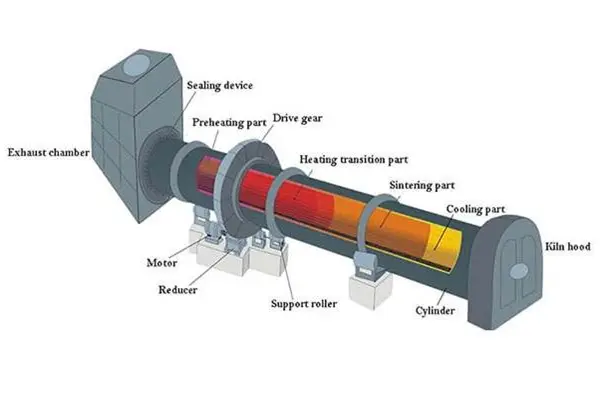
Preheating System: Equipped with a vertical preheater featuring low flue gas resistance. A level detection device is installed in the top bin to ensure a stable material bed. High-temperature flue gas comes into direct contact with the limestone for heat exchange, achieving a preheating temperature of 750–850°C, with partial decomposition of the limestone occurring in advance.
Calcination System: The kiln body has a length-to-diameter ratio of 14~15. The drive system adopts variable frequency speed control and is equipped with a main motor and an auxiliary motor. Emergency drive protection can be activated to protect the kiln body in case of power failure. The kiln head and kiln tail adopt leaf spring-type seals, offering good sealing performance, low air leakage, and reliable operation.
Cooling System: Equipped with a vertical cooler featuring zone-independent control. High-temperature lime undergoes direct heat exchange with cooling air, achieving a discharge temperature ≤ ambient temperature + 50°C. The preheated secondary air temperature can reach 600~650°C.
Combustion System: Supports multiple fuel types including pulverized coal and natural gas. Multi-channel burners can be configured according to kiln type, offering flexible flame adjustment and complete combustion. The system is equipped with safety protection functions such as automatic purging and emergency shut-off.
Dust Collection System: The kiln tail is equipped with a pulse jet bag filter. Independent dust collection devices are installed at the cooler discharge points. The entire system features sealed design, minimizing fugitive emissions and providing excellent environmental performance.
Performance Advantages
Simple and Efficient: Simple structure with a compact layout, reducing floor space by more than 30% compared to conventional rotary kilns. It can meet the production line requirements of 300~1,200 t/d, with mature and stable operation of large-scale production lines.
High-Quality Product: Limestone rolls evenly inside the kiln for uniform heating, resulting in a low overburning rate (≤ 5%). Lime activity reaches 340~380 ml with low sulfur content, making it suitable for high-standard applications such as steelmaking and chemical processing.
High Utilization Rate: Can directly use limestone of 10~50 mm particle size, reducing resource waste and improving resource utilization by 30~40% compared to conventional rotary kilns.
Energy Saving and Consumption Reduction: The preheater recovers waste heat from flue gas, the cooler recovers sensible heat from lime, and the kiln body has low heat dissipation area, reducing comprehensive energy consumption by more than 15% compared to conventional rotary kilns.
Environmentally Friendly: Kiln tail flue gas temperature ranges from 280~350°C with low dust concentration. The equipped dust collection equipment can stably meet national environmental protection standards.
| Comparison of Limestone Calcination Equipment | ||
| Conventional Rotary Kiln | Lime Rotary Kiln | Shaft Kiln |
| Horizontal design, large L/D ratio, large footprint, localized calcination dead zones | L/D ratio reduced to 14~15, compact layout, no calcination dead zones | Vertical structure, small footprint, many calcination dead zones |
| Processing 10~30 mm feed prone to blockage and arching, low utilization rate | Can directly calcine 10~50 mm limestone, high resource utilization rate | Cannot utilize 10~30 mm feed, low utilization rate |
| Poor heat retention, uneven heating, high overburning rate | Full-system insulation design, uniform heating, low overburning rate | Average heat retention, highly uneven heating, severe overburning and underburning |
| Lime activity ≤ 300 ml | Lime activity 340–380 ml | Lime activity ≤ 280 ml |
| No waste heat recovery, extremely high heat consumption, high energy consumption per ton | Dual recovery of flue gas and lime sensible heat, low comprehensive heat consumption | No waste heat recovery, extremely high heat consumption, high energy consumption per ton |
| Poor sealing, high dust generation | Full-system sealed design, equipped with high-efficiency pulse dust collection | Poor sealing, poor environmental performance |
| Mostly manual operation, low automation | PLC centralized control, simple maintenance | Mostly manual operation, low automation |
| Moderate price | Slightly higher, best overall cost-performance | Lower price |
| Quicklime purity ≥ 88%, high impurities, uneven color, prone to caking | Quicklime purity ≥ 95%, uniform color, no caking, stable activity | Quicklime purity 85~95%, high proportion of underburned/overburned material, unstable |
Process Flow of Lime Rotary Kiln
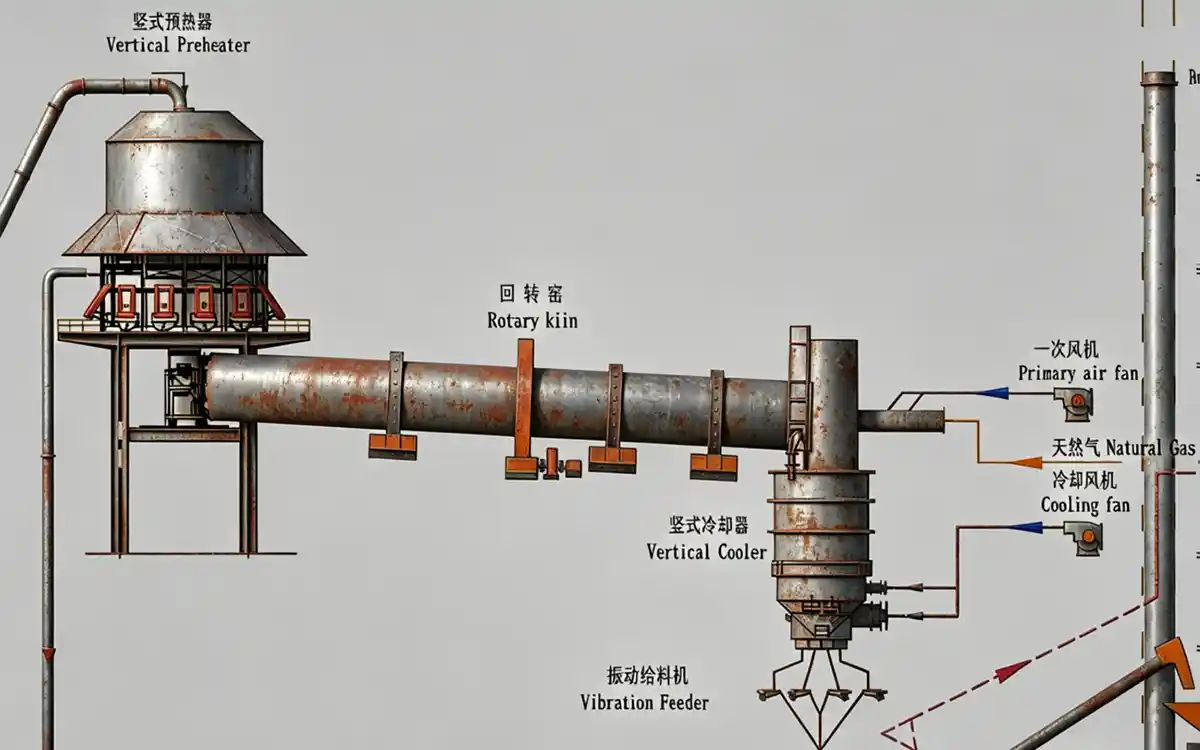
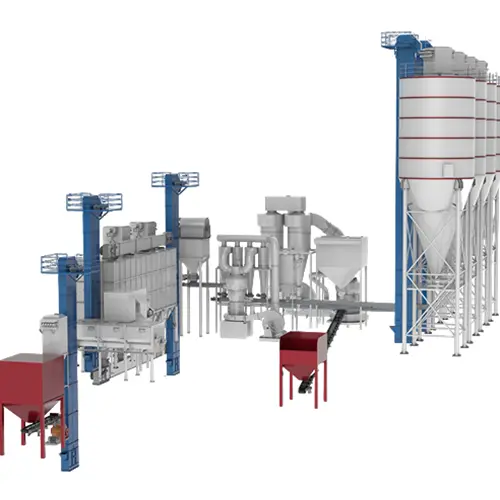
Limestone Raw Material → Crusher → Vibrating Screen → Vertical Preheater → Rotary Kiln Calcination → Quicklime → Vertical Cooler
Raw Material Preparation
Large limestone blocks are crushed by a crusher and screened by a vibrating screen to a particle size of 10–50 mm, then stored in a raw material bin. The material is uniformly and stably fed into the vertical preheater via a quantitative feeder.
Vertical Preheating
High-temperature flue gas from the kiln tail enters the preheater and performs counter-current heat exchange with the limestone, heating it to 750–850°C, with approximately 20% of the calcium carbonate undergoing initial decomposition. The preheated material is then pushed into the rotary kiln by hydraulic pushers.
High-Temperature Calcination
Limestone (CaCO₃) → Quicklime (CaO) + CO₂↑
The material slowly tumbles and moves forward inside the rotary kiln, performing counter-current heat exchange with the high-temperature flue gas. Complete decomposition of calcium carbonate occurs in the calcination zone at 900~1350°C, producing quicklime. By adjusting fuel supply, air flow, and kiln rotational speed, the calcination temperature and material residence time can be precisely controlled, ensuring stable and uniform quicklime quality.
Vertical Cooling
The calcined quicklime enters the vertical cooler from the kiln head, where it undergoes counter-current heat exchange with cold air for rapid cooling (discharge temperature ≤ ambient temperature + 50°C). Meanwhile, the cold air is preheated to 600–650°C and enters the kiln as secondary combustion air, effectively improving fuel utilization.
Application Scenarios of Lime Rotary Kiln
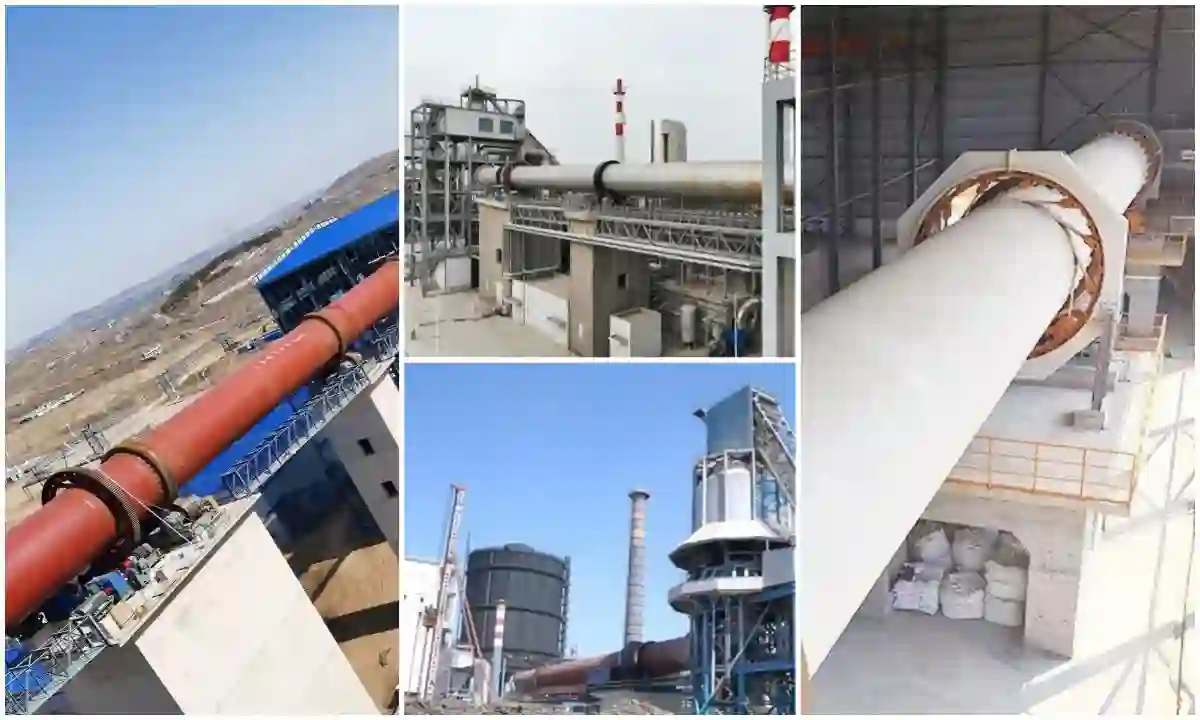
Technical Parameters of Lime Rotary Kiln
| Lime Rotary Kiln Parameter Comparison Table | |||||
| Capacity (t/d) | Kiln Spec. (m) | L/D Ratio | Lime Activity (ml) | Unit Heat Consumption (kJ/kg) | Installed Power (kW) |
| 300 | Φ3.2×50 | 15.6 | 340~380 | ≤5000 | 380 |
| 600 | Φ4.0×60 | 15.0 | 340~380 | ≤4800 | 650 |
| 800 | Φ4.3×64 | 14.9 | 340~380 | ≤4600 | 820 |
| 1200 | Φ4.8×70 | 14.6 | 340~380 | ≤4500 | 1100 |
Frequently Asked Questions about Lime Rotary Kiln
What is the difference between a lime rotary kiln and a conventional rotary kiln?
Lime Rotary Kiln: Adopts the three-in-one configuration of vertical preheater + rotary kiln + vertical cooler, capable of recovering waste heat for preheating, rapid cooling to preserve activity, and using secondary air for energy-saving combustion. Calcination temperature is precisely controllable, enabling stable production of high-purity, high-activity quicklime to meet the production requirements of high-end products such as high-specific-surface-area calcium hydroxide.
Conventional Rotary Kiln: Not equipped with vertical preheater or vertical cooler. Flue gas waste heat is directly discharged, resulting in high energy consumption, uneven calcination, and low lime activity.
How to improve the activity of quicklime produced by rotary kiln?
Select high-purity, low-impurity, and uniformly sized limestone raw materials, stably control the calcination temperature within the range of 1250~1350°C, and properly control the material residence time inside the kiln.
For a high-specific-surface-area calcium hydroxide production line, should a rotary kiln or a shaft kiln be selected?
Choose a rotary kiln. It provides uniform calcination and controllable temperature, producing high-purity, high-activity quicklime. A shaft kiln has significant temperature fluctuations, resulting in unstable product purity and low lime activity, which cannot meet the production requirements for high-specific-surface-area calcium hydroxide.
 Home
Home Products
 About
About Call
Call