

Comparative Analysis of Raymond Mill and Ball Mill
- Time:2026-03-26
- Views:41
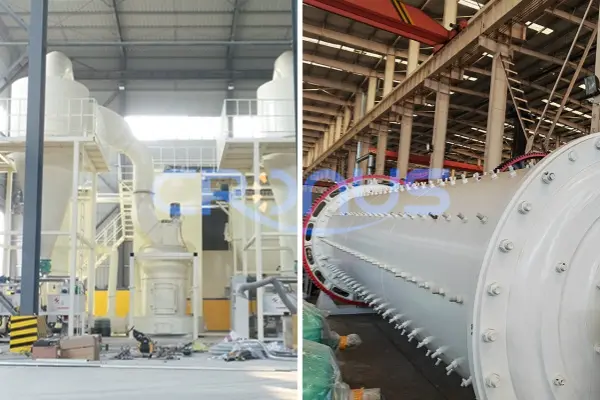
Although Raymond mill dominates the field of non-metallic mineral grinding in the 80~400 mesh range, ball mills still play an important role in scenarios such as processing high-hardness materials, wet grinding, and coarse powder processing. In addition, modern ball mill classification production lines have achieved significant improvements in fineness control and energy consumption.
Working Principle AnalysisPerformance Index ComparisonApplication Scenario RecommendationsFrequently Asked Questions
The core standards cited in this paper: JB/T 13877-2020 "Swing Raymond Mill", JB/T 1406-2002 "Ball Mill and Rod Mill", GB/T 50542-2019 "Powder Engineering Design Standard".
Working Principle Analysis of Raymond Mill and Ball Mill
Working Principle Analysis of Raymond Mill
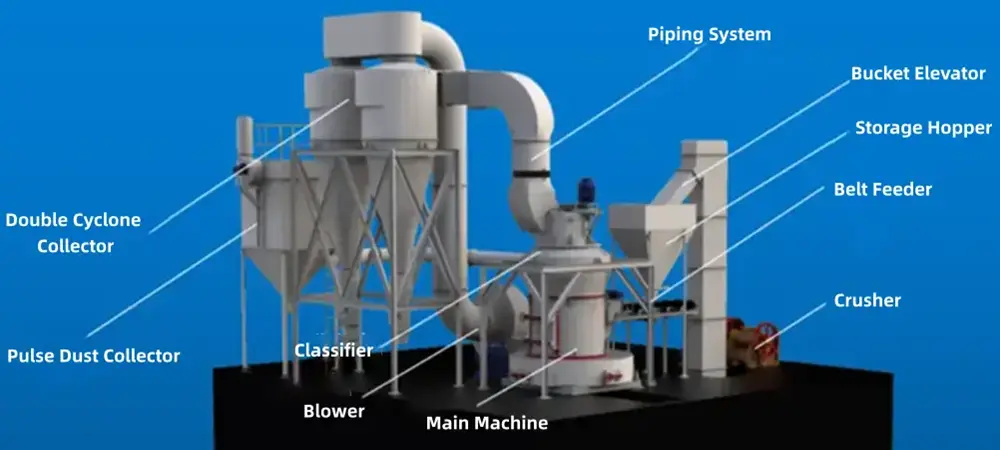
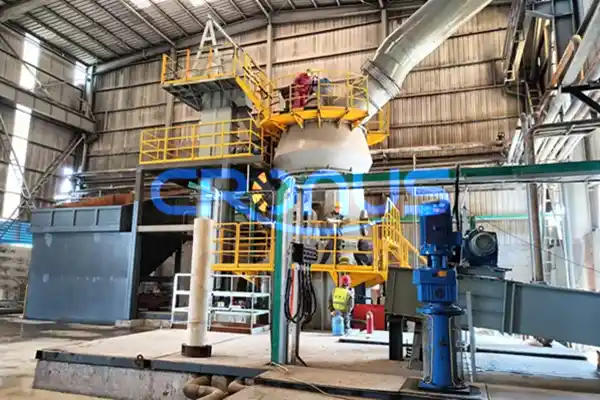
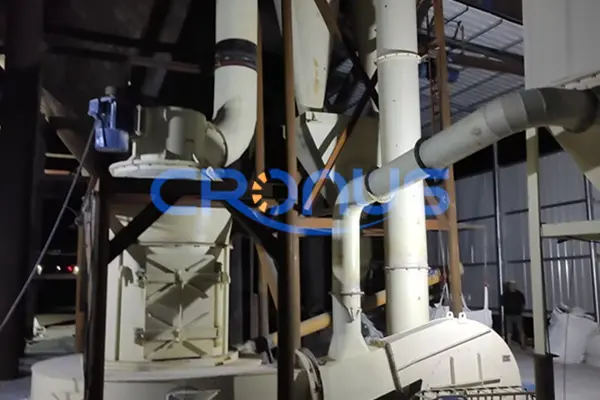
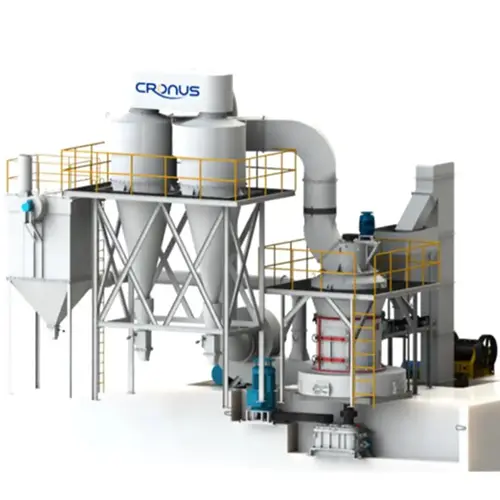
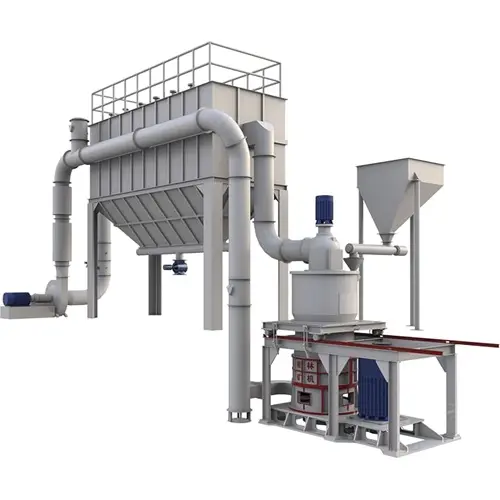
Raymond mill is a dry grinding equipment (dry grinding only), adopting a vertical structure design. During operation, the material is scooped up by the shovel blade and thrown between the grinding roller and the grinding ring. The grinding roller tightly presses against the grinding ring under centrifugal force, rolling and grinding the material. The finished product fineness is controlled by a classifier, with coarse powder returning to the grinding area for regrinding, and qualified fine powder being carried by airflow through the classifying wheel into the collection system, forming a closed-circuit cycle. The entire system operates under negative pressure driven by a fan, with powder conveyed in sealed pipelines, resulting in no dust pollution.
Working Principle Analysis of Ball Mill
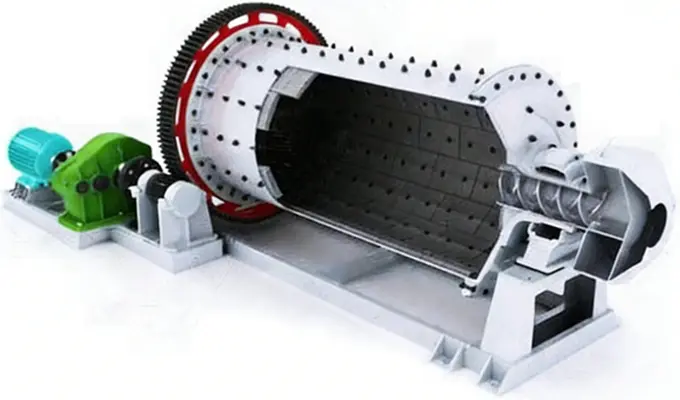
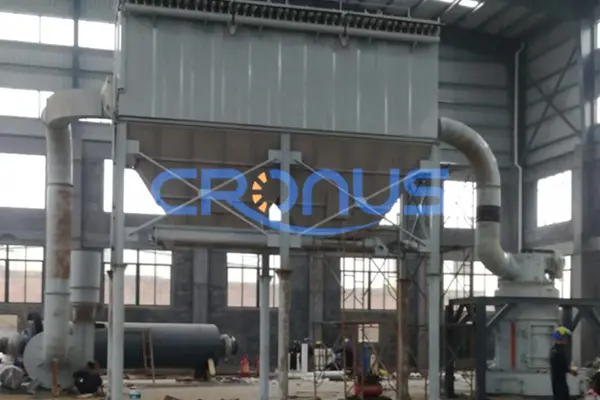
Ball mill can perform both dry and wet grinding, adopting a horizontal cylindrical structure, with steel balls of different specifications as the grinding media. During operation, the rotating cylinder uses centrifugal force to lift the steel balls to a certain height before dropping them, impacting, squeezing, and grinding the material. The material enters the first chamber through the feeding device for coarse grinding, then passes through the diaphragm plate into the second chamber for further fine grinding, and finally the finished powder is discharged through the discharge grate plate. Dry ball mills typically require a dust collection system, but their system sealing is weaker compared to Raymond mills; wet grinding does not involve dust issues.
Performance Index Comparison of Raymond Mill and Ball Mill
The following data is based on limestone material, Mohs hardness 3, feed size ≤25mm, finished product moisture content ≤1%, D97<325 mesh, tested under the same working conditions. The data is for reference only; specific parameters vary depending on raw materials and processes. For specific parameters, please consult us, and our professional technical team will answer your questions.
Energy Utilization
Raymond mill: Energy utilization rate is approximately 4%~7%. The built-in classifier can control the over-grinding rate to ≤25%. The unit power consumption is approximately 32~38 kWh/t, and the comprehensive energy consumption is reduced by 30%~40% compared to ball mill.
Ball mill: Energy utilization rate is approximately 3%~6%. The unit power consumption is approximately 45~55 kWh/t. The consumption of grinding media and liners is relatively high, resulting in higher operation and maintenance costs. However, the ball mill has a large reduction ratio (up to 300 or more), offering advantages when processing large-sized materials.
Application Scope
Raymond mill: Mainly used for grinding non-metallic minerals with Mohs hardness ≤7 and moisture content ≤6%. It has strict requirements for feed size, moisture content, and impurity control. When processing high-moisture materials, it is prone to adhesion and clogging, requiring drying equipment and the selection of pulse-jet membrane baghouse filters. It is not suitable for processing high-hardness materials, as this can cause severe wear to the grinding rollers and rings.
Ball mill: Has a wide range of applications, capable of processing various materials with Mohs hardness ≤9, especially excelling in processing high-hardness materials. It has strong adaptability to moisture content, impurities, etc. High-moisture materials can be flexibly handled through dry or wet grinding processes.
Finished Product Quality
Raymond mill: Finished product fineness can be adjusted within the range of 80~400 mesh, with a 325 mesh passing rate ≥95%. The finished powder has good particle size uniformity.
Ball mill: Finished product fineness can be adjusted within the range of 20~800 mesh, with a 325 mesh passing rate of approximately 90%~95%. Under the same 325 mesh working conditions, the particle size distribution of the finished product is wider than that of Raymond mill, with slightly poorer uniformity.
Operation and Maintenance Costs
Raymond mill: Initial investment cost is relatively low, approximately 50%~70% of that of a ball mill for the same production capacity. The core wear parts are the grinding rollers and grinding rings, with a grinding roller service life of approximately 1500~2500 hours. Operation and maintenance are simple, with short downtime for maintenance.
Ball mill: Initial investment cost is relatively high. The consumption of grinding media (steel balls) and liners is high, with steel ball consumption of approximately 100~300 g/t and liner life typically ranging from 3000~8000 hours. Operation and maintenance are complex, requiring regular replacement of steel balls and liners, with long downtime for maintenance.
How to Choose Between Raymond Mill and Ball Mill?
Although Raymond mill dominates the field of non-metallic mineral grinding in the 80~400 mesh range, ball mills still have irreplaceable application scenarios. In addition, modern ball mills are often combined with classifiers to form a closed-circuit system, creating a ball mill classification production line, which has significantly improved finished product fineness control and energy consumption compared to traditional ball mills (open-circuit process).
Application Scenarios for Raymond Mill
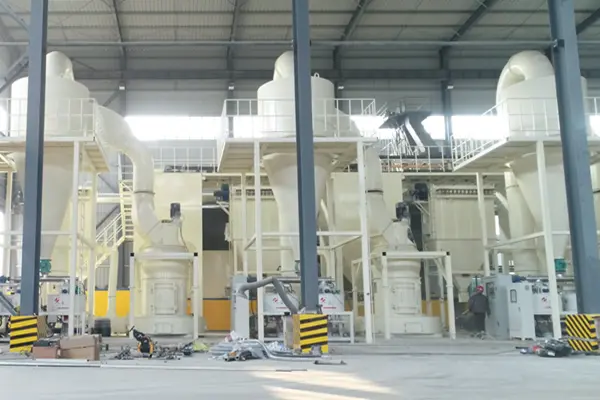
Raymond mill is mainly used for non-metallic minerals with Mohs hardness ≤7 and moisture content ≤6%. Within the conventional fineness range of 80~400 mesh, it offers high comprehensive cost-effectiveness, especially suitable for small to medium-scale projects with a single-unit capacity ≤20 t/h and requirements for finished product particle size uniformity. It is the preferred equipment for grinding non-metallic minerals such as limestone, calcite, barite, and talc.
Application Scenarios for Ball Mill
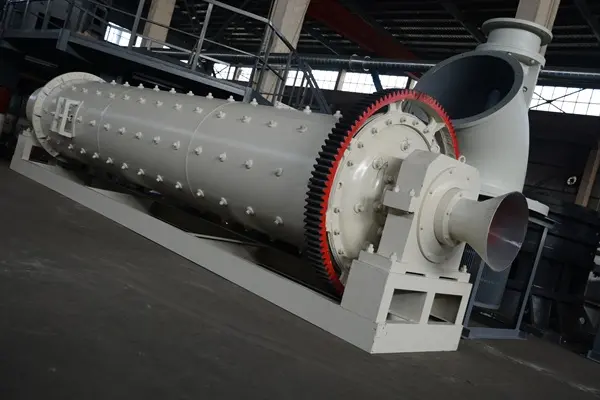
Ball mills are currently mainly used for processing high-hardness materials with Mohs hardness ≤9 (such as quartz, corundum, silicon carbide, etc.), as well as for wet grinding processes. They have a large reduction ratio (≥300) and strong adaptability to moisture content, impurities, etc. They offer advantages in scenarios with a single-unit capacity ≥30 t/h or finished product fineness requirements <80 mesh for coarse grinding. Although investment costs are high, operation and maintenance are complex, and unit power consumption is high, they are irreplaceable in processing high-hardness materials and special process requirements.
Application Scenarios for Ball Mill Classification Production Line
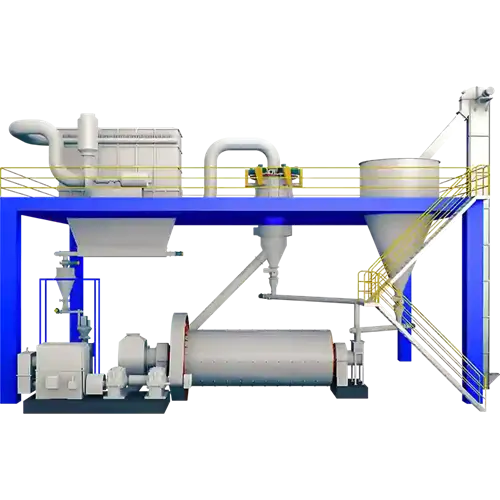
The ball mill classification production line (a closed-circuit system composed of a ball mill and a classifier) is mainly used in the field of ultra-fine powder processing from 400~1250 mesh. In this range, it offers significant advantages for processing ultra-fine powders. Compared with traditional ball mills, although the process is more complex, it has significantly improved finished product fineness control, energy utilization, unit power consumption, and production capacity, with comprehensive energy consumption reduced by 15%~25% and output increased by approximately 20%~30%.
Application Scenarios for Combination of Ball Mill and Raymond Mill
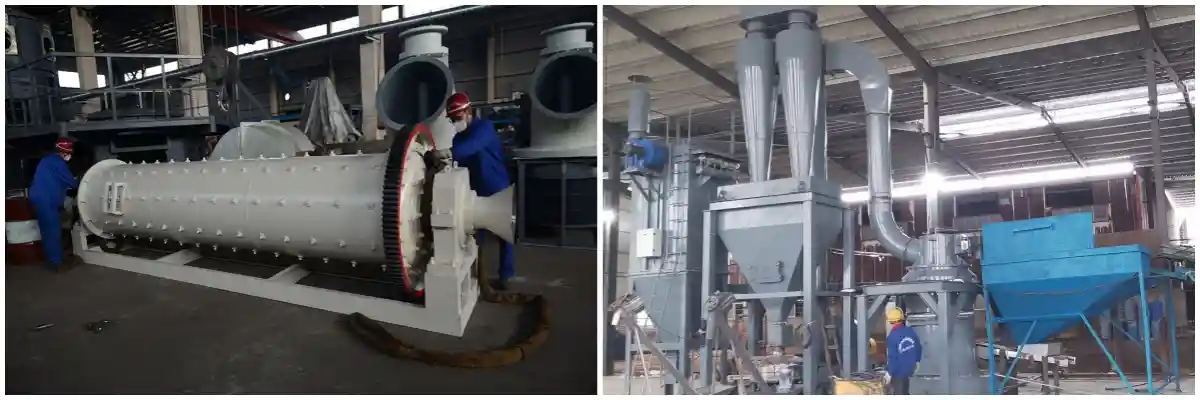
The combined process of ball mill and Raymond mill is mainly applicable to the liberation and recovery of metal-containing materials (such as primary aluminum ash). The ball mill, with its large reduction ratio, is responsible for coarse grinding and liberation, while the Raymond mill, with its uniform finished product particle size, is responsible for fine grinding and powder production. The two complement each other's functions, ensuring metal recovery rate while balancing grinding efficiency and energy consumption.
| Attribute Comparison of Raymond Mill and Ball Mill | |||
| Attribute | Raymond Mill | Ball Mill | Ball Mill Classification Production Line |
| Working Principle | Grinding roller presses against grinding ring to roll and grind material | Rotating cylinder drives steel balls to impact, squeeze, and grind material | Ball mill + classifier closed-circuit cycle, timely separation of finished product |
| Material Hardness | Mohs hardness ≤7 | Mohs hardness ≤9 | Mohs hardness ≤9 |
| Material Moisture Content | ≤6% (drying equipment required) | Strong adaptability, both dry and wet | Strong adaptability, both dry and wet |
| Finished Product Fineness | 80~400 mesh | 20~800 mesh | 400~1250 mesh (advantageous range, can be finer) |
| 325 Mesh Passing Rate | ≥95% | 90%~95% | 95%~98% |
| Finished Product Particle Size Distribution | Uniform | Slightly poorer uniformity | Good uniformity |
| Comprehensive Energy Consumption | 30%~40% lower than ball mill | Relatively high | 15%~25% lower than ball mill |
| Investment Cost | Relatively low | High | Highest (additional supporting equipment such as classifiers) |
| Operation and Maintenance | Simple structure, easy maintenance | Difficult maintenance, requires regular addition of steel balls and liners | Complex process, strict requirements for technical personnel |
| Reduction Ratio | ≤50 | ≥300 | ≥300 |
| Environmental Performance | Negative pressure sealed system, no dust leakage | Dry process requires dust removal, weaker sealing; no dust in wet process | Negative pressure sealed system, good environmental performance |
| Core Advantages | Low energy consumption, good finished product uniformity, low investment, simple maintenance | Large reduction ratio, strong adaptability, excels in processing high-hardness materials | Precise and controllable fineness, especially suitable for ultra-fine powder processing of high-hardness materials |
| Limitations | Not suitable for high-hardness, high-moisture materials; fineness upper limit of 400 mesh | High energy consumption, high maintenance costs, slightly poorer finished product uniformity | Complex process, high investment, large footprint |
Frequently Asked Questions About Raymond Mill and Ball Mill
Can Raymond Mill Replace Ball Mill?
Although Raymond mill offers high comprehensive cost-effectiveness and can replace ball mill in powder processing of low to medium hardness materials within the 80~400 mesh range, ball mills remain the primary equipment in areas such as processing high-hardness materials, wet processes, and coarse grinding, where Raymond mills cannot replace them. The two complement each other and are sometimes used in combination to leverage their respective advantages, such as using a ball mill for coarse grinding and liberation and a Raymond mill for fine grinding and powder production.
Should I Use a Raymond Mill or a Ball Mill for Processing Quartz?
Quartz has a Mohs hardness of 7, which is exactly the upper limit for Raymond mills. Although Raymond mills can process quartz, the grinding components wear out quickly and require frequent replacement, which is not conducive to large-scale industrial production. Even with upgraded and reinforced grinding components, the return on investment is not high. Therefore, ball mills are generally the preferred choice for processing quartz.
Should I Use a Raymond Mill or a Ball Mill for Fineness Below 80 Mesh?
For coarse powder processing below 80 mesh, a ball mill is the better choice. Ball mills have a large reduction ratio and can complete coarse grinding in a single pass through impact crushing, with material passing through once. Under coarse powder conditions, the unit power consumption and operation and maintenance costs are much lower than those of Raymond mills. In contrast, the efficient operating range of Raymond mills is 80~400 mesh. When processing coarse powder, the fan speed must be significantly reduced, causing a large amount of material to undergo repeated cyclic rolling, resulting in ineffective grinding, significantly increased power consumption and wear, and severely reduced output.
- Previous Article:Comparison Analysis of 6R/5R/4R/3R Raymond Mill Models
- Next Article:Comparative Analysis: Raymond Mill vs. Ultrafine Ring Roller Mill
 Home
Home Products
 About
About Call
Call