

Comparative Analysis of Raymond Mill and Vertical Mill
- Time:2026-03-10
- Views:112
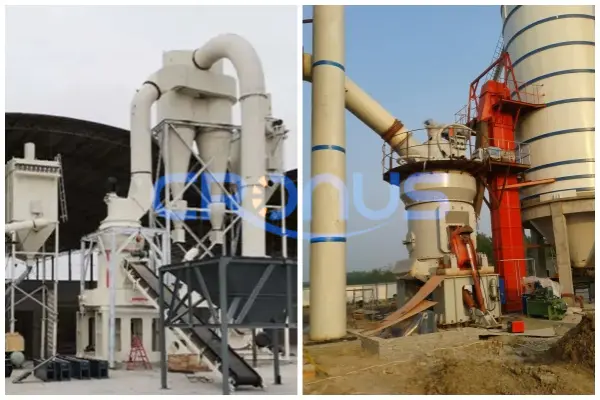
There is no absolute superiority or inferiority between Raymond mills and vertical mills. For low-moisture materials and small to medium-scale projects, the Raymond mill is recommended. For high-moisture materials and industrial-scale continuous production, the vertical mill is recommended.
Working Principle AnalysisPerformance Indicator ComparisonApplication Scenario RecommendationsFrequently Asked Questions
Core standards referenced in this article: JB/T 13877-2020 "Swing Mills", GB/T 35165-2017 "Vertical Roller Mills for Non-Metallic Minerals", GB/T 50542-2019 "Code for Design of Powder Engineering".
Working Principle Analysis: Raymond Mill vs Vertical Mill
Working Principle of Raymond Mill
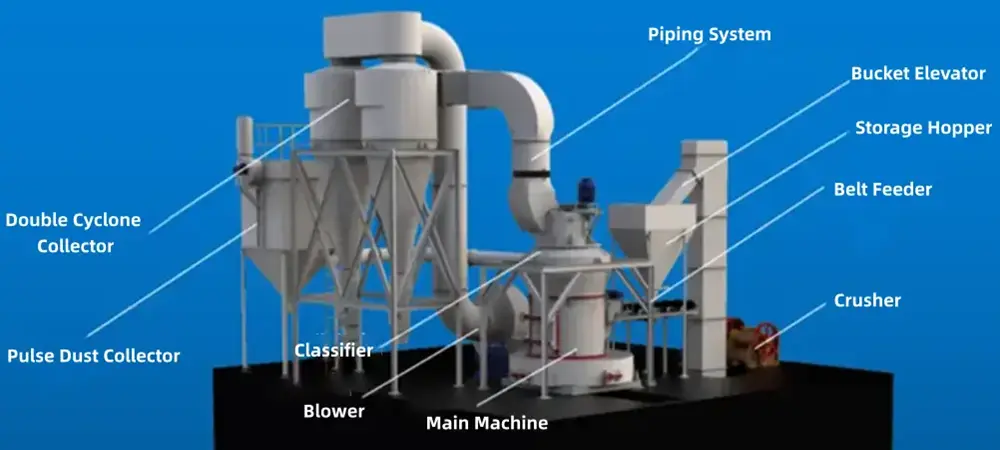
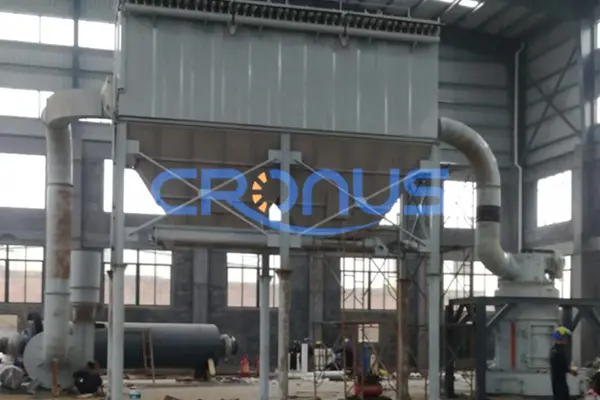
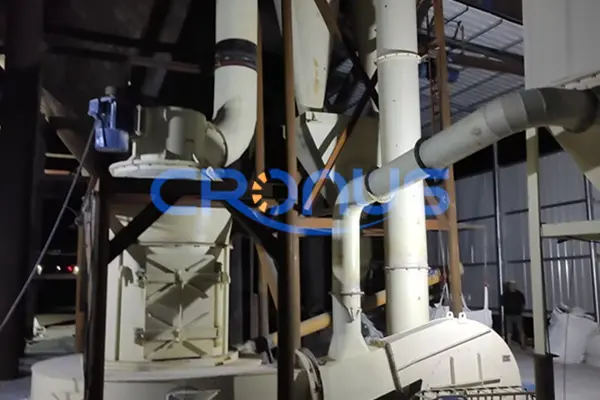
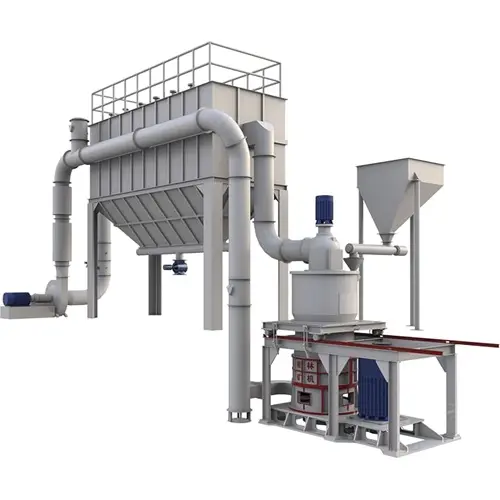
The Raymond Mill is a grinding device where grinding rollers, driven by centrifugal force, crush the material. Its core structure consists of a vertical main unit, a plum frame, a shovel blade, a grinding ring, grinding roller assemblies, a classifier, a fan, and a pipeline system.
During operation, the grinding rollers mounted on the plum frame rotate with the main shaft, continuously pressing against the fixed grinding ring under centrifugal force, while the rollers themselves rotate. Simultaneously, the shovel blade located beneath the grinding rollers also rotates at high speed with the plum frame, constantly scooping up material that has fallen to the bottom of the main unit and throwing it between the grinding rollers and the grinding ring, forming a material layer. After being compressed and ground by the rollers, the pulverized material is carried by the airflow to the classifier at the top. Qualified fine powder passes through the classifying wheel and enters the collection system, while unqualified coarse particles fall back to the grinding zone for regrinding, forming a closed-circuit system.
The fineness and output of the finished product are controlled by adjusting the rotational speed of the classifier and the system airflow. The higher the rotational speed, the finer the powder that passes through. The larger the airflow, the stronger the conveying capacity, and the more powder is carried to the classifier per unit time, directly impacting the output.
It should be noted that if the airflow is too high, it may carry coarse particles through the classifying wheel, causing the fineness of the finished product to become coarser. Conversely, if the airflow is too low, qualified fine powder cannot be removed from the grinding zone in time, potentially leading to over-grinding, affecting output, and increasing wear on the grinding rollers and ring. During production, the airflow and classifier speed must be matched and adjusted to pursue maximum output while ensuring the required fineness is achieved.
Working Principle of Vertical Mill
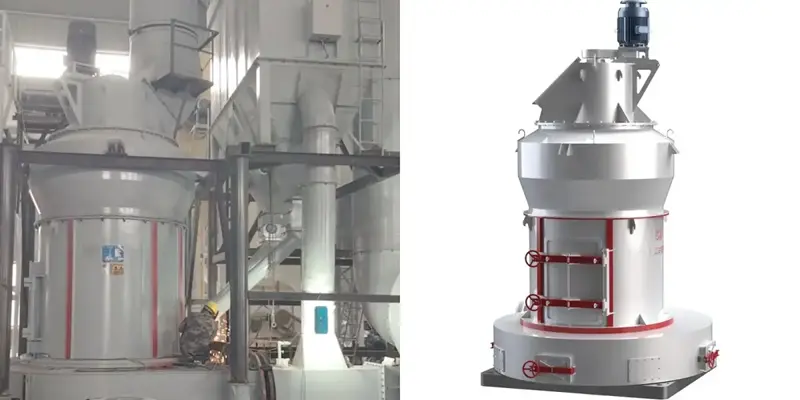
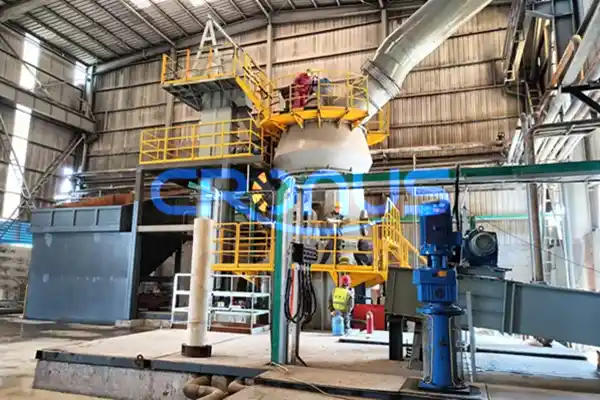
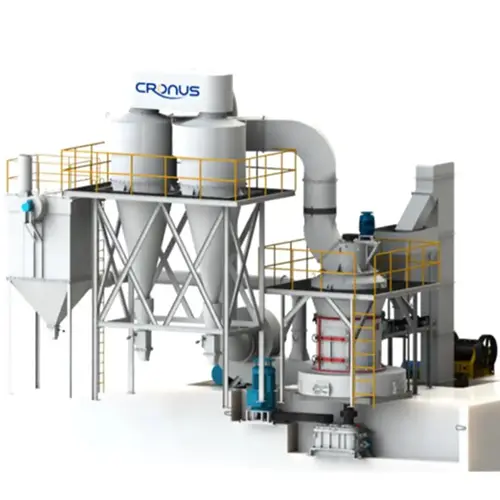
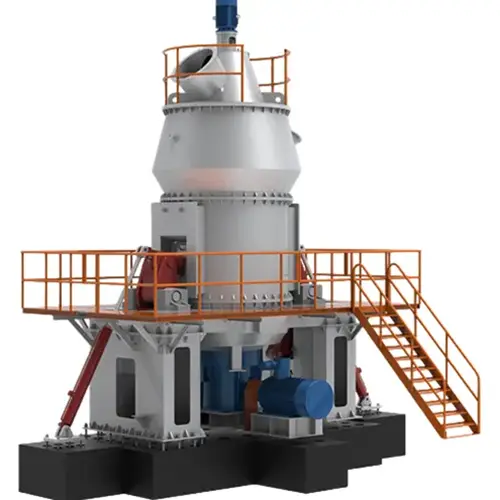
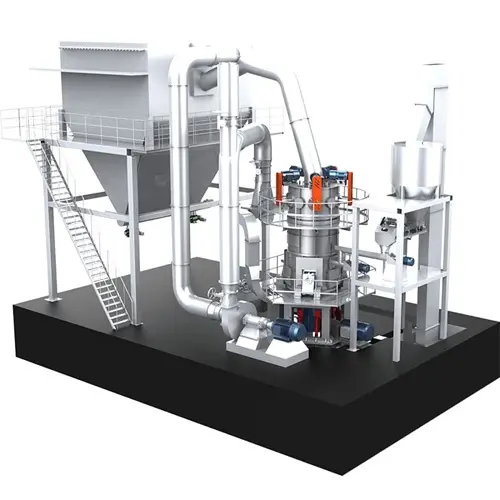
The Vertical Mill is a material bed grinding device driven by constant hydraulic pressure, integrating multiple functions such as drying, grinding, and classification. Its core structure consists of a grinding table, grinding rollers, a rocker arm device, a hydraulic pressurization system, a classifier, a fan, and a pipeline system.
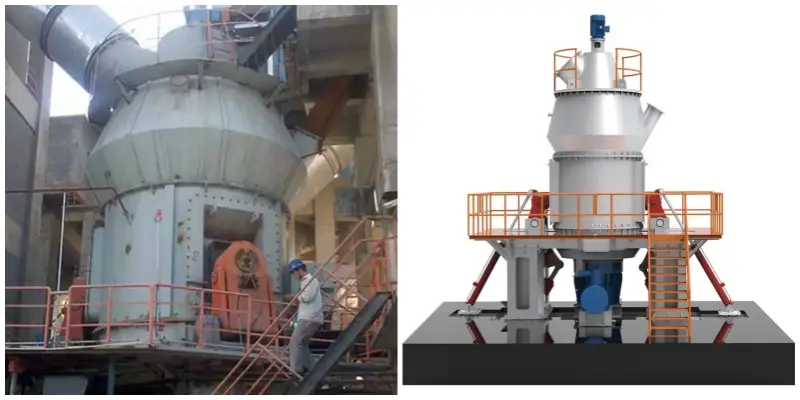
During operation, an electric motor drives the grinding table to rotate via a reducer. Material enters from the feed port and falls onto the center of the grinding table, moving towards its edge under centrifugal force. Meanwhile, the grinding rollers, under the action of the hydraulic system, continuously press down onto the material bed on the grinding table and rotate due to the friction of the material. The grinding rollers are positioned above the grinding table without direct contact; the material is crushed between the rollers and the table through compression and grinding.
Simultaneously with grinding, hot air entering through the nozzle ring dries the material. Fine powder is carried by the hot air to the classifier at the top. Qualified fine powder passes through the classifying wheel and enters the collection system, while unqualified coarse particles fall back to the grinding zone for regrinding, forming a closed-circuit system.
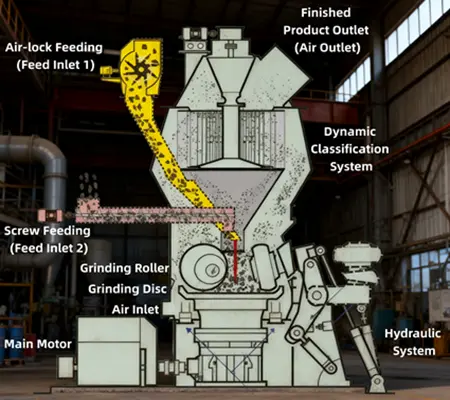
The fineness and output of the finished product are also controlled by adjusting the rotational speed of the classifier and the system airflow. Additionally, the hot air temperature and airflow determine the drying efficiency. During production, the airflow and classifier speed must be matched and adjusted, while seeking a balance between hydraulic pressure and material layer thickness to achieve maximum output while ensuring the required fineness and stable equipment operation.
Performance Indicator Comparison: Raymond Mill vs Vertical Mill
The following data is based on tests conducted with calcite material (Mohs hardness 3), feed particle size ≤25mm, finished product 200 mesh with D97 ≥90%, under identical operating conditions. Data is for reference only; specific parameters vary depending on the raw material and process. For specific parameters, please consult us, and our professional technical team will provide answers.
Energy Utilization
Raymond Mill: During grinding, the rollers press tightly against the ring, resulting in metal-to-metal contact. Energy utilization rate is 5%~8%, over-grinding rate ≤30%. For fineness exceeding 325 mesh, energy consumption increases exponentially. Under 400 mesh conditions, the power consumption per ton of powder can exceed 40 kWh/t.
Vertical Mill: During grinding, the rollers do not make direct contact with the grinding table, resulting in low metal wear. Energy utilization rate is 10%-15%, over-grinding rate ≤15%. It saves 25%~30% energy compared to Raymond mills, with unit power consumption of only 20~28 kWh/t.
Scale of Application
Raymond Mill: Suitable for materials with Mohs hardness ≤7, optimally suited for materials with low to medium hardness (≤4). Feed moisture requirement ≤6%; requires pre-drying equipment when processing high-moisture materials. Feed particle size generally required to be ≤30mm. Single unit output ranges from 0.3 to 35 t/h, maximum annual capacity ≤300,000 tons. Scalability is poor for outputs >10 t/h; mainly used for small to medium-scale powder processing. Large-scale projects typically adopt a multi-unit parallel operation mode.
Vertical Mill: Wider applicability, can handle materials with Mohs hardness ≤9.5. Strong drying capacity, no need for auxiliary drying equipment. Feed moisture requirement ≤15% (≤25% with special configurations, such as GKLM coarse powder vertical mill). Feed particle size generally ≤50mm. Single unit output ranges from 2 to 420 t/h, maximum annual capacity can reach over 2 million tons. It is the main equipment for large-scale industrial powder production.
Product Fineness
Raymond Mill: Dynamic classification system (rotating impeller). Product fineness ranges from 80 to 400 mesh, with uniform particle size distribution. With an ultra-fine classifier or high-pressure suspension roller device, fineness can reach 600 mesh, but output decreases significantly above 400 mesh. The efficient grinding range remains 80~400 mesh.
Vertical Mill: Combined dynamic and static classification system (dynamic rotor + static vanes). Product fineness ranges from 80 to 600 mesh, with concentrated particle size distribution and higher classification precision than Raymond mills. (Ultrafine vertical mills can reach 2500 mesh)
Operation and Maintenance Costs
Raymond Mill: Lower initial investment cost, only about 1/3 of a vertical mill. Grinding roller and ring service life is approximately 800~2500 hours. Single downtime is 4~8 hours. Offers high comprehensive cost-performance ratio.
Vertical Mill: Higher initial investment cost, but lower energy consumption and maintenance costs. Saves 25%~30% energy compared to Raymond mills. Groller tyres can be reversed for extended use. Service life of roller tyres and table liners is 6000-12000 hours. Operation and maintenance cost per unit of output is only 30%~50% of a Raymond mill. Annual downtime for maintenance is reduced by over 70%, offering high return on investment for long-term operation.
How to Choose Between Raymond Mill and Vertical Mill?
There is no absolute superiority or inferiority between Raymond mills and Vertical mills. Correctly matching the equipment to the appropriate application scenario and material characteristics is key to efficient production.
Optimal Application Scenarios for Raymond Mill
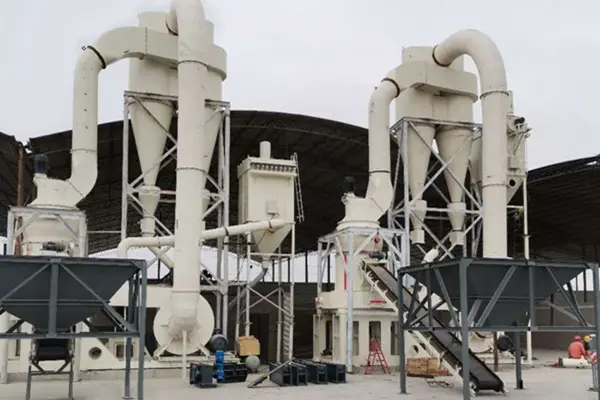
Production Scale: Small to medium-scale projects with annual capacity ≤100,000 tons and rated output ≤5 t/h, or pilot projects and temporary production lines.
Material Characteristics: Dry, low to medium hardness non-metallic minerals with Mohs hardness ≤4 and feed moisture ≤6%, such as limestone, dolomite, calcite, etc.
Quality Requirements: General powder products with no strict requirements for particle size distribution or purity, such as building powder, common building material additives, etc.
Project Attributes: Small to medium-sized private enterprises with limited budgets, requiring short investment payback periods, and constrained by site limitations.
Optimal Application Scenarios for Vertical Mill
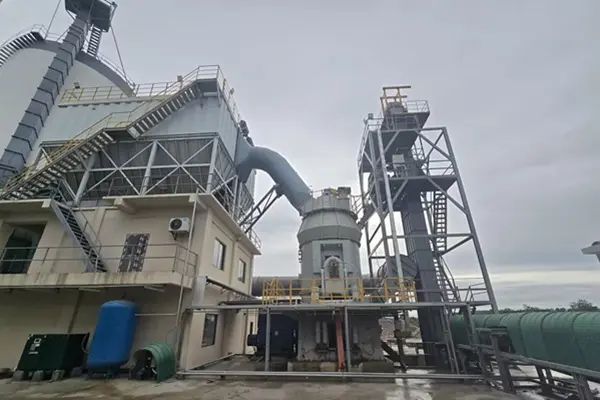
Production Scale: Medium to large-scale projects with annual capacity ≥100,000 tons and rated output ≥5 t/h, especially large-scale industrial projects requiring continuous and stable production.
Material Characteristics: Medium to high hardness, highly abrasive materials with Mohs hardness ≥4, or high-moisture materials with feed moisture ≥6%, such as slag, steel slag, cement clinker/raw meal, etc.
Quality Requirements: High-end powder products with strict requirements for particle size distribution, whiteness, purity, and yield, such as functional fillers for plastics, coatings, papermaking, rubber, and high-end building material powders.
Project Attributes: Large enterprises or group projects with ample funding, focusing on long-term operating costs and pursuing long-term return on investment.
| Comparative Analysis of Application Scenarios: Raymond Mill vs Vertical Mill | ||
| Application Scenario | Raymond Mill | Vertical Mill |
| Small to Medium Scale | Low investment, fast payback, high comprehensive cost-performance | High initial investment, risk of capacity idleness |
| Large Scale (Annual Capacity ≥300,000 tons) | Poor single-unit scalability, requires multi-unit parallel operation | High single-unit output, low operating energy consumption |
| 80-400 Mesh, Low to Medium Hardness Materials | Efficient grinding range |
Performance surplus, relatively higher investment |
| High Hardness Materials (Mohs Hardness >7) | Rapid wear, requires upgraded core grinding components | Low metal wear, long service life |
| High Moisture Materials (Moisture >6%) | Requires pre-drying equipment | Integrated drying function, strong drying capacity |
| 400-2500 Mesh Ultra-fine Powder | Fineness limitation cannot meet requirements (600 mesh achievable with special processes) | Ultra-fine vertical mill optional, high classification precision |
Frequently Asked Questions about Raymond Mill and Vertical Mill
What are the advantages and disadvantages of multi-unit parallel Raymond mills compared to a single Vertical mill?
Multi-unit Parallel Raymond Mills: Lower investment threshold, higher overall fault tolerance. Allows for phased capital investment, and the total cost is lower than a single vertical mill. In production, if one unit stops, others continue operating, minimizing capacity risk. Enables parallel processing of multiple products (e.g., 2 mills for 200 mesh, 2 mills for 325 mesh), flexibly responding to small-batch, multi-order demands, meeting the needs of various industries. However, the process system is complex, requiring selection of an experienced manufacturer (such as Cronus Machinery).
Single Vertical Mill: High initial investment, but simple maintenance, low operating energy consumption, and high long-term return on investment. The equipment has a high level of integration, occupies a small footprint, reducing investment costs for workshop buildings and steel structures.
Which is more durable, Raymond Mill or Vertical Mill?
Raymond Mill: Optimally suited for hardness ≤4. Wear accelerates sharply above hardness 7. Grinding roller/ring service life is only 800~2500 hours.
Vertical Mill: Can handle materials with Mohs hardness ≤9.5. Roller tyre service life is 6000~12000 hours (reversible for extended use). Wear resistance is higher than Raymond mills.
Which achieves higher fineness, Raymond Mill or Vertical Mill?
Raymond Mill: Efficient grinding range is 80~400 mesh. Output decreases significantly above 400 mesh. Special processes can achieve 600 mesh.
Vertical Mill: Standard vertical mills achieve 80~600 mesh. Ultrafine vertical mills can reach 2500 mesh, offering higher classification precision and more concentrated particle size distribution.
- Previous Article:Comparative Analysis: Raymond Mill vs. Ultrafine Ring Roller Mill
- Next Article:没有了!
 Home
Home Products
 About
About Call
Call