

Carbon Black Grinding Mill and Production Line Process
- Time:2026-04-07
- Views:37
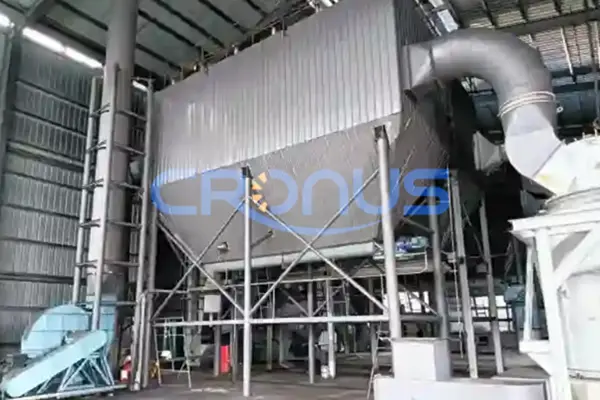
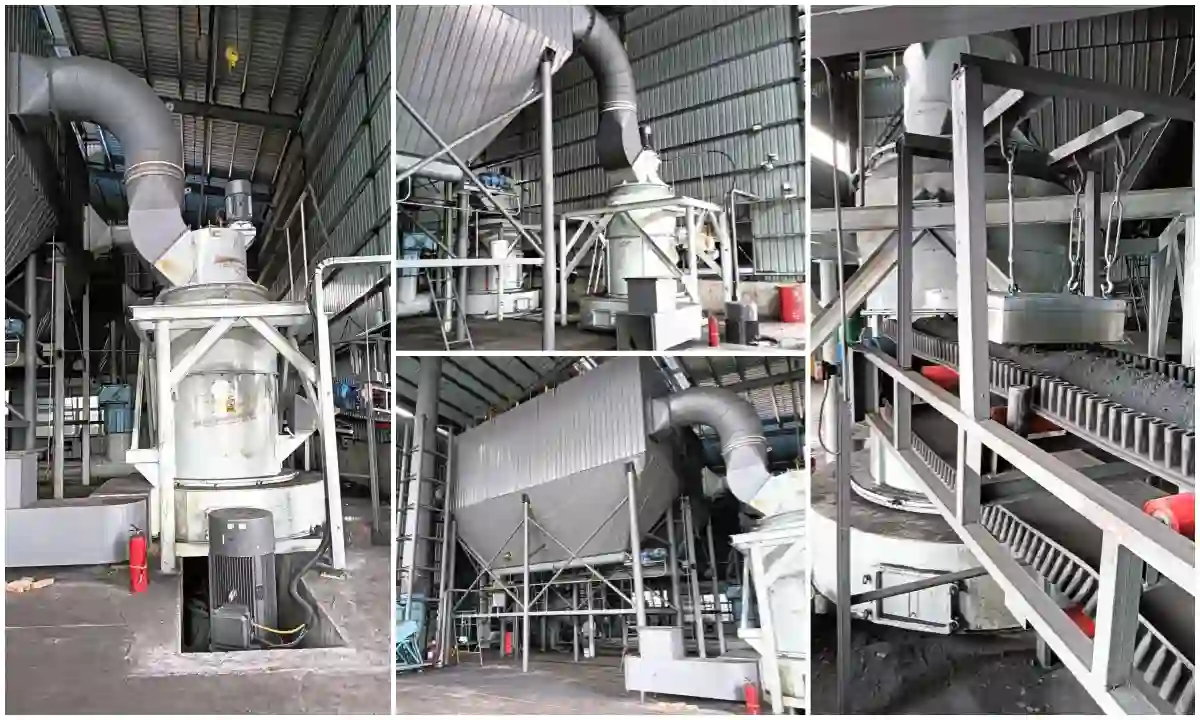
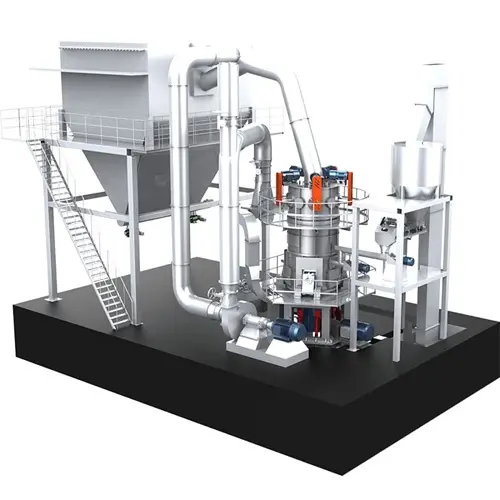
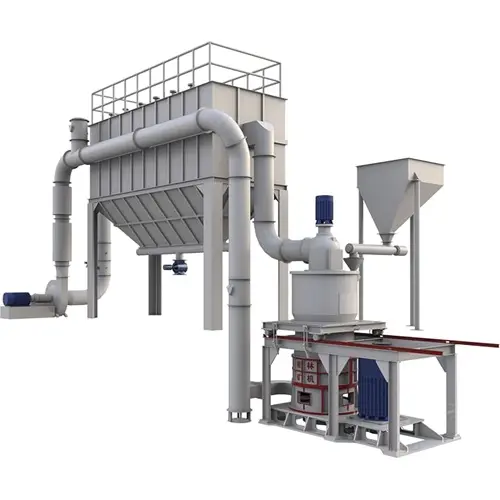
A carbon black grinding mill is equipment that grinds carbon black into powder. For processing 80~400 mesh regular carbon black powder, a Raymond mill with an open-circuit system is selected. For processing ultra-fine carbon black powder above 400 mesh, an ultra-fine ring roller mill with an open-circuit system is selected. If higher requirements for the particle size distribution of the finished product are needed, a combined process of open-circuit pre-grinding + closed-circuit classification must be adopted.
What is Carbon Black?
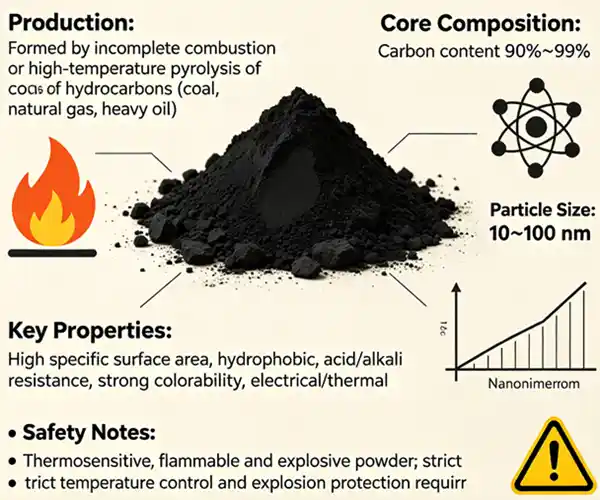
Carbon black is a black powder produced by incomplete combustion or high-temperature pyrolysis of hydrocarbons such as coal, natural gas, and heavy oil. Its core component is carbon (content 90%~99%), with primary particle sizes ranging from 10 to 100 nm. It features high specific surface area, hydrophobicity, acid and alkali resistance, strong coloring ability, and certain electrical and thermal conductivity. As a heat-sensitive, flammable, and explosive powder, carbon black requires strict temperature control and explosion-proof measures during grinding.
Key Considerations for Carbon Black Grinding Production Line
Dust Explosion: Carbon black dust presents an explosion risk at concentrations of 50 g/m³ (varies by grade). During grinding, safety and explosion-proof measures must be taken: First, equip a nitrogen protection system to control oxygen content within the system to ≤8%. Install explosion relief valves and venting panels on key equipment, and use anti-static filter bags along with explosion-proof motors and explosion-proof electrical control cabinets. It is recommended to provide reliable grounding for all pipes and hoppers (grounding resistance <10Ω), and install static eliminators at the classifier outlet.
Temperature Control: Carbon black tends to adhere, cake, or even oxidize and spontaneously combust due to heat generated during grinding. Therefore, the grinding chamber temperature must be strictly controlled to ≤70°C. For heat-sensitive carbon black grades, cooling gas should be introduced to control the chamber temperature.
Metal Contamination Protection: A strong magnetic separator must be installed before grinding to prevent metal foreign matter from entering the mill. Otherwise, metal particles may impact core components such as grinding rollers and rings, generating sparks and causing combustion or explosion accidents.
Storage & Transportation: Finished carbon black powder should be packaged in moisture-proof woven bags to avoid compaction and caking. Store in a dry, well-ventilated warehouse away from ignition sources. Do not store together with oxidizers. During transportation, avoid exposure to sunlight and violent vibration, and equip vehicles with flame arrestors when necessary.
How to Select the Right Carbon Black Grinding Mill?
80~400 Mesh Carbon Black Powder Processing
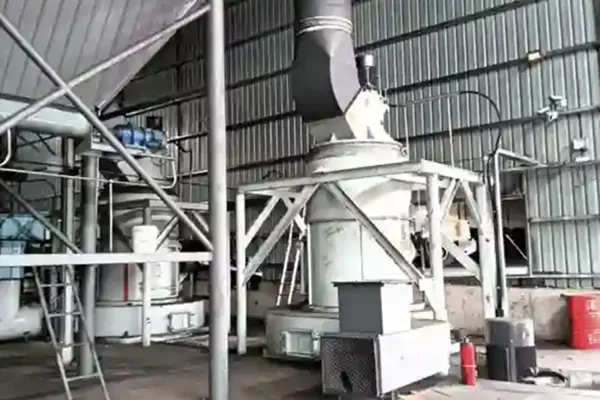
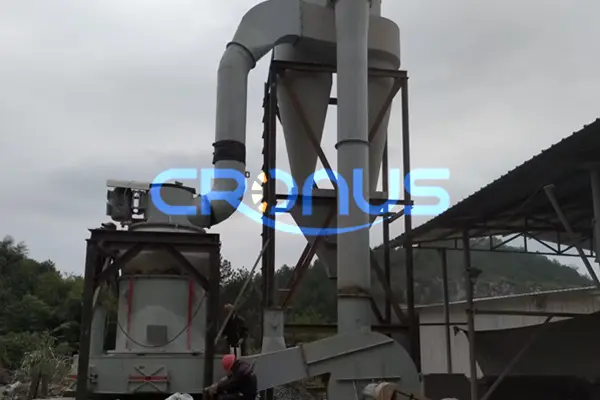
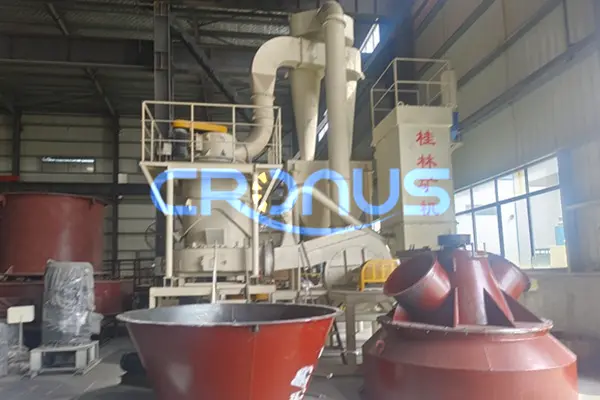
For 80~400 mesh carbon black powder processing, an open-circuit Raymond mill is typically used. This process features a simple structure and low equipment investment. The carbon black is quickly discharged and collected as finished product after a single pass, significantly reducing the residence time of the material in the grinding chamber and effectively avoiding combustion risks caused by over-grinding or temperature rise. It is suitable for conventional industrial applications such as rubber and coatings where particle size requirements are not stringent.
Above 400 Mesh Carbon Black Ultra-Fine Powder Processing
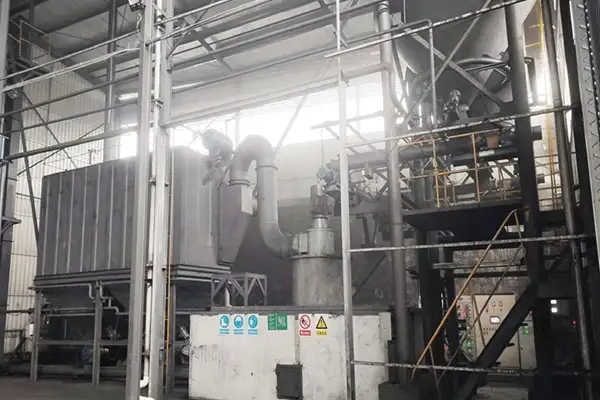
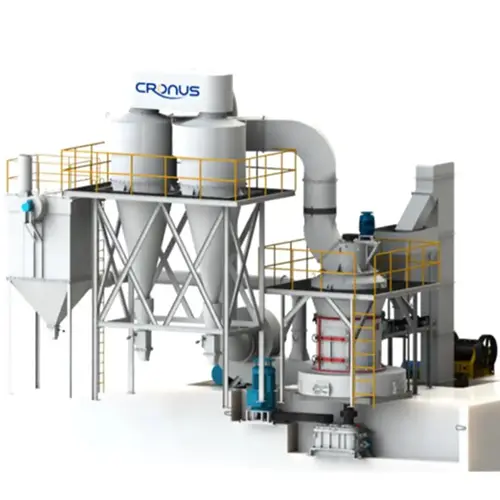
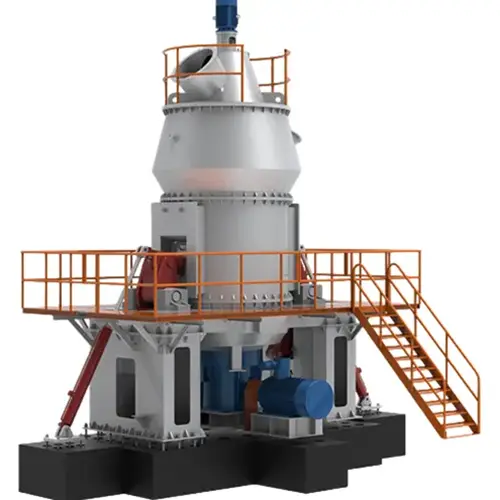
For carbon black ultra-fine powder processing above 400 mesh, an open-circuit ultra-fine ring roller mill is typically used. When strict particle size distribution standards are required (e.g., high-end conductive carbon black D50 ≤5μm, pigment carbon black D97 ≤8μm), the open-circuit process, lacking recirculation for regrinding, results in relatively wider particle size distribution and poorer uniformity, failing to meet high-end application requirements. In such cases, a combined process of open-circuit pre-grinding + closed-circuit classification is required. The open-circuit ring roller mill pre-processes the carbon black to 400~800 mesh, followed by classification using a high-precision turbo air classifier, equipped with a sealed recirculation conveying device to form a closed-circuit loop.
Process Flow of Carbon Black Grinding Production Line
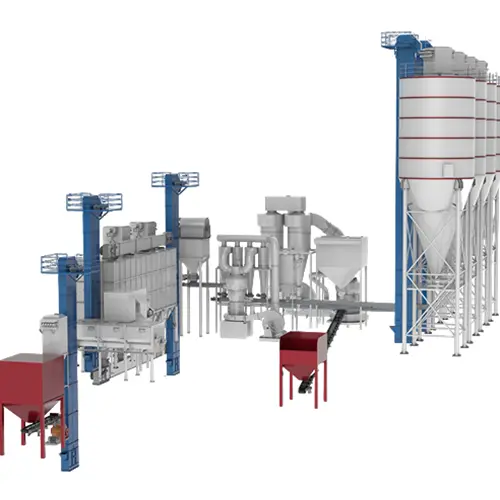
Carbon black grinding production lines typically use open-circuit mills. Due to the inherently small particle size of the raw material, crushing is generally not required. After pre-treatment including iron removal and screening, the material is evenly fed into the open-circuit carbon black grinding mill by a feeder. After a single pass, it is quickly discharged and collected as finished product.
The system is equipped with nitrogen inerting protection, explosion venting panels, explosion relief valves, explosion-proof electrical equipment, and spark detection devices. PLC automatic control maintains the grinding chamber temperature stably within 70°C while strictly controlling the oxygen content inside the mill to prevent high-temperature spontaneous combustion of carbon black powder and dust explosions.
Application Scenarios of Carbon Black Grinding Mill
Frequently Asked Questions About Carbon Black Grinding
Are all carbon black grinding mills open-circuit systems?
No. Any carbon black grinding mill can be configured as either an open-circuit or closed-circuit system depending on production requirements. The choice between these two processes mainly depends on your requirements for finished product fineness and particle size distribution.
Can a conventional classifier be used in a closed-circuit carbon black grinding mill system?
Closed-circuit systems in carbon black grinding mills are typically used for ultra-fine carbon black processing. Ultra-fine carbon black powder tends to adhere easily, and using a conventional classifier can lead to clogging and metal contamination. A high-precision turbo air classifier must be used. When necessary, high-pressure sealing gas can be introduced to form a gas barrier and eliminate metal contamination.
How to improve the purity of finished carbon black powder?
In addition to equipping magnetic separators, wear of grinding components such as rollers and liners in carbon black grinding mills can also generate trace amounts of iron filings. Using fully ceramic-lined grinding rollers and classifier wheels can reduce metal wear and further improve finished product purity.
Recommendations
-
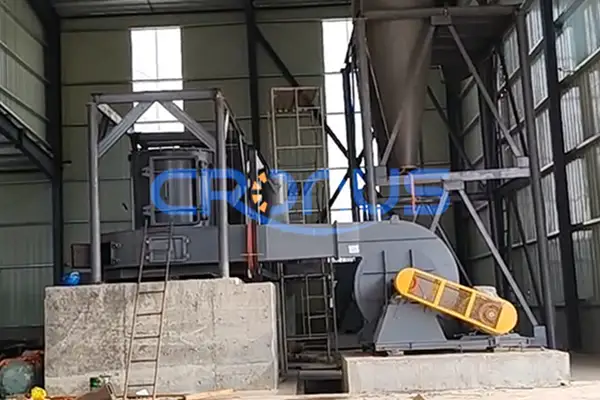 How to construct a standard foundation for a Raymond Mill?
 -
 Can Sand‑Powder Integrated Machines Truly Achieve Co‑production? Equipment Selection Guide
 -
 Deep‑Dive Analysis of Working Principle of Raymond Mill
 -
 Why do the grinding roller shaft and the central shaft of a Raymond mill need to undergo heat treatm
 Home
Home Products
 About
About Call
Call