

Calcium Hydroxide Grinding Mill and Production Line Process
- Time:2026-03-13
- Views:99
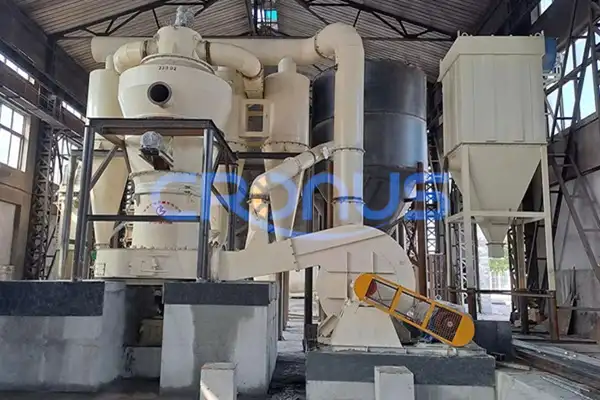
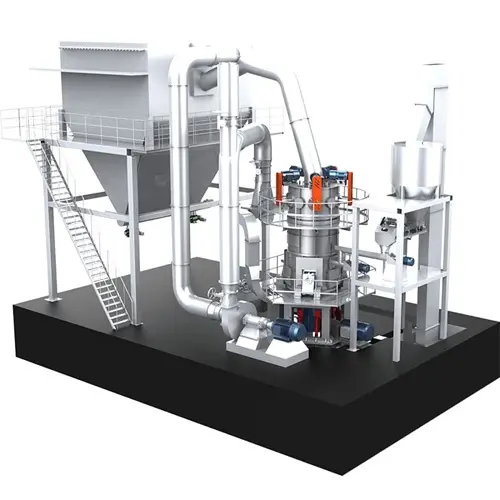
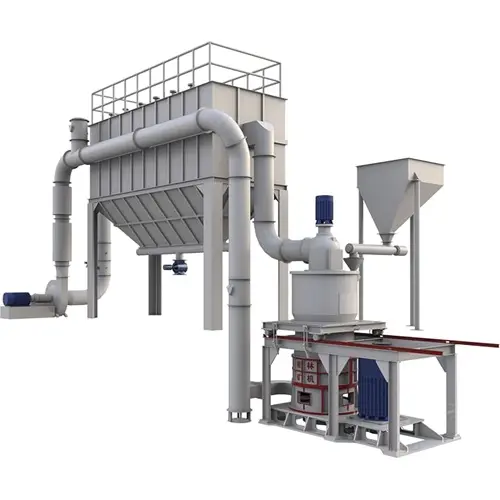
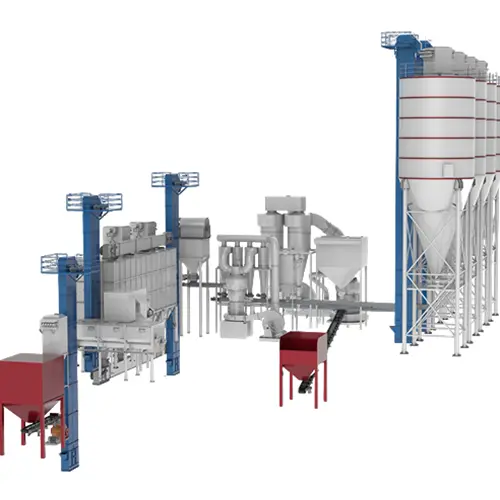
A calcium hydroxide grinding mill is equipment that grinds calcium hydroxide into powder. Due to the strong adhesion of calcium hydroxide, ordinary grinding mills cannot grind it efficiently, requiring the use of a hydrated lime grinding mill with a full-system anti-sticking design. A complete calcium hydroxide production line mainly consists of a lime slaker, a hydrated lime classifier, a hydrated lime grinding mill, and a water mist dust collector. The process mode must be matched according to the product positioning.
What is Calcium Hydroxide?
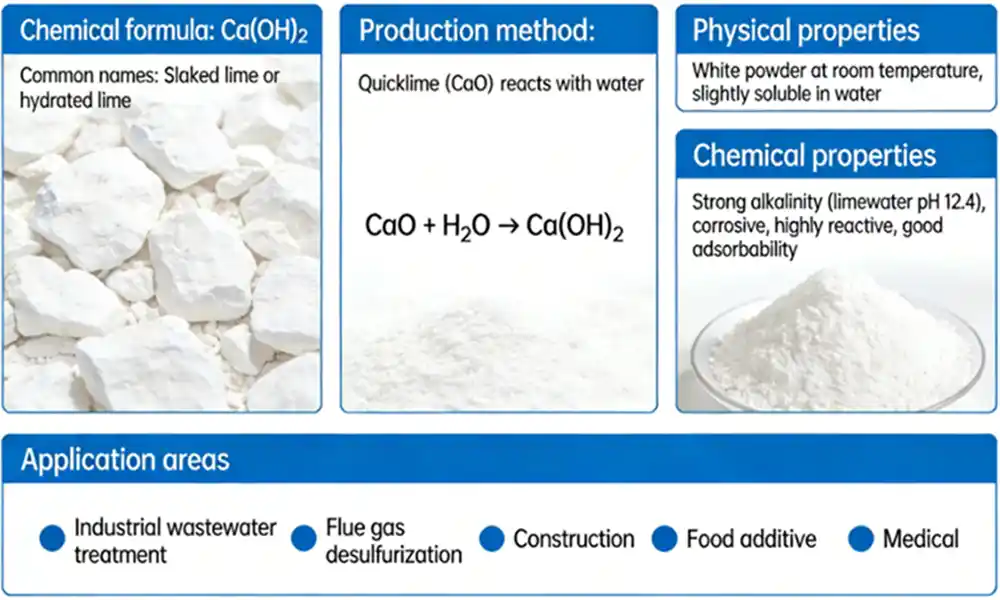
Calcium Hydroxide (chemical formula: Ca(OH)₂), commonly known as hydrated lime or slaked lime, is a strong alkaline compound produced by the hydration reaction of quicklime (Calcium Oxide, CaO) with water. Its aqueous solution (lime water) has a pH value of up to 12.4 and is corrosive. At room temperature, it appears as a white powder with slight solubility in water. It is characterized by strong alkalinity, high reactivity, and good adsorptive properties. Typically processed into powders of varying fineness, it is widely used in industrial wastewater treatment, flue gas desulfurization (FGD), construction, food additives, and pharmaceutical applications.
Key Considerations for Calcium Hydroxide Grinding Production Line
Raw Material Preparation: Quicklime raw material generally requires high CaO purity (>90%), high activity, and low impurities. Before entering the mill, it must be crushed by a jaw crusher to a suitable particle size (≤30mm). Vibrating screens and magnetic separators (iron removers) are used to remove over-burnt or under-burnt lime and metallic impurities, ensuring uniform particle size and standard purity.
Hydration Process: The hydration reaction requires precise control of the water-to-lime ratio (typically between 0.6:1 and 0.8:1). Key parameters such as hydration temperature, water addition rate, and mixing intensity must be optimized to ensure thorough and uniform reaction between quicklime and water, yielding Calcium Hydroxide with high specific surface area and high reactivity. The homogenized Calcium Hydroxide often requires aging for 8 to 24 hours to allow complete hydration of any remaining fine particles, further enhancing the specific surface area. Note: Hydration and aging times depend on the quality requirements of the final Calcium Hydroxide powder and are not arbitrarily prolonged.
Dust Management: Calcium Hydroxide dust is alkaline and irritating. Pulse jet baghouse dust collection systems must be installed at all dust generation points to ensure emissions comply with standards. Current advanced industry practices utilize pulse mist dust collection technology. This involves primary dust collection via a pulse jet bag filter, followed by multi-stage purification in a water mist dust collector, which also recovers heat. This process enhances the hydration reaction, improves product quality, achieves ultra-low particulate emissions, reduces requirements for bag heat and stick resistance, and lowers operational costs.
Packaging and Storage: The finished Calcium Hydroxide powder must be packaged in sealed, moisture-proof bags to prevent absorption of atmospheric moisture and Carbon Dioxide (CO₂), which leads to carbonation (forming Calcium Carbonate) and reduces activity. Storage should be in a dry, well-ventilated warehouse with strict moisture protection. Storage with acids is strictly prohibited.
How to Select the Right Calcium Hydroxide Grinding Mill?
The Calcium Hydroxide slurry produced after hydration exhibits strong adhesiveness. Conventional grinding mills cannot process it efficiently due to clogging and build-up. Specialized equipment with a full-system anti-adhesion design, such as a hydrated lime grinding mill, is required.
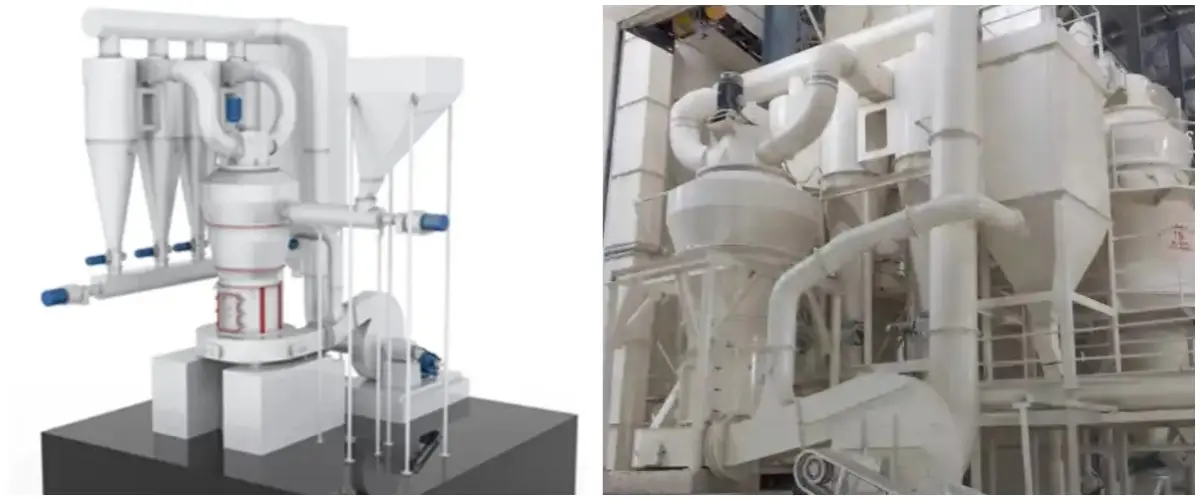
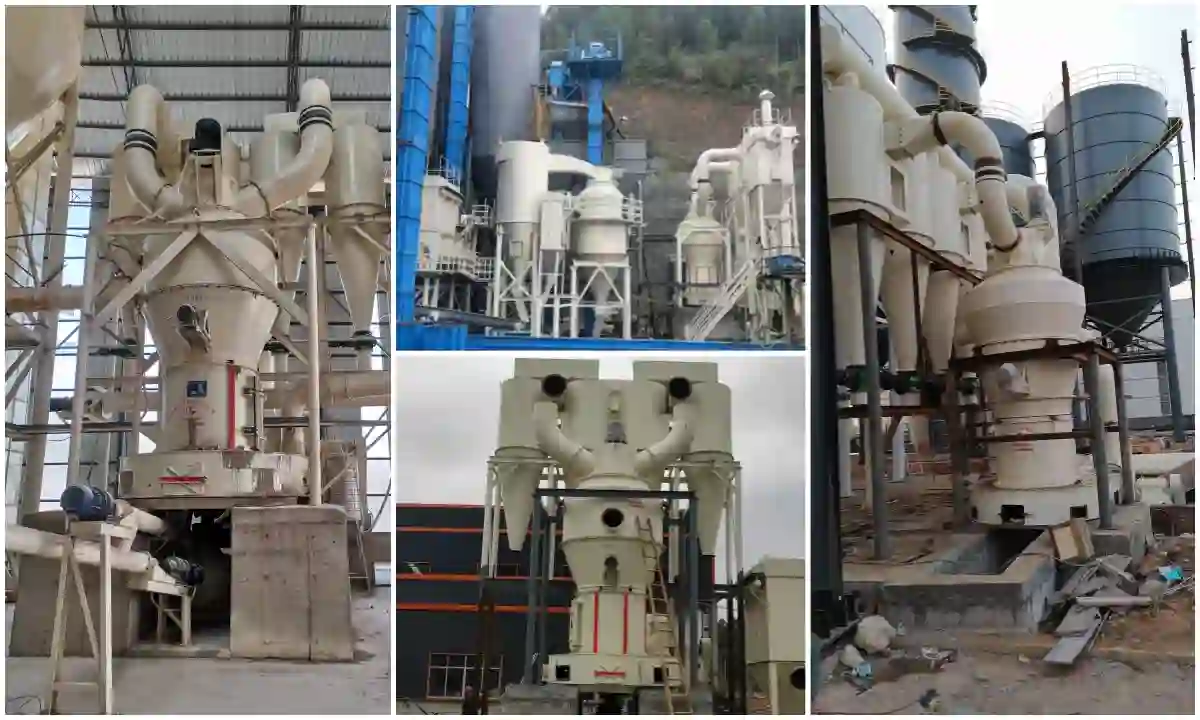
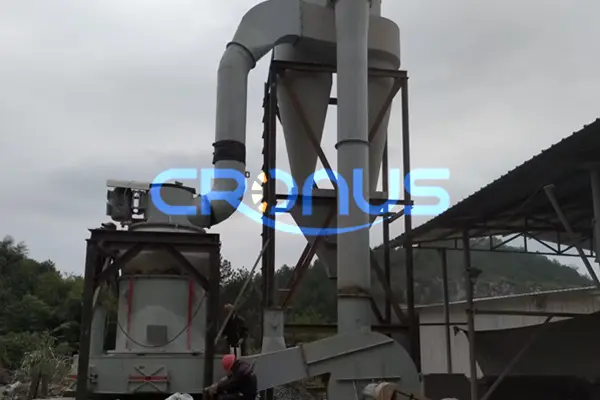
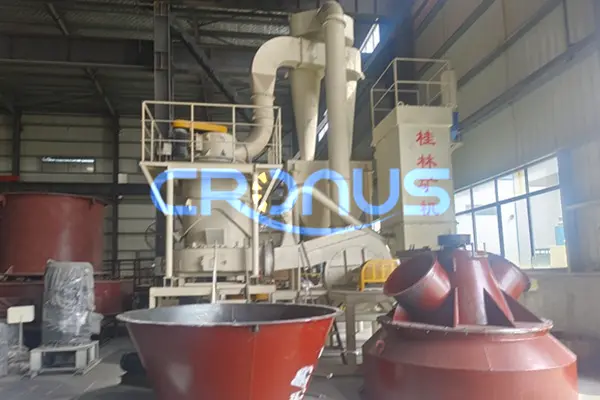
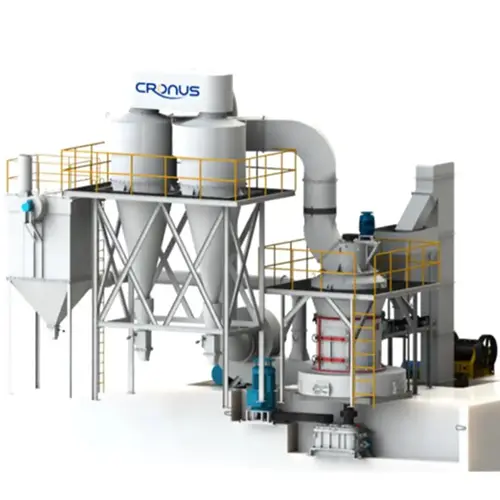
The hydrated lime grinding mill is a specialized grinding unit specifically engineered to address the challenges of processing Calcium Hydroxide, namely its light texture, easy adsorption, and strong viscosity. Based on the Raymond mill principle, it incorporates a full-system anti-adhesion design and multi-stage dispersion technology. By modifying the mill main unit cavity shape, plow structure, and fan system, it effectively resolves the processing difficulties encountered with standard mills. It is the critical equipment for producing high-quality (high activity, high fineness, high specific surface area) Calcium Hydroxide powder.
General Grade Calcium Hydroxide Production: A hydrated lime grinding mill may not be required. Production can be achieved directly by classifying the hydrated product using a hydrated lime classifier. Coarse particles are rejected directly. This process is simple with lower investment costs, suitable for applications with lower fineness and purity requirements, such as construction mortar and wall putty powder.
Industrial Grade Calcium Hydroxide Production: Requires a hydrated lime grinding mill for grinding. The finished powder achieves uniform purity and fineness, making it suitable for general industrial manufacturing sectors like plastics and rubber.
Environmental Grade Calcium Hydroxide Production: Generally does not require a grinder. Production typically involves classification using a hydrated lime classifier. Rejected coarse particles are returned to the lime slaker for further processing. The resulting powder exhibits high activity and fast reaction rates, suitable for applications like power plant desulfurization (FGD) and general wastewater treatment.
Premium Grade / High Specific Surface Area (HSA) Calcium Hydroxide Production: Requires both a hydrated lime classifier for selection and a hydrated lime grinding mill for grinding. The finished product is characterized by high activity, high fineness, and high specific surface area, meeting the stringent demands of high-end applications in the food, pharmaceutical, and advanced environmental remediation sectors.
Calcium Hydroxide Production Line Process Flow
A complete Calcium Hydroxide production line mainly consists of a lime slaker, a hydrated lime classifier, a hydrated lime grinding mill, and a water mist dust collector. Burnt lime is first crushed by a jaw crusher and screened by a vibrating screen to ensure the raw material meets the mill feed requirements.
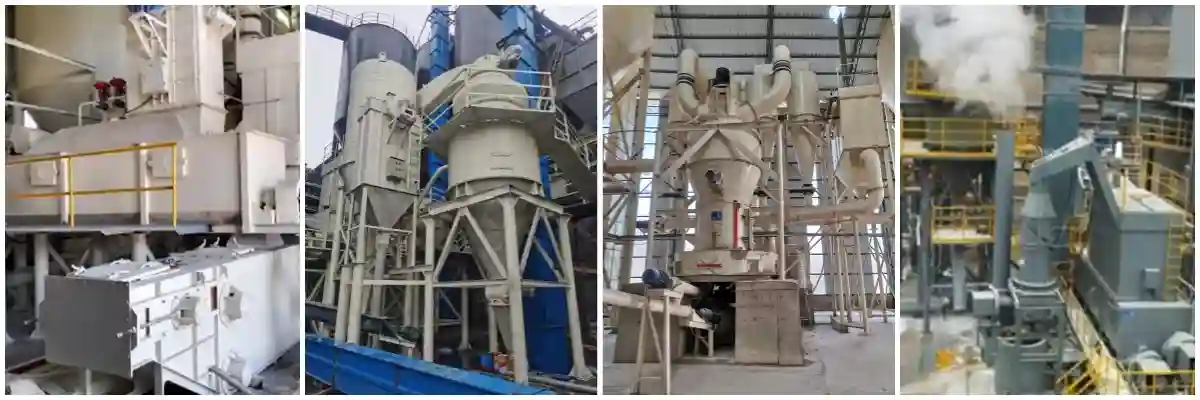
It is then fed by a volumetric or weigh feeder into the lime slaker (often comprising a double-shaft mixer followed by a single-shaft mixer). By precisely controlling the water-to-lime ratio, reaction temperature, hydration time, and mixing intensity, highly reactive Calcium Hydroxide is produced. For producing Ultra-High Specific Surface Area (HSA) Calcium Hydroxide, a two-stage hydration system (e.g., twin-shaft mixer + chain conveyor hydrator) may be employed.
The hydrated product is a mixture of finished fines and oversize particles, ready for separation. Depending on the product requirements, the system can flexibly integrate a hydrated lime classifier (positioned upstream of the mill) and a hydrated lime grinding mill. This configuration allows for the production of various grades (industrial, environmental, food/pharmaceutical).
For the dust collection system, it is recommended to use a combination of a pulse jet baghouse filter and a water mist dust collector. This pulse mist dust collection technology enhances production efficiency while achieving ultra-low emissions (typically exhaust concentration ≤10 mg/m³).
Application Scenarios for Calcium Hydroxide Grinding Mills
Frequently Asked Questions about Calcium Hydroxide Grinding
Is a Calcium Hydroxide grinding mill necessary for production?
Not all Calcium Hydroxide production lines require a grinding mill. The grinding process is intended to enhance fineness, purity, and added value. For applications with lower fineness requirements, such as construction mortar or putty powder, a simpler "hydration + classification" process is sufficient, offering lower investment costs.
Why is a grinding mill necessary for producing High Specific Surface Area (HSA) Calcium Hydroxide?
Hydration Process: The lime slaker is fundamental for developing high activity and pore structure quality, forming the basis for HSA Calcium Hydroxide production. (Typically uses a two-stage hydration system.)
Classification Process: The hydrated lime classifier is positioned upstream of the grinding mill to promptly separate on-spec HSA Calcium Hydroxide, preventing ineffective grinding and over-grinding.
Grinding Process: The hydrated lime grinding mill breaks down and refines large Calcium Hydroxide particles, opening up their originally closed internal pores, thereby increasing the specific surface area. It is the core equipment for HSA Calcium Hydroxide production.
Can a Calcium Hydroxide grinding mill process purchased ready-made Calcium Hydroxide?
Yes, it is technically feasible to purchase and re-grind Calcium Hydroxide. However, the initial capital investment is significantly higher than simply buying finished powder, and the quality of re-ground material may not necessarily be superior. The production of high-quality Calcium Hydroxide relies on the integrated process of the entire Calcium Hydroxide production line. For small-scale users, direct purchase of finished Calcium Hydroxide powder is recommended. For industrial-scale production or users with stringent quality requirements, investing in a complete production line is the optimal choice.
Recommendations
-
 How to construct a standard foundation for a Raymond Mill?
 -
 Can Sand‑Powder Integrated Machines Truly Achieve Co‑production? Equipment Selection Guide
 -
 Deep‑Dive Analysis of Working Principle of Raymond Mill
 -
 Why do the grinding roller shaft and the central shaft of a Raymond mill need to undergo heat treatm
 Home
Home Products
 About
About Call
Call