

Industrial Grade Calcium Oxide
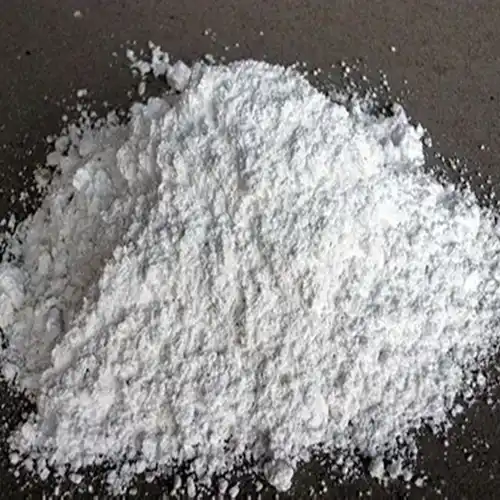
Powder Purity:≥90%(for high quality, ≥92%)
Powder Whiteness:≥80
Powder Fineness:80~400 mesh
Free Moisture Content:≤0.5%
Introduction to Industrial Grade Calcium Oxide
Industrial grade calcium oxide (commonly known as quicklime, chemical formula CaO) is a calcium oxide powder produced from natural limestone through high-temperature calcination, crushing, grinding, and classification. The powder exhibits high reactivity, strong water absorption, and releases intense heat upon contact with water. It is widely used in metallurgical slagging, flue gas desulfurization, wastewater treatment, aerated concrete production, and chemical synthesis.
Product Characteristics of Industrial Grade Calcium Oxide
Chemical Characteristics: Calcium oxide (CaO) content ≥90%, high reactivity (≥300ml), strong alkalinity and hygroscopicity, reacts violently with water to form calcium hydroxide and release large amounts of heat.
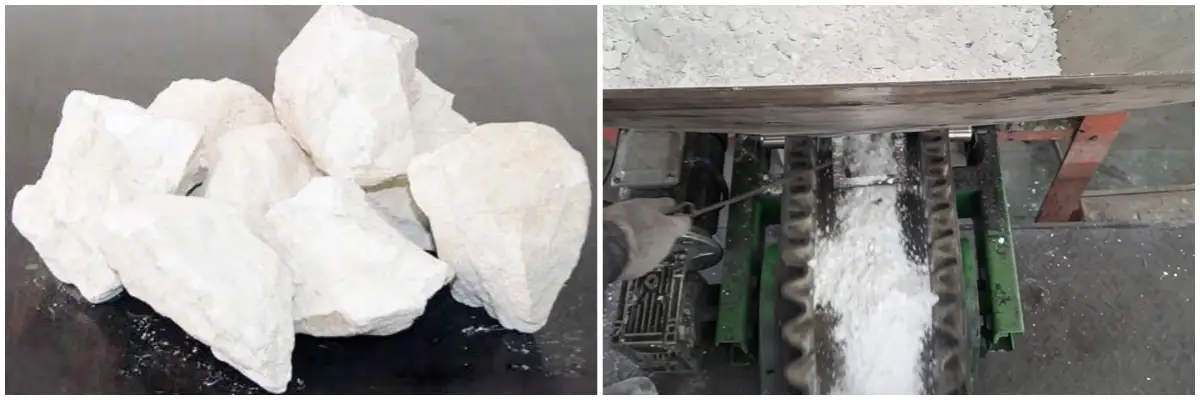
Physical Characteristics: Fineness of 80~400 mesh, bulk density of 0.8~1.2 g/cm³, available in powder or lump form, good flowability.
Color and Appearance: Typically pure white or slightly grayish-white, free from visible impurities, uniform quality.
Moisture Content: Free moisture content ≤0.5%. The powder must be stored in tightly sealed packaging to prevent moisture absorption and degradation.
Preparation Process of Industrial Grade Calcium Oxide
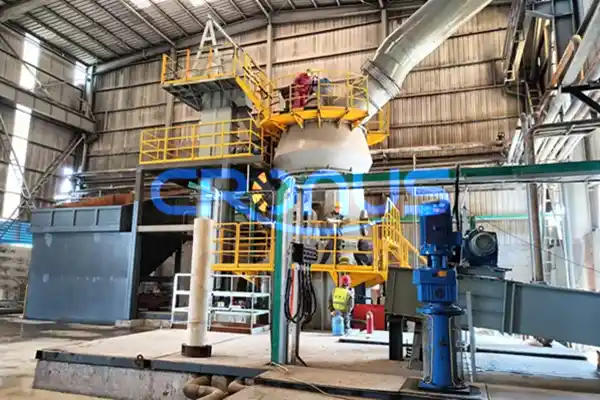
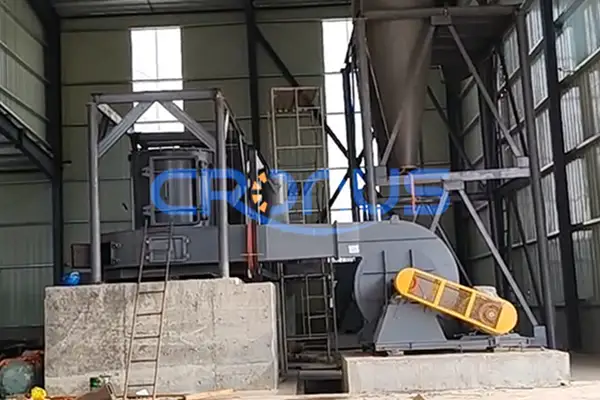
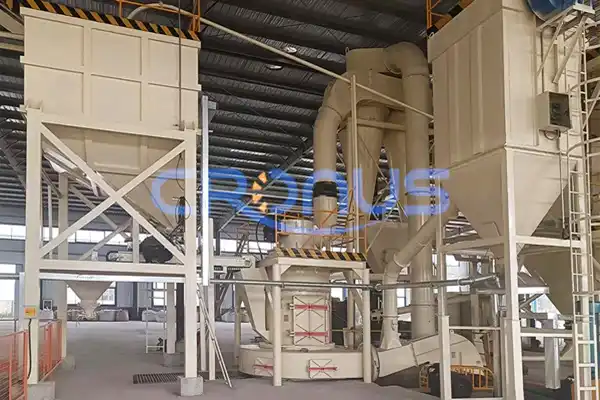
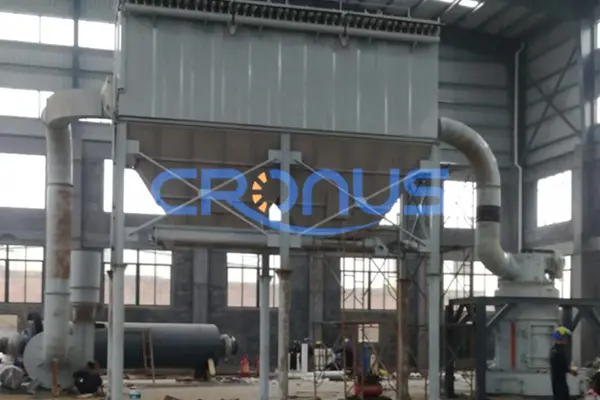
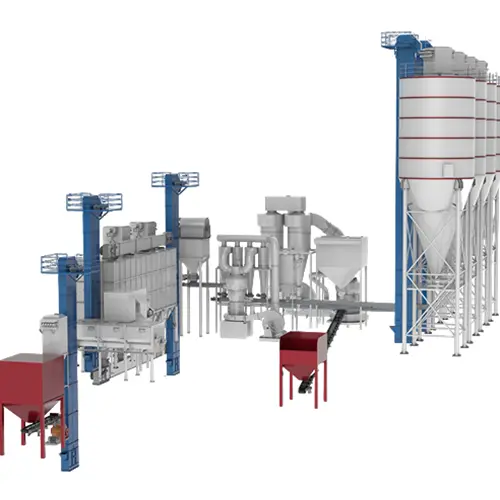
Limestone → Shaft Kiln/Rotary Kiln → Crusher → Raymond Mill → Industrial Grade Calcium Oxide
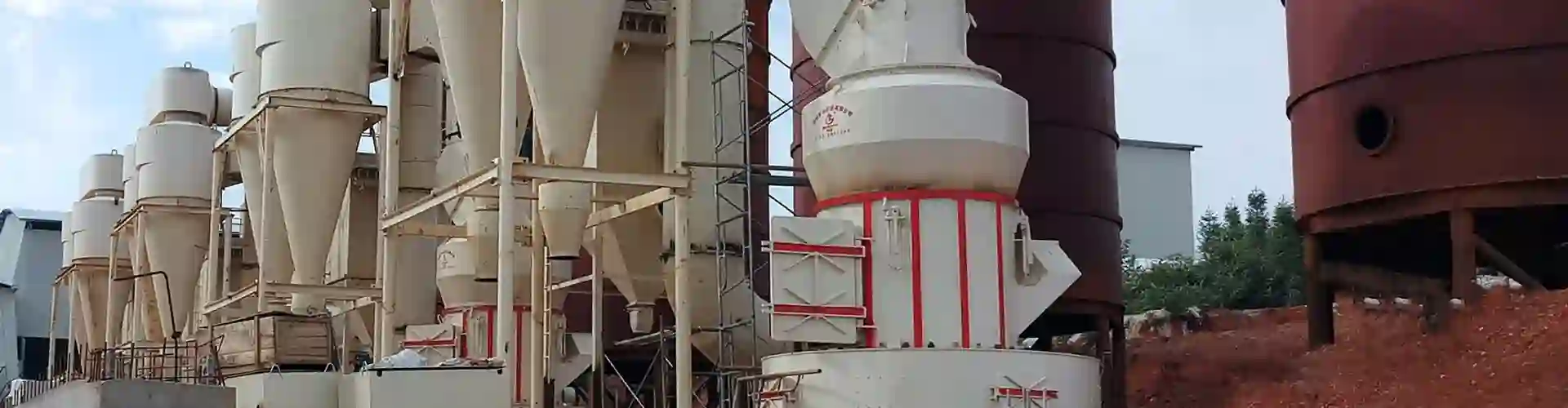
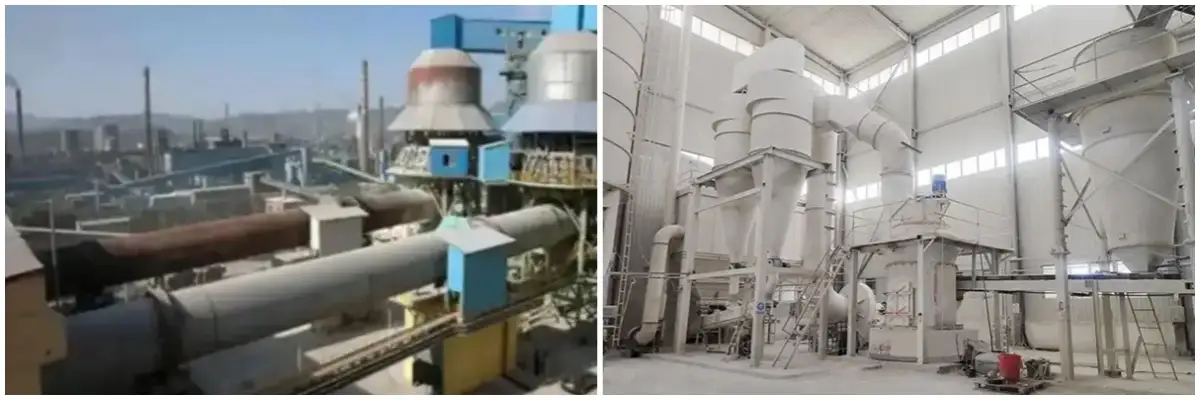
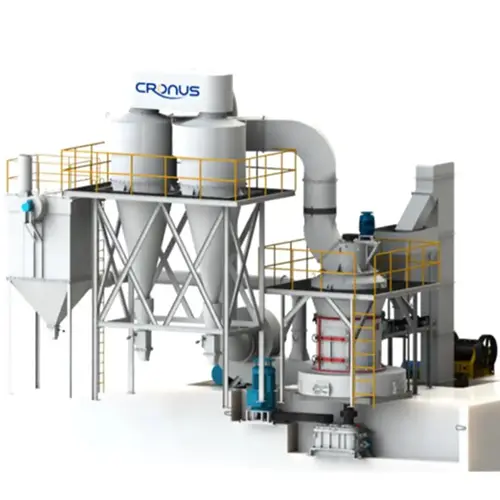
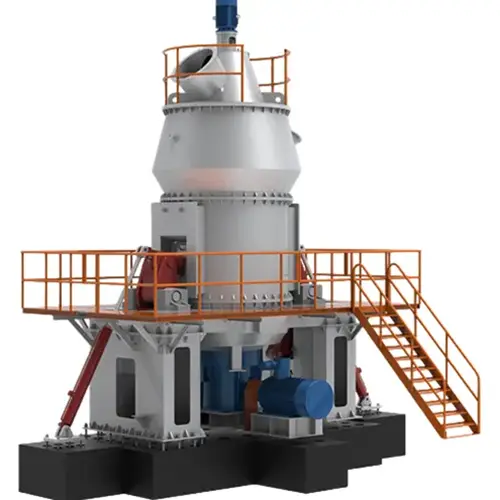
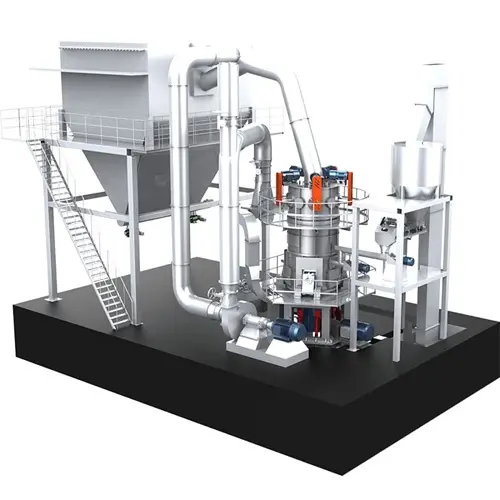
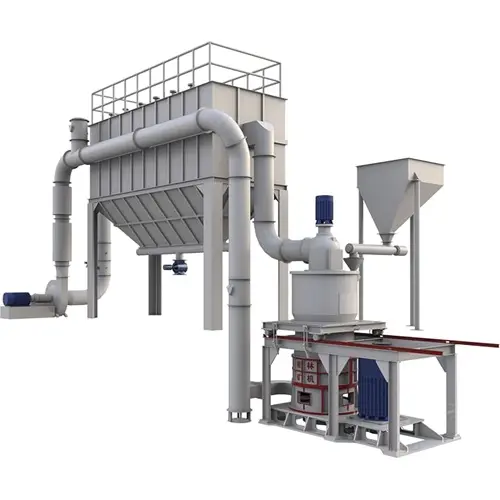
Industrial grade calcium oxide is produced by high-temperature calcination. Limestone is crushed, screened, washed, and then fed into a shaft kiln or rotary kiln for calcination at 1000~1200°C, where calcium carbonate decomposes into calcium oxide and carbon dioxide. For high-quality calcium oxide powder, a rotary kiln is recommended. The calcined quicklime is cooled, crushed by a jaw crusher, and then ground and classified by a Raymond mill to obtain calcium oxide powder with different fineness levels.
Application Fields of Industrial Grade Calcium Oxide
Metallurgical Industry: Used as a steelmaking slagging agent for desulfurization, dephosphorization, and desiliconization in the steel smelting process, improving molten steel purity and reducing smelting costs.
Environmental Protection: Used in flue gas desulfurization, wastewater treatment, acid waste neutralization, and sludge dewatering, offering high neutralization efficiency and low cost.
Building Materials Industry: Used in the production of aerated concrete blocks, autoclaved bricks, lime mortar, and stabilized soil, improving material strength and durability.
Chemical Industry: Used as a basic chemical raw material for producing calcium hydroxide, calcium carbonate, calcium chloride, propylene oxide, pharmaceutical intermediates, and more.
Agricultural Industry: Used for improving acidic soil, preparing pesticide carriers, and feed additives, adjusting soil pH and supplementing calcium.
Technical Parameters of Industrial Grade Calcium Oxide
| Industrial Grade Calcium Oxide Parameter Table | |
| Calcium Oxide (CaO) Content | ≥90% (high quality ≥92%) |
| Reactivity (4N HCl·40°C·10min) | ≥300ml (high quality ≥360ml) |
| Silicon Dioxide (SiO₂) Content | ≤1.5% |
| Magnesium Oxide (MgO) Content | ≤1.5% |
| Fineness (Mesh) | 80~400 mesh |
| Whiteness | ≥80 |
| Free Moisture Content | ≤0.5% |
| Appearance | White or grayish-white powder/lump, free from visible impurities |
| * The above data are for reference only. Specific parameters vary by raw material and process. | |
Frequently Asked Questions About Industrial Grade Calcium Oxide
What is the difference between industrial grade calcium oxide and industrial grade calcium hydroxide?
Industrial Grade Calcium Oxide: Produced from limestone, featuring high powder reactivity and strong water absorption. It is suitable for metallurgy, flue gas desulfurization, wastewater treatment, and building materials.
Industrial Grade Calcium Hydroxide: Produced from calcium oxide, featuring mild properties and lower hygroscopicity. It is suitable for acid wastewater neutralization, bleaching powder production, food additives, and coatings.
What should be noted when storing industrial grade calcium oxide?
Industrial grade calcium oxide is chemically active, readily absorbing moisture and carbon dioxide from the air, leading to deliquescence, degradation, and heat release. It must be stored in a cool, dry, well-ventilated, and sealed warehouse, away from water sources and acidic substances. Moisture-proof and sealed packaging is recommended.
What is the difference between ordinary industrial calcium oxide and high-reactivity calcium oxide?
Ordinary Industrial Calcium Oxide: Calcium oxide content typically 85%~90%, reactivity between 200~300ml, produced using ordinary shaft kilns. Suitable for general industrial filling, neutralization, and building materials.
High-Reactivity Calcium Oxide: Calcium oxide content ≥92%, reactivity ≥360ml, produced using rotary kilns at high temperatures, featuring fine crystals, high porosity, and extremely fast reaction rates. Suitable for high-end applications such as fine chemicals, advanced metallurgy, and environmental treatment.
 Home
Home Products
 About
About Call
Call