

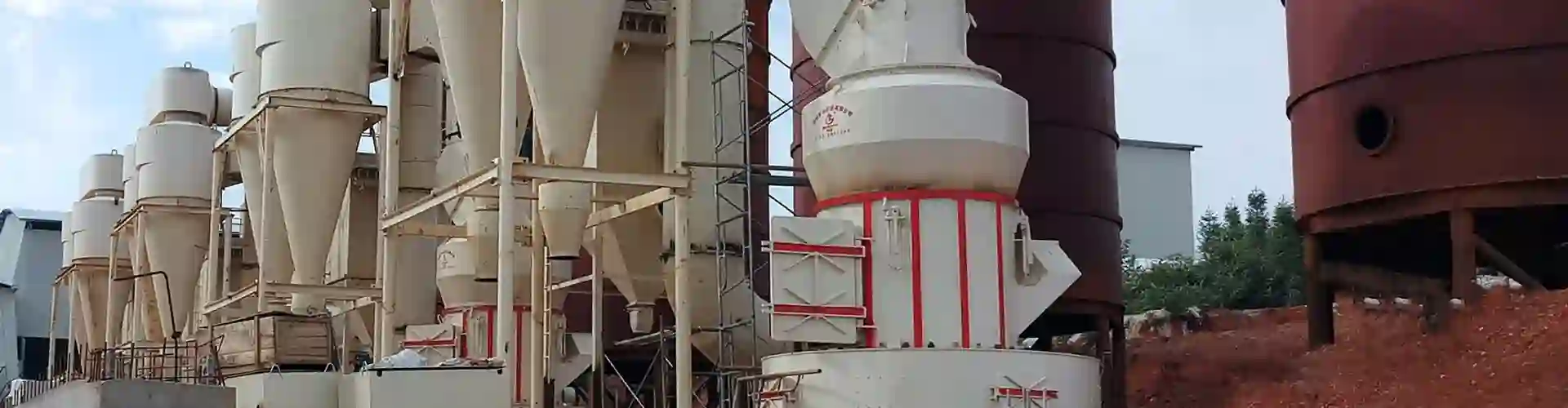
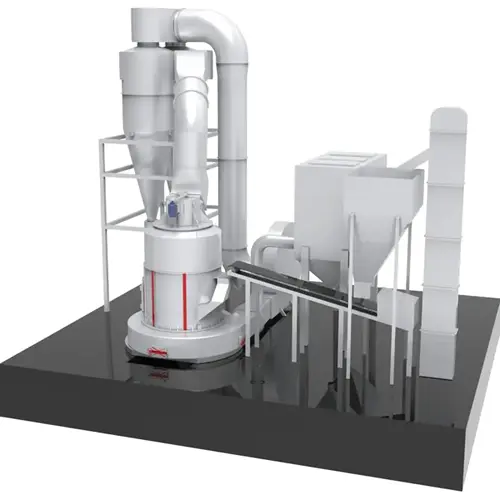
CRRM Small Raymond Mill
Feed Size:≤15mm
Production Output:50~1000kg/h
Product Fineness:80~400 mesh
Suitable Materials:Limestone, calcite, marble, wollastonite, bentonite, kaolin, pyrophyllite, barite, alunite, chalk, talc, gypsum, fluorite, pumice, etc.
Small Raymond Mill Introduction
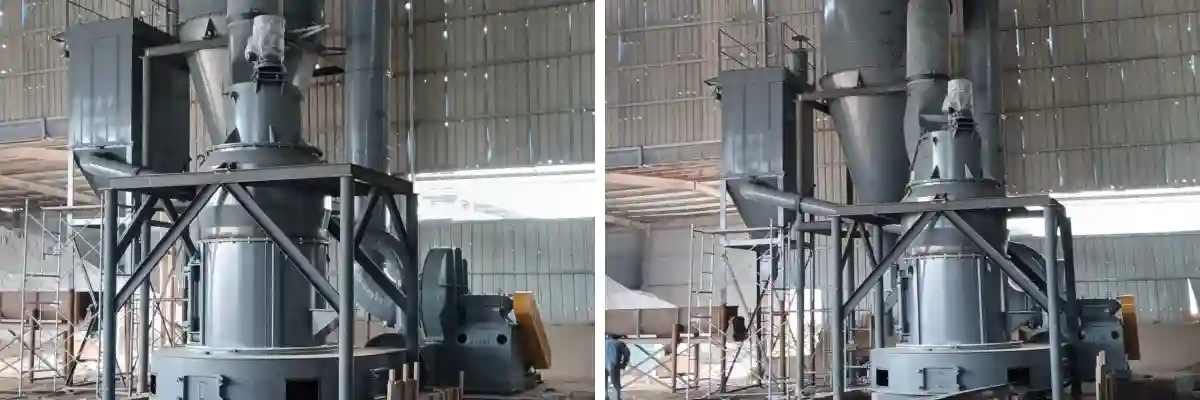
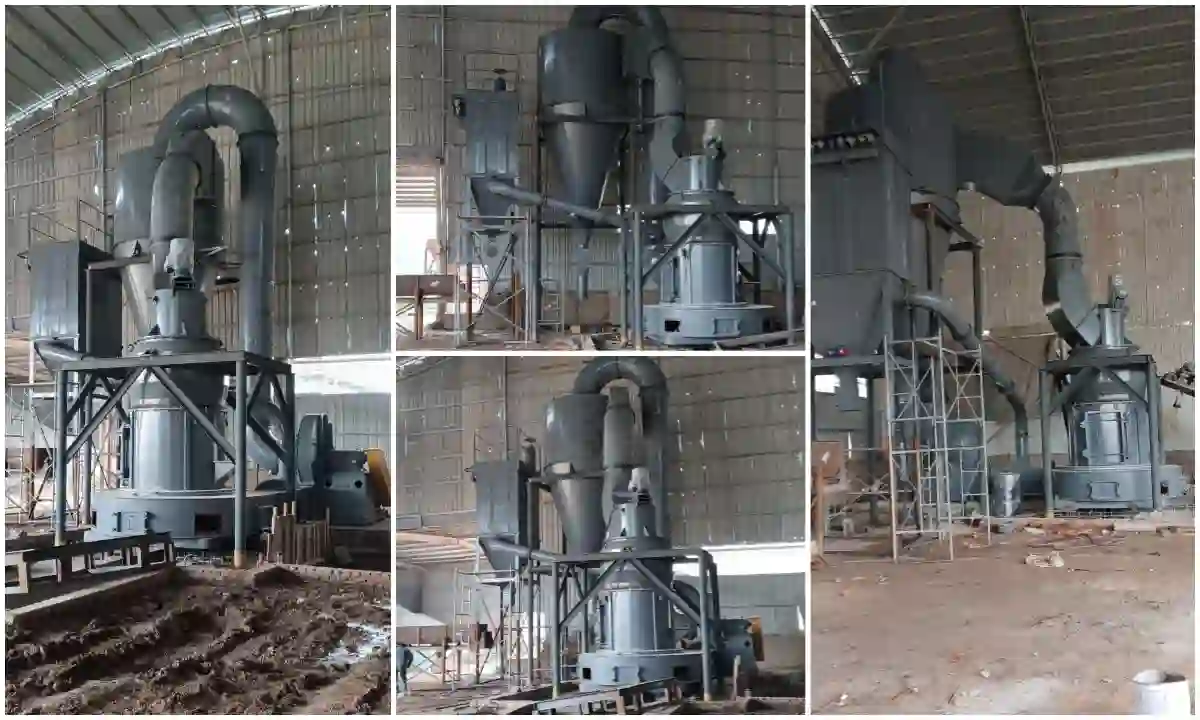
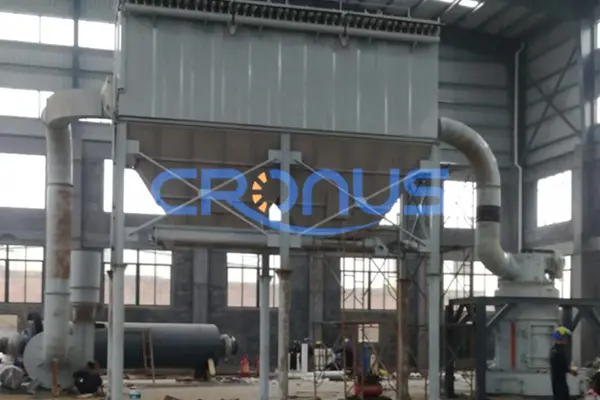
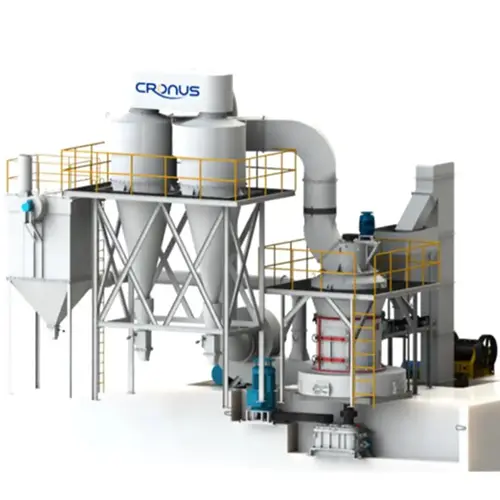
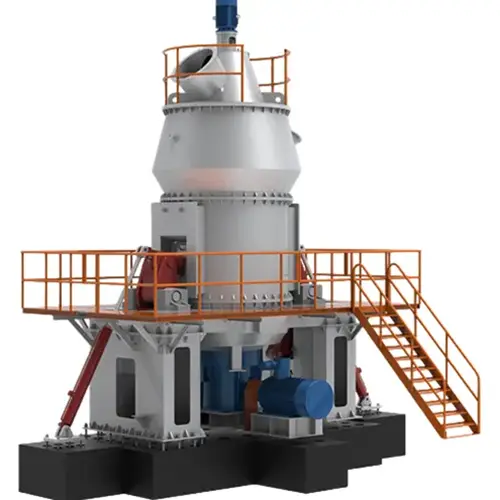
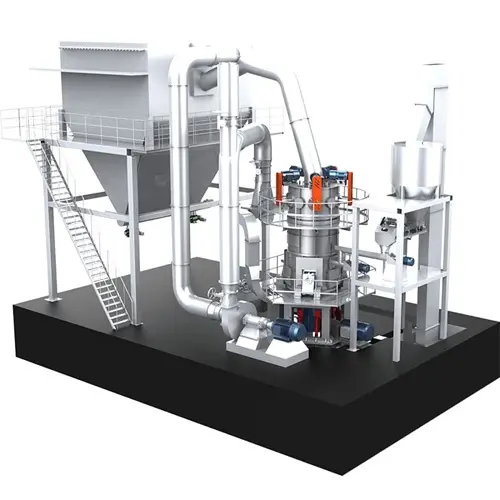
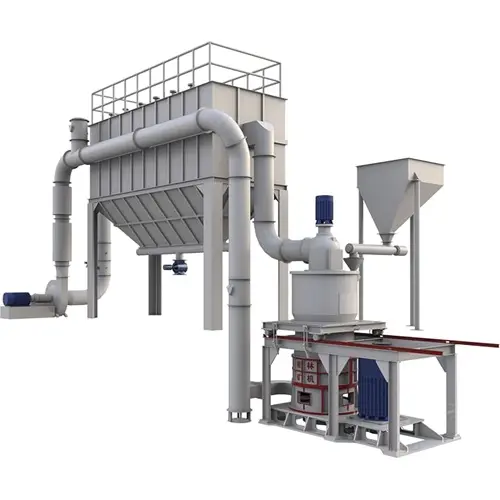
The CRRM Small Raymond Mill is a compact unit designed by Cronus Machinery to meet small-scale grinding requirements (≤1000 kg/h). It features two grinding rollers and a single-cyclone design (dual-cyclone configuration available as an option), offering a simple structure, small footprint, and easy installation and disassembly. A split-type base is available depending on site conditions, providing a cost-effective solution primarily for small-scale powder processing and space-constrained projects.
Small Raymond Mill Features & Advantages
Compact Structure: Small footprint, occupying only 60%–70% of the space required by conventional Raymond mills.
Simple & Convenient: Single-cyclone design simplifies operation, maintenance, installation, and disassembly.
Strong Adaptability: Split-type base available to accommodate site-specific conditions, facilitating transport and suitable for space-constrained applications.
Economical & Energy-Efficient: Simplified process flow results in lower operating energy consumption and investment costs, making it suitable for research institutions and small-scale enterprises.
Small Raymond Mill Process Flow
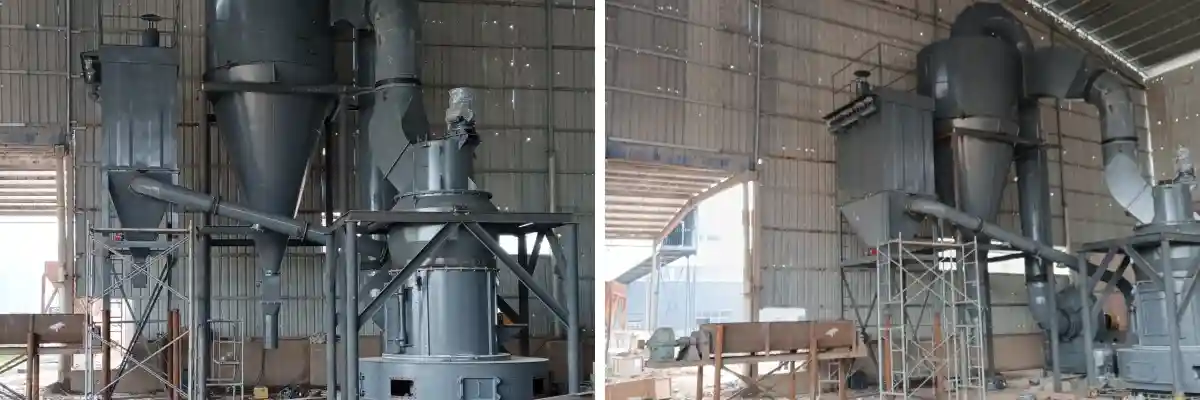
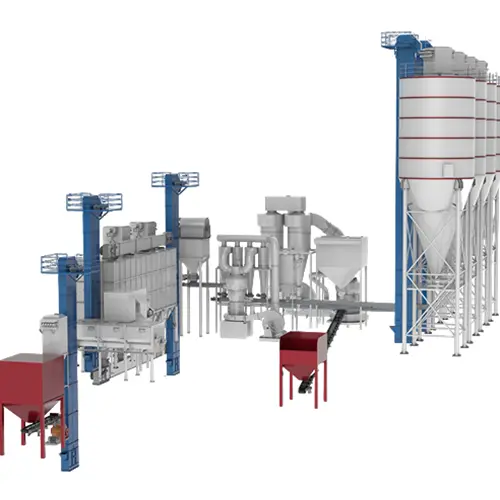
Raw Material → Crusher → Feeder → Small Raymond Mill → Single Cyclone Collector → Pulse Jet Baghouse Dust Collector → Finished
Raw Material Preparation
A small crusher is typically used to reduce raw material size to ≤15 mm, thereby reducing the load on the downstream grinding equipment. The material is then fed into the small Raymond mill via a feeder. Due to the compact size of the equipment, vertical conveying via bucket elevator is not required.
Grinding & Classification
After entering the grinding zone, the material is ground between the grinding rollers and rings. The classification system utilizes air separation. Qualified fine powder is carried by the rising airflow through the classifier at the top into the single cyclone collector, while unqualified coarse particles fall back to the grinding zone under gravity for regrinding, forming a closed-circuit cycle.
Collection & Dust Removal
The collection system consists of a single cyclone collector and a pulse jet baghouse dust collector. The single cyclone collects the majority (80%–95%) of the finished fine powder, while the pulse jet baghouse collects residual dust and purifies exhaust gases. Purified gas is discharged by the fan.
Small Raymond Mill Application Scenarios
Small Raymond Mill Technical Parameters
| CRRM Small Raymond Mill Parameter Comparison Table | |
| Number of Grinding Rollers | 2 |
| Feed Size | ≤15 mm |
| Product Fineness | 80–400 mesh |
| Capacity | 50–1000 kg/h |
| Main Unit Power | 5.5–11 kW |
| Classifier Power | 1.5–2.2 kW |
| Fan Power | 7.5–11 kW |
| Overall Dimensions | 3.5 × 2.5 × 4.2 m |
| * The above data is for reference only. Specific parameters vary depending on materials. | |
Frequently Asked Questions About Small Raymond Mills
Why does the small Raymond mill use a single-cyclone design?
The single-cyclone design is adopted because for powder production with a capacity of ≤1000 kg/h, a single cyclone collector can efficiently handle the load without the need for a complex dual-cyclone分流 structure. Additionally, the single cyclone has a smaller footprint and lower cost, making it more suitable for small-scale processing and space-constrained projects.
When should a dual-cyclone design be used for the small Raymond mill?
The dual-cyclone design is adopted for processing specialty materials with higher added value. For example, in the pharmaceutical excipient field, the dual-cyclone design can increase the collection efficiency of the Raymond mill to over 99%.
Does the split-type base of the small Raymond mill ensure stable operation?
The split-type base has lower vibration resistance compared to an integral base. However, for small-scale grinding projects, this design is reasonable, as it reduces investment costs and footprint while ensuring stable operation of the small Raymond mill.
 Home
Home Products
 About
About Call
Call