

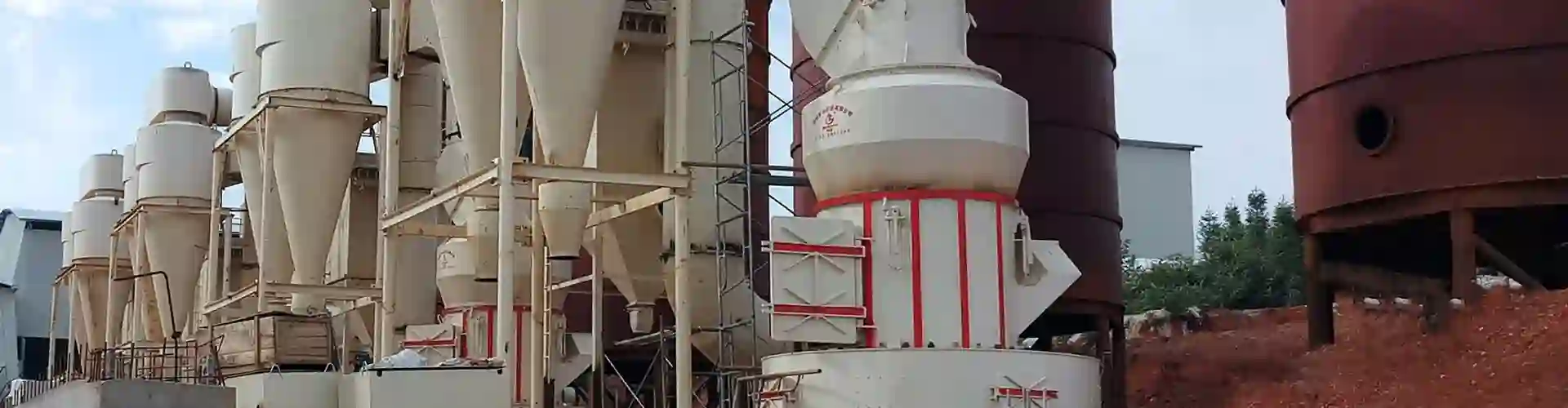
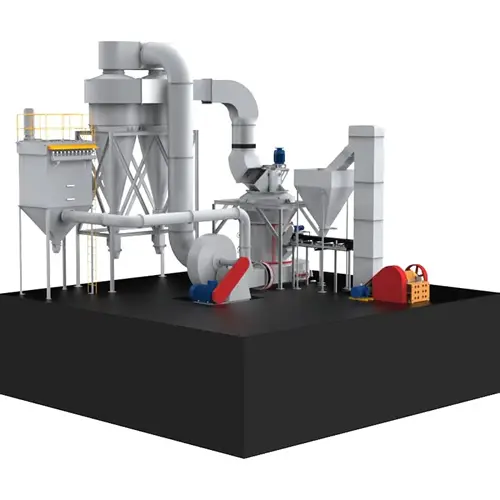
CRRM Large Raymond Mill
Feed Size:≤35mm
Production Output:10~80t/h
Product Fineness:80~400 mesh
Suitable Materials:Calcite, limestone, marble, barite, kaolin, bentonite, talc, gypsum, graphite, fluorite, etc.
Introduction to Large Raymond Mill
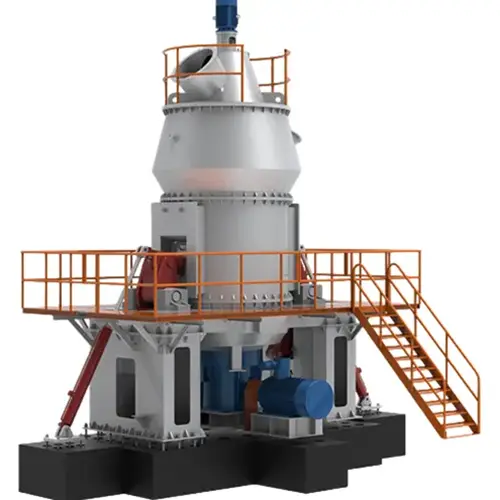
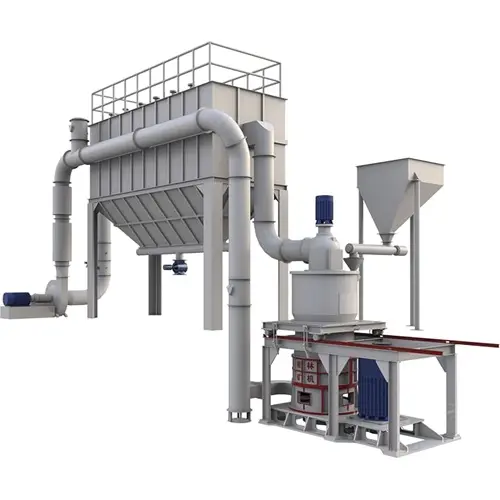
CRRM Large Raymond Mill is a large-scale grinding equipment designed by Cronus Machinery to meet the demands of industrial-scale production. It features ≥4 grinding rollers. The base is manufactured using an integral casting process with precision machining. By eliminating assembly gaps, it ensures uniform force distribution across the entire contact surface between the equipment and the foundation. This effectively protects core grinding components such as grinding rollers and rings, providing strong support for the stable operation of the large Raymond mill. Compared to traditional split-base processes, the structural rigidity is increased by 40%, and operating vibration amplitude is reduced by 60%.It is primarily used in large-scale powder grinding projects with a capacity of ≥10 tons per hour.
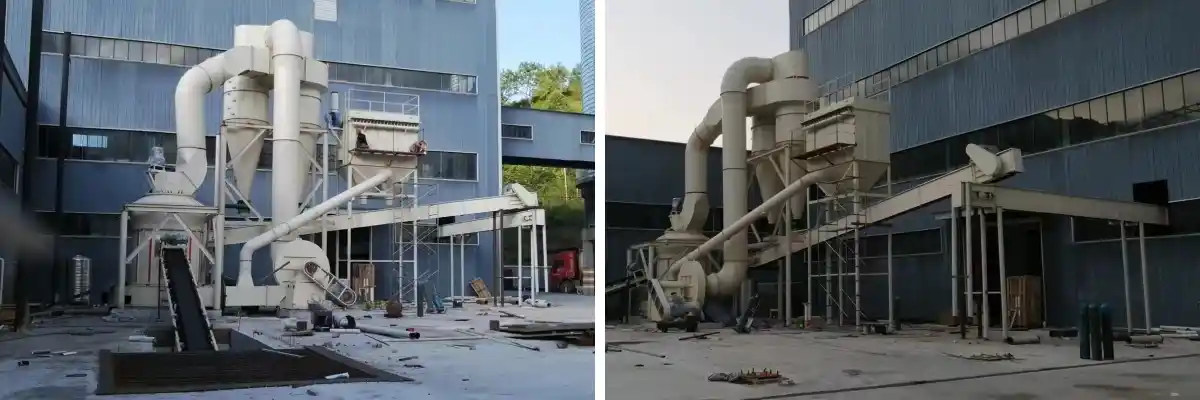
Features and Advantages of Large Raymond Mill
Multi-Roller Grinding: Equipped with ≥4 grinding rollers, providing a large grinding area and stronger grinding force. The single-unit capacity can reach tens of tons per hour, meeting the tonnage demands of industrial-scale production.
Sturdy Structure: The base adopts an integral casting process with no assembly gaps. The equipment distributes force evenly across the entire contact surface with the foundation, dispersing the immense impact forces generated during mill operation across the entire base plane.
Stable & Efficient: The integral base reduces wear on core grinding components like rollers and rings, prolongs equipment service life, minimizes downtime for maintenance, and increases production efficiency.
Easy Installation: Although it is a large grinding mill, the integral base utilizes a pre-calibration process, eliminating the need for on-site assembly and splicing. It can be put in place simply by hoisting, reducing the installation period by 50%.
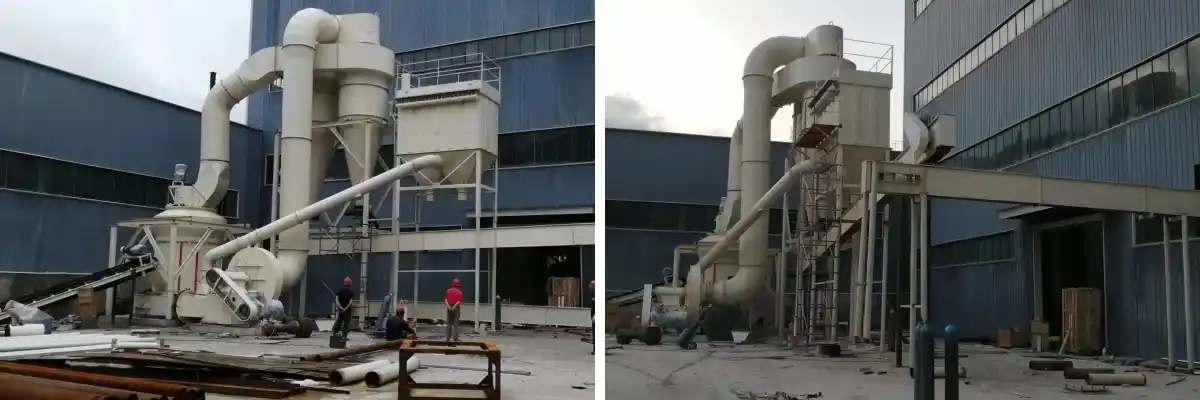
Process Flow of Large Raymond Mill
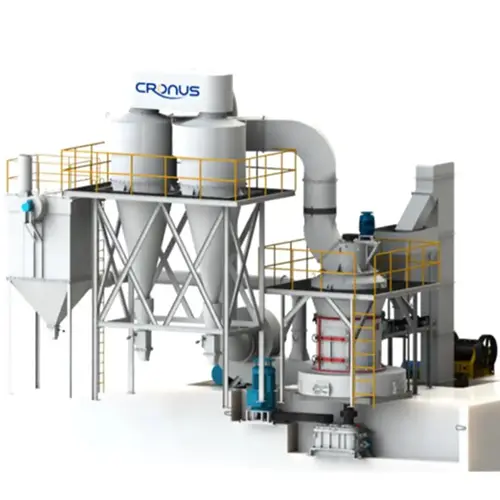
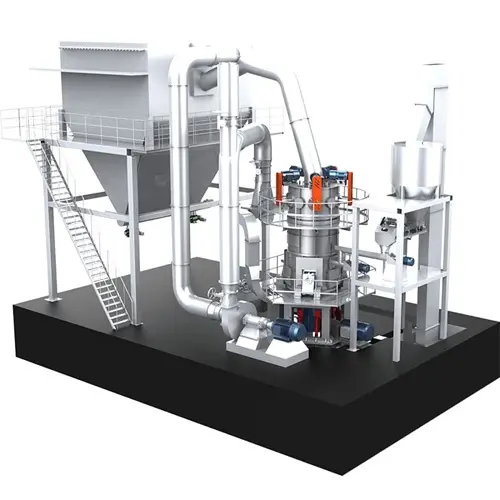
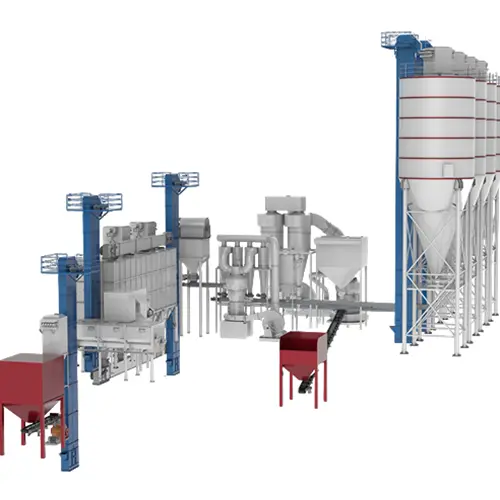
Raw Material → Crusher → Bucket Elevator → Vibrating Feeder → Large Raymond Mill → Double Cyclone Collector → Pulse Baghouse → Finished
Raw Material Processing
Large blocks of material are crushed by a jaw crusher to a size suitable for milling (≤35mm). They are then vertically lifted by a bucket elevator and fed into the mill uniformly, quantitatively, and continuously by a vibrating feeder.
Grinding and Classification
After the material enters the large Raymond mill, it is picked up by a plow and thrown into the space between the grinding rollers and the grinding ring. Inside the main unit, multiple grinding rollers (≥4) mounted on the star frame rotate around the central shaft. Under the action of centrifugal force, they press tightly against the grinding ring, achieving grinding and pulverization. The ground powder is then classified by a classifier. Coarse powder is returned for regrinding, while qualified fine powder flows with the airflow into the collection system.
Collection and Dust Removal
The collection system consists of a parallel double cyclone collector and a pulse baghouse. Qualified fine powder enters the cyclone collector for separation and is then discharged through the discharge pipe and collected as finished product, with a fineness of up to 400 mesh. The purified airflow is discharged into the atmosphere by the induced draft fan located above the pulse baghouse, with an emission concentration ≤10mg/m³. Except for the section from the blower to the grinding chamber which operates under positive pressure, the airflow in the remaining pipelines of the entire system flows under negative pressure.
Application Scenarios of Large Raymond Mill
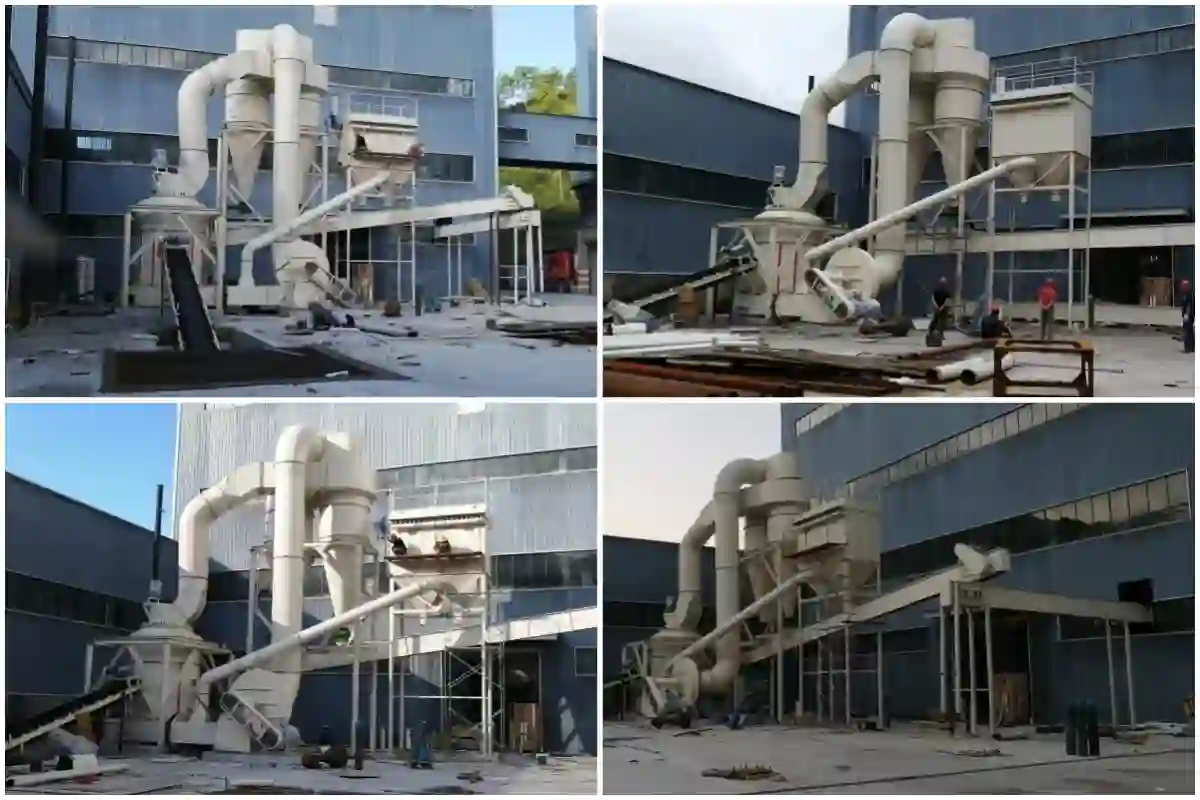
Technical Parameters of Large Raymond Mill
| CRRM Large Raymond Mill Parameter Comparison Table | ||||||
| Model | Feed Size (mm) | Product Fineness (mesh) | Capacity (t/h) | Main Motor Power (kW) | Fan Motor Power (kW) | Classifier Motor Power (kW) |
| CRRM2150 | ≤30 | 80~400 | 10~40 | 250 | 280 | 45 |
| CRRM2500 | ≤35 | 11.5~50 | 280 | 280 | 45 | |
| CRRM2750 | ≤35 | 15~80 | 450 | 450 | 75 | |
| * The above data are for reference only. Specific parameters vary depending on the material. | ||||||
Frequently Asked Questions about Large Raymond Mill
What should be noted when constructing the foundation for a large Raymond mill?
The foundation construction for a large Raymond mill must strictly follow the drawings, using reinforced concrete structure, especially for the main unit area. Ensure the base thickness is ≥300mm. Use high-grade cement for compaction and allow it to cure naturally for at least 15 days after pouring; the use of setting accelerators is strictly prohibited. After curing, re-measure the reserved hole positions and dimensions to ensure installation accuracy, providing a guarantee for the long-term operation of the equipment.
What is the difference between the integral base of a large Raymond mill and a traditional split base?
Integral Base: Manufactured using an integral casting process and precision machined, with no assembly gaps. During operation, the equipment distributes force evenly across the entire contact surface with the foundation. Installation is completed with a single hoisting and placement. This is the mainstream process for modern large Raymond mills.
Split Base: Composed of multiple steel plates or castings assembled (welded/bolted) together, requiring on-site secondary assembly and splicing. The installation period is longer (3~5 days). During operation and maintenance, bolts and fasteners need to be checked for loosening. Compared to the integral base, the initial investment cost is lower and transportation is more convenient. It is commonly used in small-scale powder processing.
Why does the large Raymond mill adopt a parallel double cyclone design?
The parallel double cyclone collector design is adopted because the tonnage-level capacity of a large Raymond mill requires an efficient collection system to handle large volumes of finished powder. The double cyclone collector increases collection efficiency by 10%~15% compared to a single cyclone, effectively reducing the load on downstream baghouse and improving overall production efficiency.
 Home
Home Products
 About
About Call
Call