

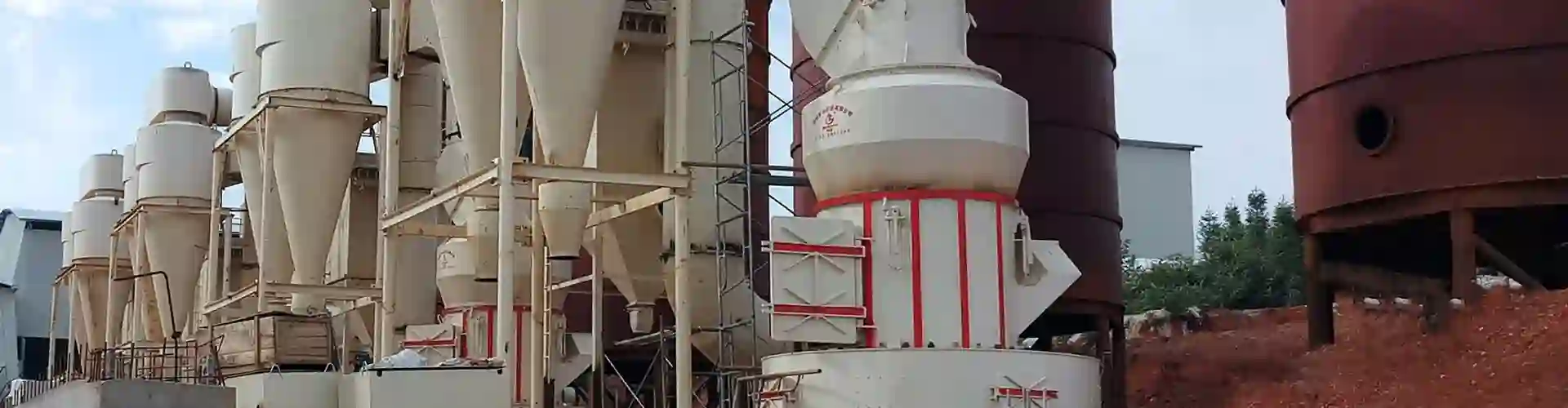
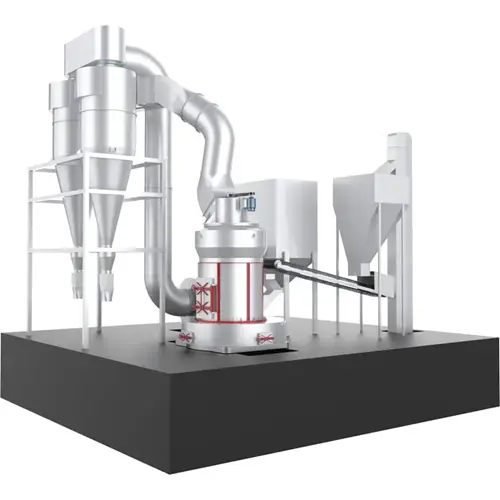
6R/5R/4R/3R Series Raymond Mill
Feed Size:≤20~35mm
Production Output:1~80t/h
Product Fineness:80~400 mesh
Suitable Materials:limestone, marble, calcite, dolomite, bentonite, kaolin, talc, fluorite, zeolite, mica, gypsum, graphite, etc.
Introduction to 6R/5R/4R/3R Series Raymond Mills
In the 6R/5R/4R/3R series Raymond mills, the "R" stands for Roller, while the number indicates the performance level rather than the absolute number of rollers. Specifically, 3R represents small Raymond mills with 3~4 rollers; 4R represents small to medium Raymond mills with 3~4 rollers; 5R represents medium to large Raymond mills with 4~5 rollers; and 6R represents extra-large Raymond mills with 5~6 rollers. For example, the 4R3220 Raymond mill is available in models with 3 rollers and 4 rollers, rather than being strictly equipped with 4 rollers.
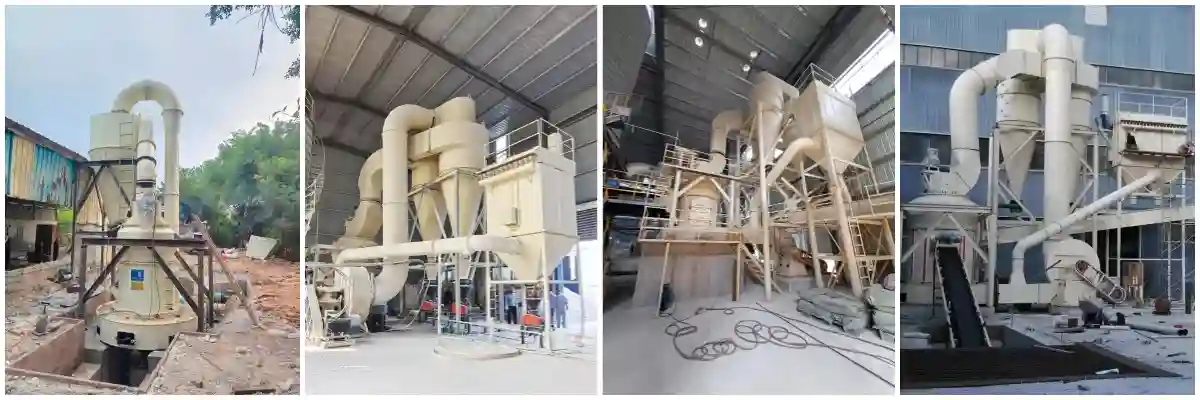
Features and Advantages of 6R/5R/4R/3R Series Raymond Mills
Features and Advantages of 3R Raymond Mill
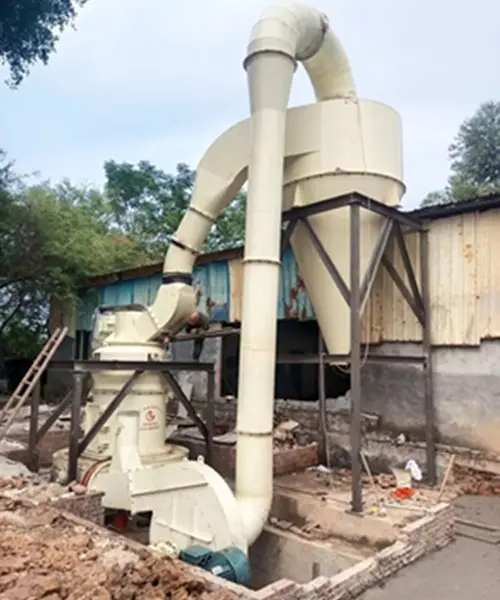
The 3R Raymond mill has a grinding ring diameter of 830~970 mm and primarily features 3 rollers (with a few models equipped with 4 rollers). The equipment is compact, occupying a small footprint, with a lightweight overall structure (4~5 t) and relatively low investment cost. It is suitable for small-scale batch production and projects with space constraints.
Features and Advantages of 4R Raymond Mill
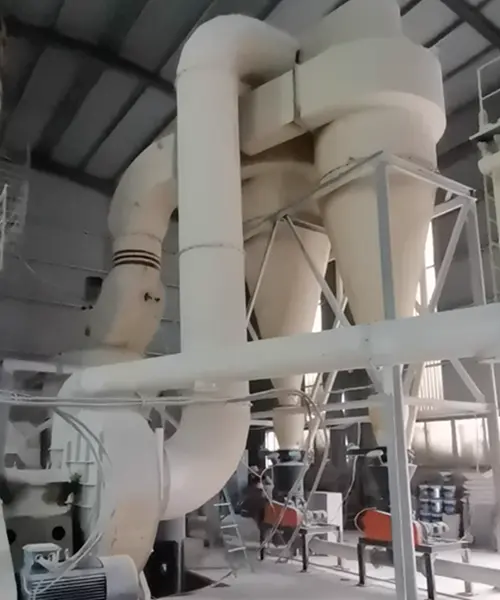
The 4R Raymond mill has a grinding ring diameter of 970~1073 mm and primarily features 4 rollers (with a few models equipped with 3 rollers). Compared to the 3R Raymond mill, it offers a larger grinding area, with production capacity increased by approximately 50%~80%. It features strong versatility and high cost-effectiveness, making it suitable for most small to medium-sized production lines.
Features and Advantages of 5R Raymond Mill
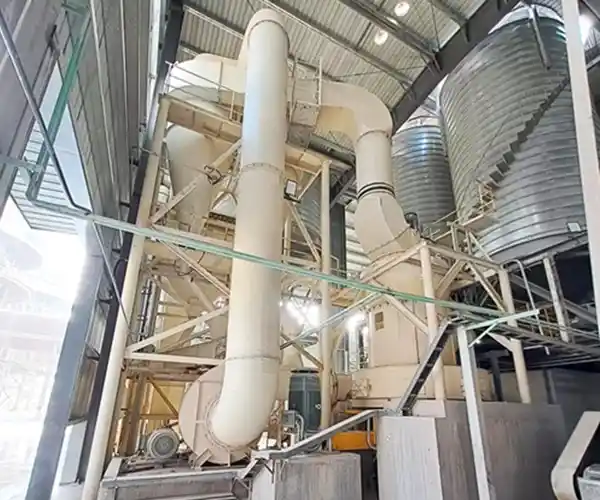
The 5R Raymond mill has a grinding ring diameter of 1280~1400 mm and primarily features 5 rollers (with a few models equipped with 4 rollers). As a medium to large-scale equipment, it offers significantly increased grinding area compared to the 4R Raymond mill, with output 1.8~2 times that of the 4R model. The finished product has more uniform particle size and higher sieving rate, making it suitable for large-scale industrial production with certain fineness requirements.
Features and Advantages of 6R Raymond Mill
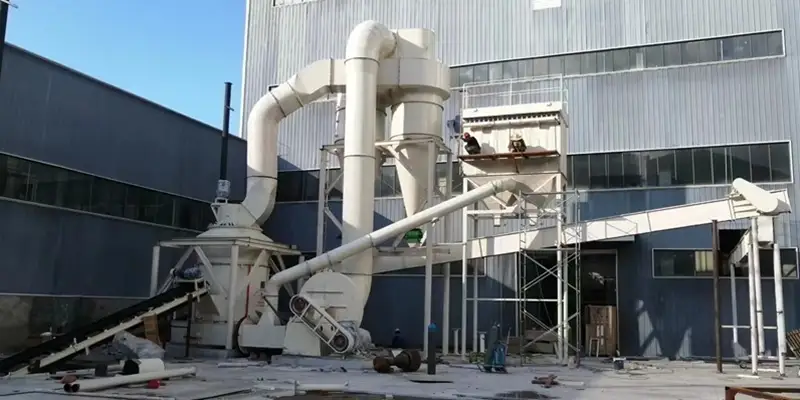
The 6R Raymond mill has a grinding ring diameter of 1600~1770 mm and primarily features 6 rollers (with a few models equipped with 5 rollers). The equipment offers high grinding efficiency and large single-unit output, with a capacity exceeding 10 t/h. Although the initial investment cost is relatively high, its unit energy consumption is lower than that of smaller Raymond mills, making it suitable for large-scale continuous production.
| Comparison of 6R/5R/4R/3R Series Raymond Mills | ||||
| Attribute | 3R Raymond Mill | 4R Raymond Mill | 5R Raymond Mill | 6R Raymond Mill |
| Equipment Type | Small Equipment | Small to Medium Equipment | Medium to Large Equipment | Extra-Large Equipment |
| Grinding Ring Diameter | 830~970 mm | 970~1073 mm | 1280~1400 mm | 1600~1770 mm |
| Number of Rollers | 3 rollers primarily (a few with 4) | 4 rollers primarily (a few with 3) | 5 rollers primarily (a few with 4) | 6 rollers primarily (a few with 5) |
| Core Advantages | Compact size, low investment |
Wide application, high cost-effectiveness |
Uniform product particle size, high sieving rate | High single-unit output, low unit energy consumption |
| Applicable Scenarios | Small-scale, space-constrained projects | Small to medium production lines | Industrial production with specific fineness requirements | Large-scale continuous production |
Process Flow of 6R/5R/4R/3R Series Raymond Mills
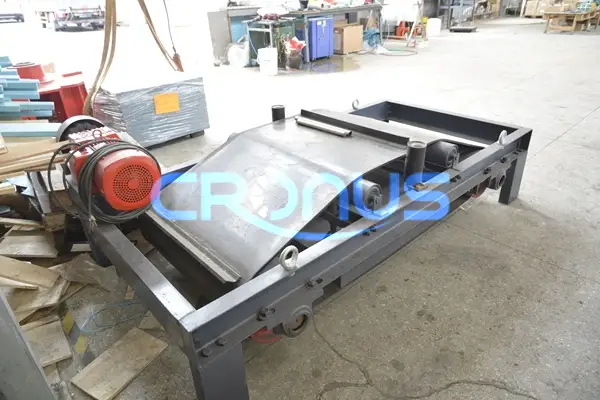
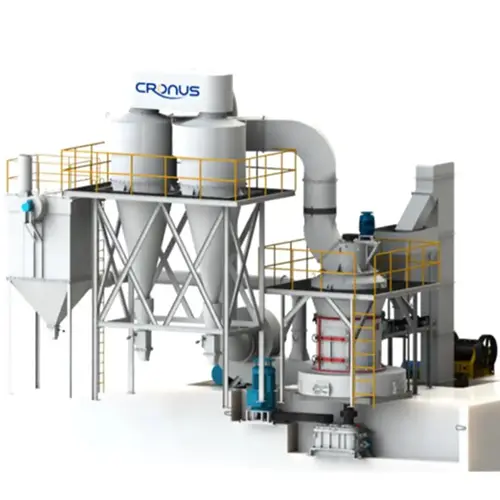
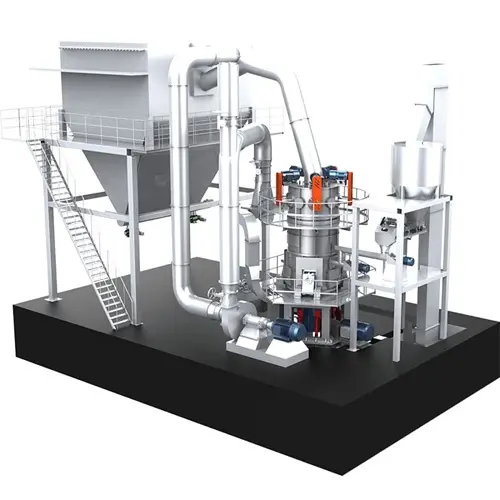
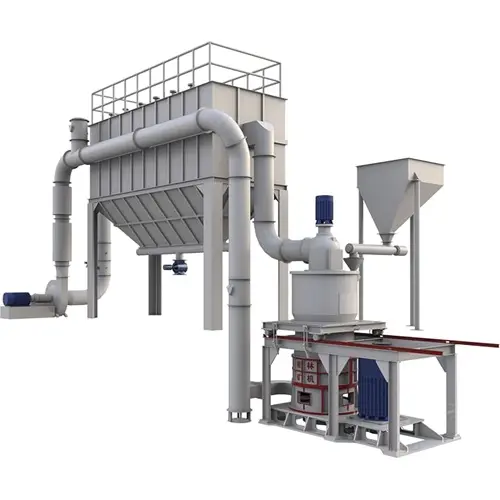
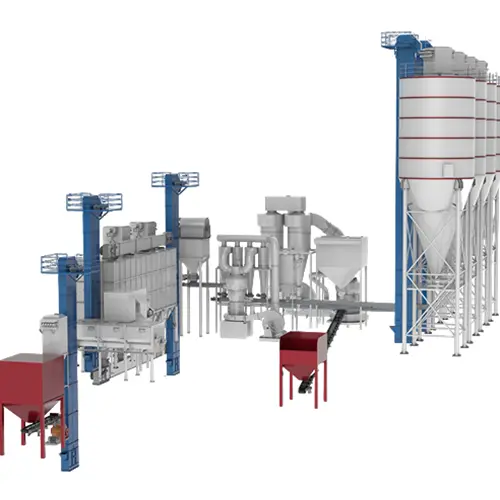
Raw Material → Crusher → Bucket Elevator → Feeder → R Series Raymond Mill → Cyclone Collector → Pulse Baghouse Dust Collector → Finished
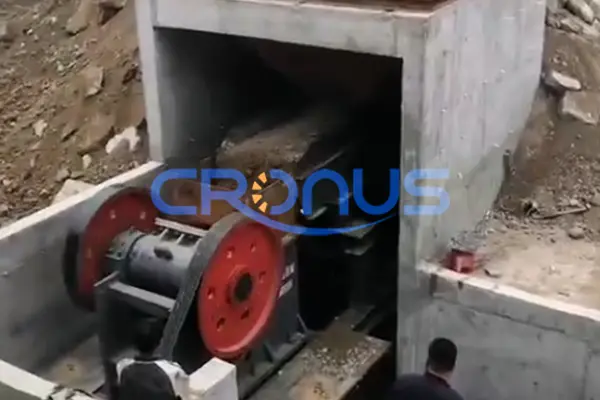
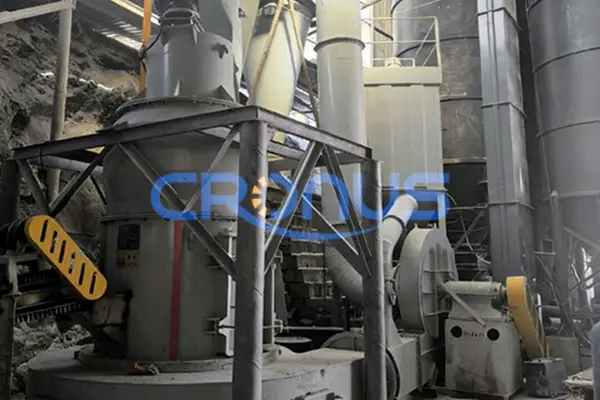
The process flow of the R Series Raymond mills is generally similar, following the standardized process of crushing → feeding → grinding → classifying → collection. Large materials are crushed by a jaw crusher to the required feed size, then transported via a bucket elevator and feeder into the main unit of the Raymond mill for grinding and classification.
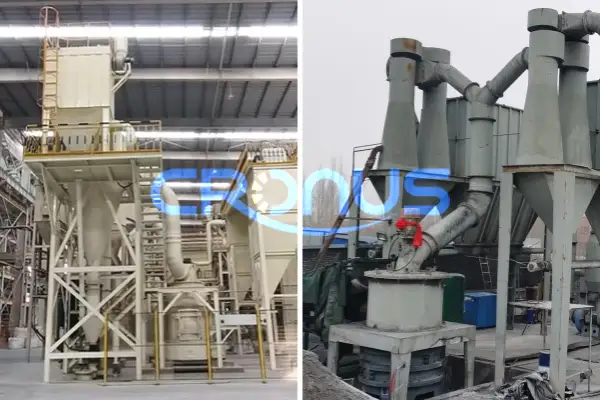
The fineness of the finished product is controlled by adjusting the speed of the classifier. Coarse powder is returned for re-grinding, while qualified fine powder is carried by airflow into the cyclone collector, where it is discharged as finished product after gas-solid separation.
The purified airflow returns to the blower, forming a closed-circuit cycle, while excess air is discharged after being purified by the pulse baghouse dust collector.
Application Scenarios of 6R/5R/4R/3R Series Raymond Mills
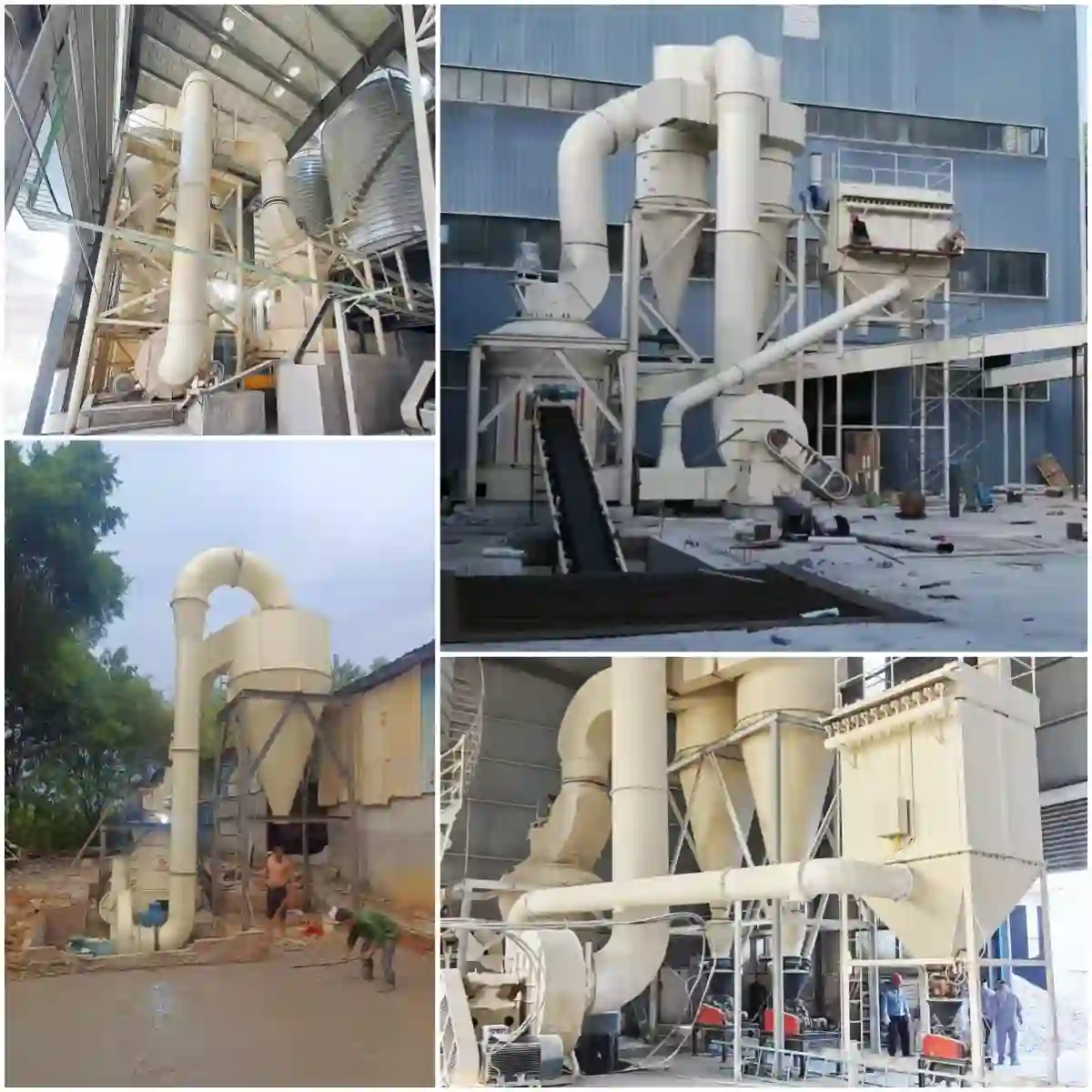
Technical Parameters of 6R/5R/4R/3R Series Raymond Mills
| Parameter Comparison Table of 6R/5R/4R/3R Series Raymond Mills | ||||||||
| Model | Performance Level |
Number of Rollers |
Feed Size (mm) |
Product Fineness (mesh) |
Capacity (t/h) |
Main Unit Power (kW) |
Fan Power (kW) |
Classifier Power (kW) |
| 3R Series | Small | 3~4 | ≤20 | 80~400 | 1~6 | 45 | 45 | 15 |
| 4R Series | Small to Medium | 3~4 | ≤20 | 1.5~18 | 55~110 | 55~110 | 15~22 | |
| 5R Series | Medium to Large | 4~5 | ≤30 | 5~40 | 160~250 | 132~280 | 30~45 | |
| 6R Series | Extra-Large | 5~6 | ≤35 | 11.5~80 | 280~450 | 280~450 | 45~75 | |
| * The above data are for reference only. Specific parameters vary by material. Please contact us for a professional customized solution. | ||||||||
Frequently Asked Questions about 6R/5R/4R/3R Series Raymond Mills
Does a higher number of rollers in 6R/5R/4R/3R Raymond mills mean better performance?
In most cases, a higher number of rollers results in a larger grinding area and higher output. However, this is not absolute, as equipment performance is also influenced by key parameters such as grinding ring diameter, main unit power, and classifier performance. When evaluating the performance of a Raymond mill, the number of rollers alone should not be considered.
Does a larger number in 6R/5R/4R/3R Raymond mills indicate more rollers?
No. While "R" stands for Roller, the number represents the performance level rather than the absolute number of rollers. For example, the 3R Raymond mill is available in models with both 4 rollers and 3 rollers.
How to select the right 6R/5R/4R/3R Raymond mill model?
Model selection for R Series Raymond mills should prioritize output capacity. Choose the 3R Raymond mill for small-scale production, the 4R for small to medium-scale production, the 5R for large-scale industrial production, and the 6R for large-scale continuous production. When selecting a model, comprehensive considerations should also be given to material characteristics, site constraints, and budget.
Are there any other R series equipment besides the 6R/5R/4R/3R Raymond mills?
Yes. For example, the 2R small Raymond mill and the 7R extra-large Raymond mill are also available. These are customized equipment and are relatively rare in the current market. If you need detailed parameters, please contact us, and our professional technical staff will be happy to answer your questions.
 Home
Home Products
 About
About Call
Call